






Manila Bulletin
 Philippines
National
Senators welcome veto of P92.5-B worth of unprogrammed appropriations for 2026
Philippines
National
Senators welcome veto of P92.5-B worth of unprogrammed appropriations for 2026
Philippines
National
Senators welcome veto of P92.5-B worth of unprogrammed appropriations for 2026
Senators welcome veto of P92.5-B worth of unprogrammed appropriations for 2026
By Dhel Nazario
Published Jan 5, 2026 01:29 pm


At A Glance
- Senators on Monday, Jan. 5, welcomed President Marcos' move to veto almost P92.5 billion in the 2026 national budget under the unprogrammed appropriations (UA).
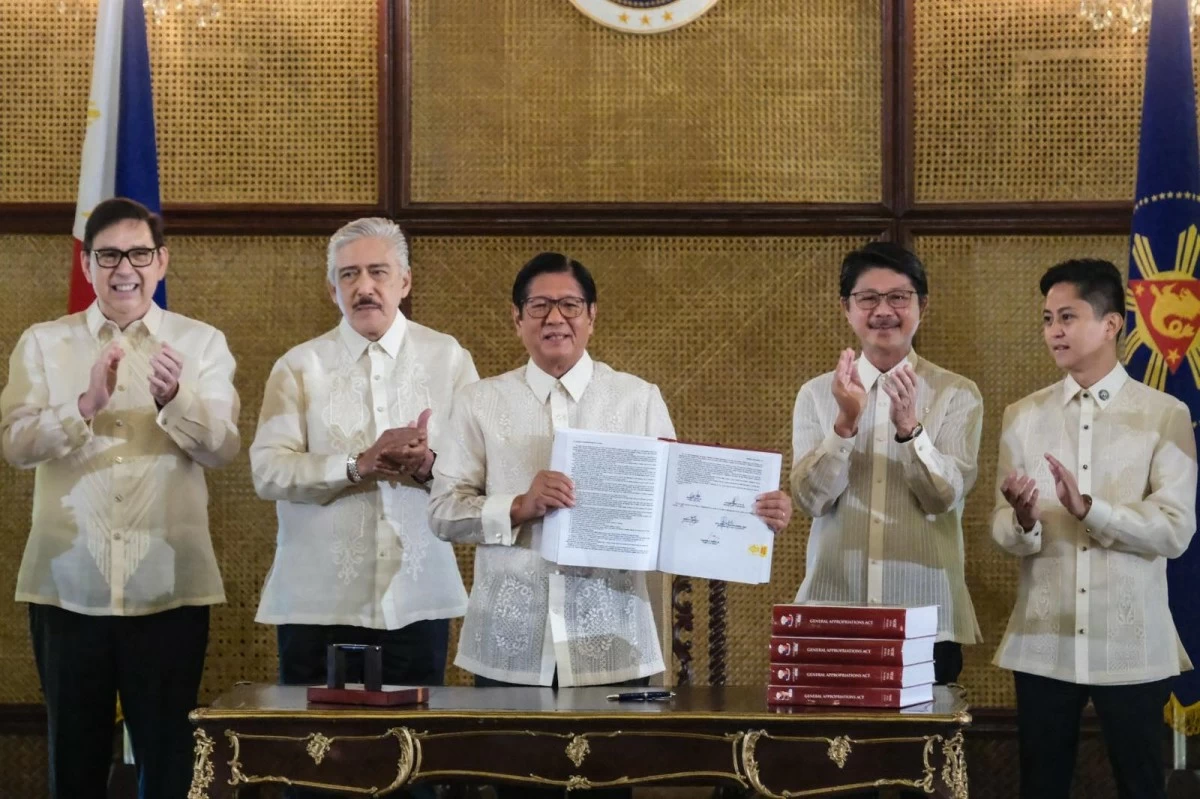
President Ferdinand R. Marcos Jr. signs the General Appropriations Act (GAA) for Fiscal Year 2026 at the Ceremonial Hall of on Monday, January 5, 2026. The national budget, enacted as Republic Act No. 12314, amounts to Php6.793 trillion. In his speech, President Marcos vowed to ensure that every peso of the Php6.793-trillion national budget for 2026 will directly benefit the Filipino people. Marcos emphasized that all programs and projects will undergo strict scrutiny to deliver concrete results, especially for the most vulnerable sectors.He said the 2026 budget reflects the government’s commitment to more prudent, careful, and responsible public spending.The President noted that the national budget is designed to sustain progress in education, health, food security, social protection, and job creation. He also called on the public to actively participate in safeguarding the budget, stressing that vigilance, transparency, and citizen involvement are vital to a functioning democracy. PHOTOS BY YUMMIE DINGDING / PPA POOL
Senators on Monday, Jan. 5, welcomed President Marcos' move to veto almost P92.5 billion in the 2026 national budget under the unprogrammed appropriations (UA).
Marcos signed the P6.793-trillion 2026 General Appropriations Act (GAA) in Malacañan on Monday.
In a Viber message, Senate President Vicente "Tito" Sotto III said that the 2026 budget is by far the cleanest ever but it seems the President wants it "squeaky clean", adding that Marcos even highlighted the Senate provision that prevents political patronage by politicians.
"Anyway, yun ang isa sa mga contentious na issue na sometimes sa legislation kailangan magbigay ka (Anyway, that is one of the contentious issues where, sometimes in legislation, you have to make concessions)," Sotto said.
"Kaya malinis yun budget pero gusto ni PBBM mas malinis pa (So the budget is clean, but PBBM wants it to be even cleaner)," he added.
Senator Erwin Tulfo welcomed the signing of the P6.793-trillion budget and lauded the veto.
“We welcome President Marcos’ signing of the 2026 General Appropriations Act, which we believe is the most transparent budget law in the recent history,” Tulfo said in a statement.
“This is what we need, a budget that will restore the public’s trust to the government. We are grateful that the President heeded our call to limit the use of unprogrammed appropriations and vetoed P92.5 billion worth of projects lodged under this budgetary mechanism,” he added.
The senator, who serves as vice chairman of the Senate Committee on Finance, earlier questioned the bicameral conference committee’s retention of P243 billion in unprogrammed appropriations under the final version of the 2026 budget bill, warning that such funds could be susceptible to misuse.
He previously pointed out that these unprogrammed funds were linked in the ghost flood control projects and other questionable infrastructure programs.
According to Executive Secretary Ralph Recto, among the items included in the P92.5 billion vetoed items in unprogrammed funds is the P80.8 billion “lump sum” for the Strengthening Assistance for Government Infrastructure and Social Programs (SAGIP).
“President Marcos’ decision to veto several items under the unprogrammed funds is just a step toward full and real accountability,” Tulfo said.
The neophyte Senator then underscored that passing the 2026 Budget signals the start of their oversight functions.
“While the Senate and House of Representatives were able to push for transparency
features such as accessible budget portals and live streaming of the Bicam for this year’s budget, we carry the huge responsibility to ensure that every single peso is for the benefit of the Filipino," he said.
"We will be on the lookout on how every project will be accomplished so there will be no more unfinished or substandard projects in the future. This is only the beginning of a genuine reform in the government," he added.
Senator Sherwin Gatchalian, who chairs the Senate Finance Committee respected the President’s constitutional authority to veto certain provisions of the 2026 national budget. He emphasized that the ₱80-billion SAGIP under the Unprogrammed Appropriations (UA) had already been removed by the Senate. The UA contains many components, and SAGIP has been identified as a source of abuse and corruption, particularly in flood control projects. In other words, lump-sum funds for projects such as flood control were often parked under SAGIP, which the Senate had long eliminated. In 2024, flood control funds under SAGIP amounted to ₱86.93 billion.
"At the same time, it must be underscored that there was no direct veto under the Programmed Appropriations. Moreover, five of the seven items vetoed under the UA were originally part of the National Expenditure Program (NEP), or the President’s Budget, which Congress merely acted on and refined," he said.
"I also wish to clarify that the inclusion of the RACE Program in the UA is for book-entry purposes only. Similar to the CARS Program, it is a non-cash item that merely provides the legal basis for the DTI–BOI to issue tax payment certificates. Walang aktwal na pondong inilalabas dito (There are no actual funds that are being taken out here)," he added.
Moving forward, he said that they will closely monitor and coordinate with the Executive Branch on the implementation of the budget.
Meanwhile, Senate President Pro Tempore Panfilo "Ping" Lacson, an eagle-eyed watchdog of the budget said that While checking which specific items under the UA were vetoed, off hand, for him, among the items listed in the UA under the 2026 budget measure passed by Congress, there are only two that he thought were necessary to be retained.
Lacson said that these are the local counterpart fund and government support to Foreign Assisted Projects and the Revised AFP Modernization Program.
"We need these items as our commitments to our economic development and national security," he said.
He explained that the UA are non-cash items that may only be used following the Special Provisions, namely: if there is an excess in the government’s non-tax revenue collection; if there is an accompanying revenue measure, and; there is an approved loan. Further, Lacson said that only the President is authorized to approve to use the Unprogrammed Appropriations to augment items under the Programmed Appropriations aka Regular Budget.
In the 2024 GAA, Lacson added that the UA became controversial after the bicam conference committee added two additional and highly questionable, even unconstitutional Special Provisions such as GOCC’s (which allowed the executive branch to transfer the Philhealth fund to the national treasury and eventually used for several infrastructure projects), and; Foreign Assisted Projects (which could have been disastrous, if disbursed for purposes other than what it was intended).