ADVERTISEMENT

PAL named most punctual airline in Asia-Pacific in 2025

Published Jan 5, 2026 06:18 pm
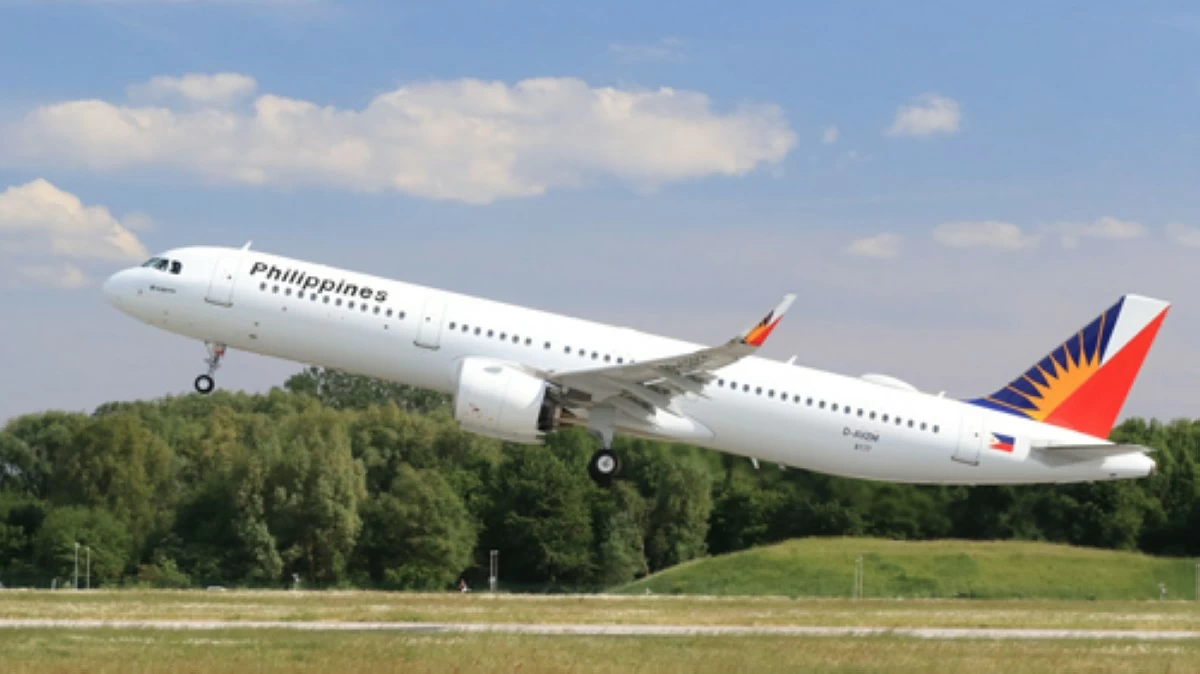
Flag carrier Philippine Airlines (PAL) was named the most punctual carrier in the Asia-Pacific region in 2025, outperforming some of the world’s best airlines in a year marked by strong travel demand and operational challenges.
Based on the 2025 On-Time Performance Review of aviation analytics firm Cirium, PAL registered an on-time arrival performance of 83.12 percent, the highest in the region.
The performance is measured by the percentage of flights that arrive at the gate within 15 minutes of their scheduled arrival time, indicating compliance with assigned airport slot times and reliability for passengers to reach their destinations on schedule.
PAL completed 98.59 percent of its 116,267 flights last year, reflecting its operational consistency despite operating in one of the most challenging aviation markets in the world.
Throughout the year, the airline was left contending not only with local carriers but also with weather disruptions, air traffic congestion, and subpar airport infrastructure in the country.
Cirium even noted that PAL’s performance was “impressive” given its home base of Ninoy Aquino International Airport is prone to congestion.
In its financial report, PAL also took note of higher flying costs this year, coupled with industry-wide supply chain issues and capacity pressures.
Despite these constraints, the airline managed to improve its on-time performance by 7.06 percentage points from its 2024 punctuality rate of 76.06 percent.
This was enough to make PAL the second most improved airline in the world, only behind United Kingdom-based Virgin Atlantic, which improved from 74.01 percent in 2024 to 83.45 percent last year.
PAL Holdings Inc. President and Chief Operating Officer Lucio Tan III said efforts to improve punctuality remain the airline’s core commitment to its millions of passengers.
“This achievement reflects the discipline, professionalism, and teamwork of our entire organization, particularly our frontline teams who operate our flights safely and reliably every day,” said Tan.
He said the carrier is keen on sustaining its punctual performance and overall reliability as part of its vision to be one of the world’s best airlines.
In the region, flag carrier Air New Zealand ranked second with an on-time rating of 79.29 percent followed by Japan’s All Nippon Airways with 78.88 percent, Singapore Airlines at 78.58 percent, and Japan Airlines with 78.25 percent.
Globally, flag carrier Aeromexico was the most punctual airline in 2025, with an on-time arrival performance of 90.02 percent.
Saudia took the second spot with a score of 86.53 percent, with Scandinavian Airlines at third with 86.09 percent. Azul Brazilian Airlines and Qatar Airways were ranked next with 85.18 percent and 84.82 percent, respectively.
ADVERTISEMENT
.most-popular .layout-ratio{ padding-bottom: 79.13%; } @media (min-width: 768px) and (max-width: 1024px) { .widget-title { font-size: 15px !important; } }

{{ articles_filter_1561_widget.title }}

.most-popular .layout-ratio{ padding-bottom: 79.13%; } @media (min-width: 768px) and (max-width: 1024px) { .widget-title { font-size: 15px !important; } }

{{ articles_filter_1562_widget.title }}

.most-popular .layout-ratio{ padding-bottom: 79.13%; } @media (min-width: 768px) and (max-width: 1024px) { .widget-title { font-size: 15px !important; } }

{{ articles_filter_1563_widget.title }}

{{ articles_filter_1564_widget.title }}

.mb-article-details { position: relative; } .mb-article-details .article-body-preview, .mb-article-details .article-body-summary{ font-size: 17px; line-height: 30px; font-family: "Libre Caslon Text", serif; color: #000; } .mb-article-details .article-body-preview iframe , .mb-article-details .article-body-summary iframe{ width: 100%; margin: auto; } .read-more-background { background: linear-gradient(180deg, color(display-p3 1.000 1.000 1.000 / 0) 13.75%, color(display-p3 1.000 1.000 1.000 / 0.8) 30.79%, color(display-p3 1.000 1.000 1.000) 72.5%); position: absolute; height: 200px; width: 100%; bottom: 0; display: flex; justify-content: center; align-items: center; padding: 0; } .read-more-background a{ color: #000; } .read-more-btn { padding: 17px 45px; font-family: Inter; font-weight: 700; font-size: 18px; line-height: 16px; text-align: center; vertical-align: middle; border: 1px solid black; background-color: white; } .hidden { display: none; }
function initializeAllSwipers() { // Get all hidden inputs with cms_article_id document.querySelectorAll('[id^="cms_article_id_"]').forEach(function (input) { const cmsArticleId = input.value; const articleSelector = '#article-' + cmsArticleId + ' .body_images'; const swiperElement = document.querySelector(articleSelector); if (swiperElement && !swiperElement.classList.contains('swiper-initialized')) { new Swiper(articleSelector, { loop: true, pagination: false, navigation: { nextEl: '#article-' + cmsArticleId + ' .swiper-button-next', prevEl: '#article-' + cmsArticleId + ' .swiper-button-prev', }, }); } }); } setTimeout(initializeAllSwipers, 3000); const intersectionObserver = new IntersectionObserver( (entries) => { entries.forEach((entry) => { if (entry.isIntersecting) { const newUrl = entry.target.getAttribute("data-url"); if (newUrl) { history.pushState(null, null, newUrl); let article = entry.target; // Extract metadata const author = article.querySelector('.author-section').textContent.replace('By', '').trim(); const section = article.querySelector('.section-info ').textContent.replace(' ', ' '); const title = article.querySelector('.article-title h1').textContent; // Parse URL for Chartbeat path format const parsedUrl = new URL(newUrl, window.location.origin); const cleanUrl = parsedUrl.host + parsedUrl.pathname; // Update Chartbeat configuration if (typeof window._sf_async_config !== 'undefined') { window._sf_async_config.path = cleanUrl; window._sf_async_config.sections = section; window._sf_async_config.authors = author; } // Track virtual page view with Chartbeat if (typeof pSUPERFLY !== 'undefined' && typeof pSUPERFLY.virtualPage === 'function') { try { pSUPERFLY.virtualPage({ path: cleanUrl, title: title, sections: section, authors: author }); } catch (error) { console.error('ping error', error); } } // Optional: Update document title if (title && title !== document.title) { document.title = title; } } } }); }, { threshold: 0.1 } ); function showArticleBody(button) { const article = button.closest("article"); const summary = article.querySelector(".article-body-summary"); const body = article.querySelector(".article-body-preview"); const readMoreSection = article.querySelector(".read-more-background"); // Hide summary and read-more section summary.style.display = "none"; readMoreSection.style.display = "none"; // Show the full article body body.classList.remove("hidden"); } document.addEventListener("DOMContentLoaded", () => { let loadCount = 0; // Track how many times articles are loaded const offset = [1, 2, 3, 4, 5, 6, 7, 8, 9, 10]; // Offset values const currentUrl = window.location.pathname.substring(1); let isLoading = false; // Prevent multiple calls if (!currentUrl) { console.log("Current URL is invalid."); return; } const sentinel = document.getElementById("load-more-sentinel"); if (!sentinel) { console.log("Sentinel element not found."); return; } function isSentinelVisible() { const rect = sentinel.getBoundingClientRect(); return ( rect.top < window.innerHeight && rect.bottom >= 0 ); } function onScroll() { if (isLoading) return; if (isSentinelVisible()) { if (loadCount >= offset.length) { console.log("Maximum load attempts reached."); window.removeEventListener("scroll", onScroll); return; } isLoading = true; const currentOffset = offset[loadCount]; window.loadMoreItems().then(() => { let article = document.querySelector('#widget_1690 > div:nth-last-of-type(2) article'); intersectionObserver.observe(article) loadCount++; }).catch(error => { console.error("Error loading more items:", error); }).finally(() => { isLoading = false; }); } } window.addEventListener("scroll", onScroll); });

Sign up by email to receive news.