






Manila Bulletin
 Philippines
National
Marcos signs P6.793-T GAA for 2026; says budget answers calls for accountability after crises, corruption
Philippines
National
Marcos signs P6.793-T GAA for 2026; says budget answers calls for accountability after crises, corruption
Philippines
National
Marcos signs P6.793-T GAA for 2026; says budget answers calls for accountability after crises, corruption
Marcos signs P6.793-T GAA for 2026; says budget answers calls for accountability after crises, corruption
Published Jan 5, 2026 10:57 am
|
Updated Jan 5, 2026 01:42 pm


At A Glance
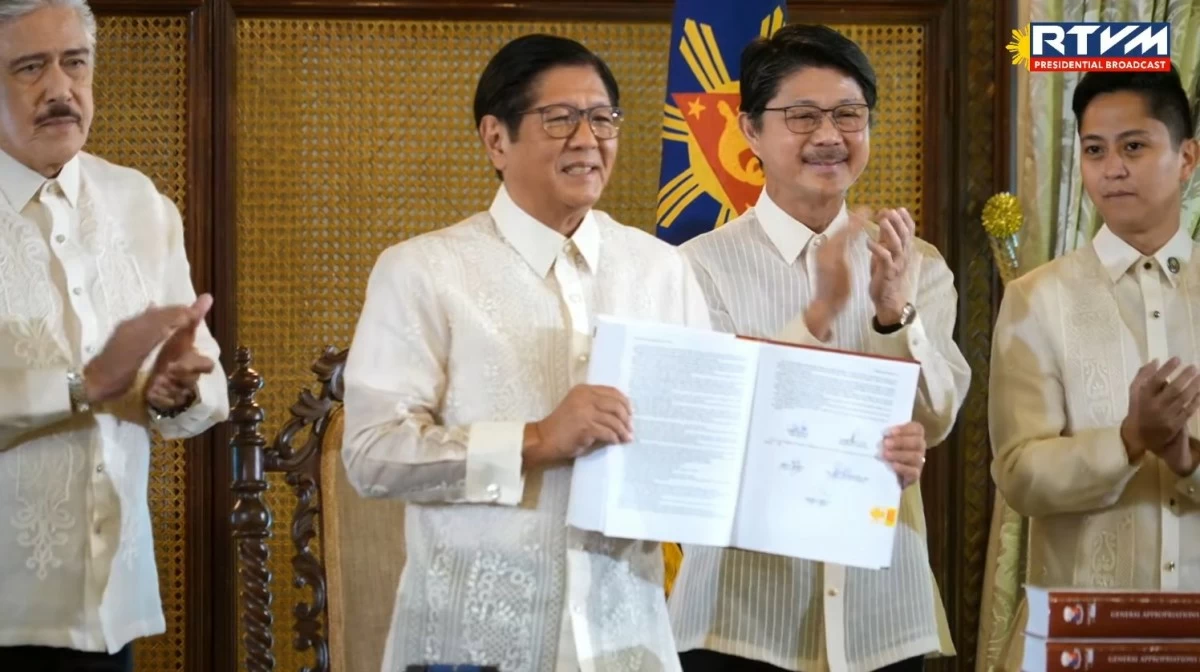
President Ferdinand 'Bongbong' Marcos Jr. (RTVM)
President Marcos said the 2026 national budget is meant to restore public trust and enforce accountability after a year marked by disasters, economic strain, and the exposure of corruption in government.
Speaking during the signing of the P6.793-trillion 2026 General Appropriations Act (GAA) in Malacañan on Monday, Jan. 5, the President said the challenges of 2025 made it clear that “real change could no longer wait.”
He added that the government must now move forward with “difficult but needed reforms in governance” to rebuild trust and deliver an honest and effective government to Filipinos.
“Let us take this opportunity to start moving forward with difficult but needed reforms in governance, to rebuild the trust in us, to strengthen accountability, and deliver an honest and effective government to the Filipinos,” he said.
“Magtatrabaho ang administrasyong ito upang mapabuti ang sistema, mapalakas ang pananagutan, at matuldukan ang katiwalayan (This administration will work to improve the system, strengthen accountability, and put an end to corruption),” he added.
According to Marcos, the 2026 budget is a critical part of his administration’s medium-term development plan and comes at a “critical juncture” for sweeping reforms in politics and governance.
“Walang bawas, walang kulang (No deductions, nothing missing),” he said, referring to his directive to ensure that public funds and assistance reach their intended beneficiaries without patronage.
“Ang bawat programa at proyekto ay dadaan sa masusing pagsusuri upang masiguro na ito ay may malinaw na benepisyo sa mamamayan, lalo na sa sektor na higit na nangangailangan (Every program and project will undergo thorough review to ensure that it has clear benefits for the people, especially for the sectors that need it most),” he added.
The Chief Executive likewise assured the public that their concerns over the budget were heard, saying, “Naririnig namin po kayo (We hear you),” as he vowed stricter scrutiny of programs and projects.
“Kaisa ninyo ako sa pagnanais na masiguro ang bawat pisong buwis ay mapupunta sa tamang proyekto at sa tunay na pangangailangan ng ating taong bayan (I share your desire to ensure that every peso of taxes goes to the right projects and the real needs of our people),” he said.
“Sa national budget ng 2026, malinaw ang direksyon ng inyong pamahalahan. Magiging mas masinop, mas maingat, mas responsable kami sa paggastos ng pondo ng bayan (In the 2026 national budget, the direction of your government is clear. We will be more prudent, more careful, and more responsible in spending public funds),” he added.
In a press briefing following the budget signing, Executive Secretary Ralph Recto assured the public that the 2026 GAA is free from pork barrel.
“Hindi lang basta-basta pinirmahan kung hindi sinuri, inupuan, at pinag-aralan nang mabuti (It wasn’t just signed. It was studied thoroughly),” he said.
“Sa tingin namin pork barrel-free. Hindi naman pwede makialam ang legislator pagdating ng executing the budget. Purely executive function na 'yan (We believe it’s pork barrel-free. Legislators cannot meddle into how the budget will be implemented),” he added.
Education, health, social protection
The President said the 2026 budget prioritizes investments that directly benefit Filipinos, including education, health, social protection, and job creation.
Education received the largest share at more than P1.34 trillion, which Marcos said would fund new teaching and non-teaching positions, teacher promotion and reclassification, and classroom construction nationwide.
He said the 2026 GAA also provides the largest health sector budget in Philippine history at P448.125 billion to expand access to universal health care. Another P1 billion has also been allocated to the Department of Health's Zero Balance Billing Program in local government hospitals, covering inpatient services in basic accommodation.
Marcos said the budget strengthens PhilHealth and funds programs aimed at reducing out-of-pocket health expenses for Filipino families.
Food security, social services
The President said more than P297 billion was allocated to agriculture to modernize supply systems and support farmers and fisherfolk, including investments in farm-to-market roads.
He also highlighted over P270 billion for social services, which he said would help move the country away from short-term relief toward inclusive and sustained growth.
Marcos said the administration aims to achieve a single-digit poverty rate by 2028 through targeted and rationalized flagship programs.
Execution and oversight
President Marcos stressed that passing the national budget is “only the beginning,” saying the greater challenge lies in ensuring proper execution and true accountability.
He said the government would strictly enforce rules barring politicians from distributing cash and financial assistance to prevent patronage.
The President also said certain budget provisions would be implemented in line with existing laws and regulations to ensure fiscal discipline, noting that some items were adjusted to protect the public interest.
He called on Filipinos to remain vigilant and engaged, urging them to take part in monitoring government spending as part of a functioning democracy.
“My administration will enforce these safeguards without exception to serve the public interest and to advance our national development goals,” Marcos said.
“Kasama ninyo kami sa layuning tiyakin na ang budget ng bayan ay para sa bayan (We are with you in ensuring that the people’s budget is truly for the people),” he added.