






Manila Bulletin
 Business
Trade & Industry
Is 'Build Better More' agenda derailed? The 2025 transport year in review
Business
Trade & Industry
Is 'Build Better More' agenda derailed? The 2025 transport year in review
Business
Trade & Industry
Is 'Build Better More' agenda derailed? The 2025 transport year in review
Is 'Build Better More' agenda derailed? The 2025 transport year in review
Published Jan 5, 2026 05:19 am
|
Updated Jan 5, 2026 01:53 pm


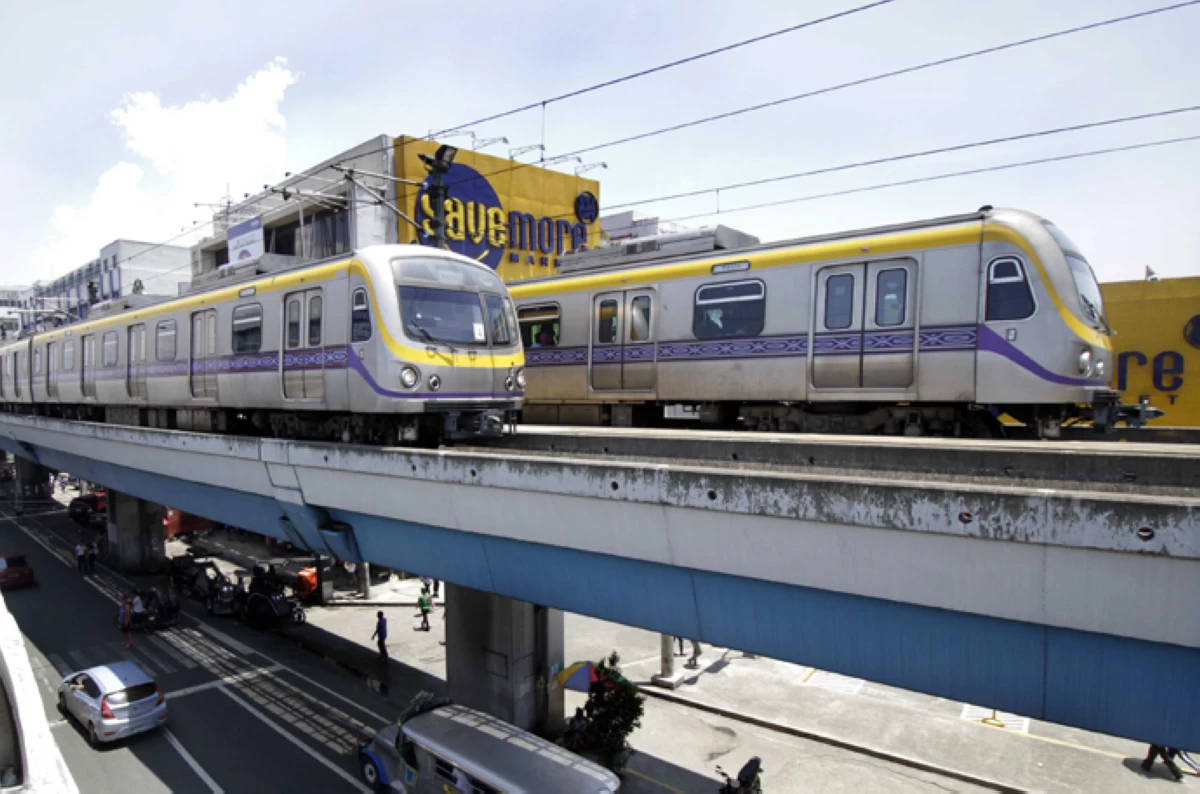
All things considered, 2025 was a transition period for the transportation sector as the government sought to shift away from car-centric planning toward a more commuter-friendly model. This shift has been defined by two leadership changes, ambitious plans, and a lot more waiting.
When President Ferdinand “Bongbong” Marcos Jr. was elected in 2022, he essentially carried over the public infrastructure agenda of the previous administration, rebranding the previous Build! Build! Build! (BBB) program of former president Rodrigo Duterte as the Build Better More program, or BBM for short.
Under his administration, Marcos vowed to continue and expand Duterte’s agenda, saying that: “We shall confidently build on this firm foundation established by my predecessor.”
This meant ordering the Department of Transportation (DOTr) to “move with full speed ahead in improving the railway system, modernizing existing airports and seaports, and connecting [the country’s] many islands.”
It was a historic moment for the sector, as big-ticket transport projects are often vulnerable to disruption during leadership transitions, with successive administrations seeking to leave their own distinct mark on the industry rather than carry forward those already underway.
But as quickly as Marcos’ relationship with Duterte went off the rails last year, the question now is: Is the transport sector still on track?
First stop: Bautista station
At the start of 2025, the DOTr is already off to a bad start after its proposed budget of ₱180.14 billion was cut by more than half to ₱87.24 billion. At the time, then-Transportation Secretary Jaime Bautista said the reduction would have little effect on ongoing projects, as the country’s development partners funded most.
Bautista, a former president and chief operating officer of flag carrier Philippine Airlines (PAL), was tapped to lead the DOTr in June 2022, with one of his main agenda being the privatization of the country’s major transport infrastructure.
He was largely successful in this regard, particularly with the private sector takeover of Bohol-Panglao International Airport, Laguindingan International Airport, and Ninoy Aquino International Airport (NAIA), all of which were completed in 2024.
Bautista also turned the spotlight to land transport, marked by the groundbreaking ceremony for the Ayala-led Taguig City Integrated Terminal Exchange (TCITX) in February 2025, as well as plans to privatize the operations of the EDSA Busway to refute assertions that the government intended to remove it.
That momentum, however, came to a sudden stop when Bautista resigned from the DOTr in the same month due to health reasons. While the move was abrupt, many viewed it as an expected outcome, reportedly stemming from his failure to bring major railway projects back on course toward their supposed deadlines.
Projects such as the Metro Manila Subway Project (MMSP) and the North-South Commuter Railway (NSCR) struggled to make substantial progress under the Bautista-led DOTr, primarily due to right-of-way (ROW) issues. While the administration denied that Bautista’s exit was performance-related, his departure was seen as a much-needed reset to keep the government’s transport projects on track.
Second stop: Dizon station
President Marcos was quick to find a replacement for Bautista, plucking Vince Dizon from the private sector and naming him the transportation secretary, tasked with breathing new life into the development of what was then 69 flagship projects under the Build Better More program.
Dizon was no stranger to public service, having served as Duterte’s presidential adviser for flagship programs and projects under the BBB program, as well as leading the state-run Bases Conversion and Development Authority (BCDA).
His first order of business from Malacañang was to expedite ongoing projects and begin work on those in the pipeline. The overarching goal, according to Dizon, was to ease the commuting experience of Filipinos who have long wasted hours of valuable time stuck in traffic.
Recognized by many as an “action man,” Dizon wasted no time in prioritizing passengers, rolling out changes that made travel in the capital region and elsewhere more convenient.
During his first press conference with transport beat reporters, he announced plans to overhaul the EDSA Busway—from building dedicated concourses separate from the Metro Rail Transit Line 3 (MRT-3), to expanding the presence of traffic enforcers, and installing timers at each station.
There, he also signaled openness to extending the operating hours of Metro Manila’s railways, which was eventually implemented, along with increases in discounts for senior citizens and students to 50 percent and the rollout of a new cashless payment system on the MRT-3.
In the months that followed, the secretary ramped up these efforts, including canceling the contract for the Common Station due to delays, imposing fines on airline booking platforms for high fares, and reviving the Martial Law–era Love Bus, among other initiatives.
Despite these gains, the same issues that plagued his predecessor persisted under Dizon’s helm, with ROW constraints remaining a major thorn to the construction of large-scale projects. But—perhaps learning from past mistakes—he created a new office within the DOTr to address these concerns, which helped accelerate ROW acquisition, especially with the MMSP.
Dizon also doubled down on the administration’s privatization drive, which he viewed as crucial to ensuring efficient transport services. Among the projects he floated for public-private partnerships (PPP) deals were the MRT-3, Light Rail Transit Line 2 (LRT-2), and a number of regional airports.
Moreover, he fought for higher funding for the DOTr to fast-track the administration’s priority projects, seeking to raise the 2025 budget of ₱87.24 billion to ₱196.28 billion in 2026. The additional funding was expected to bolster the agency’s foreign-assisted projects.
Just as Dizon’s momentum in steering the transport sector was gaining full steam, it came to a screeching halt when Marcos tapped him on Aug. 31 last year to head the Department of Public Works and Highways (DPWH), following the resignation of then-Secretary Manuel Bonoan amid the corruption scandal involving flood control projects.
With such a sudden change, could this derail the progress the government has long pursued in the transportation sector?
Third stop: Lopez station
To ensure that efforts to prioritize commuters and accelerate project delivery remain on track, Dizon handpicked seasoned DOTr official Giovanni Lopez as his successor, whom President Marcos appointed as the acting transportation secretary.
An accountant and lawyer by profession, Lopez previously served as undersecretary for administration, finance, and procurement under Dizon. He has held key positions in the department over the years, including serving as chief of staff to Duterte-era DOTr chief Arthur Tugade.
Right at the get-go, Lopez disclosed that the department is expected to complete all remaining ROW acquisitions for MMSP, with completion set for the second quarter of 2026. He also forged a partnership with the Office of the Solicitor General (OSG) to resolve ROW issues for both the MMSP and NSCR.
For NSCR, the DOTr is close to securing a PPP partner after 11 rail operators took part in the pre-bid conference for its ₱229-billion concession deal. Lopez also marked the first tangible progress in the long-delayed Mindanao Railway Project (MRP) by acquiring ROW along the railway’s alignment.
To further improve the commuting experience, Lopez implemented measures such as free-ride initiatives on Metro Manila rail lines, appealed to airlines to lower fares, and mandated that key agency officials commute at least once a week to spur further reforms.
The push to privatize transport infrastructure remained strong, though it was also questioned after business titan Manuel V. Pangilinan disclosed that Metro Pacific Investments Corp. (MPIC) may exit its stake in the private operator of LRT-1.
Light Rail Manila Corp. (LRMC) is in a weak financial position, primarily due to unfulfilled government obligations over the past decade. Lopez has since said that the government aims to settle its outstanding obligations this year through budgetary funding.
Based on the bicameral conference committee report on the 2026 national budget, the DOTr will receive a higher allocation of ₱136.79 billion for the year, which is 30 percent lower than its requested ₱196.28 billion.
This begs the question: if the transport sector truly is a priority for the government, why does its budget remain shortchanged?
There also appears to be little urgency within the administration regarding Lopez’s status as DOTr chief. After all, he has been an “acting” secretary for over four months.
Granted, lawmakers have been occupied in recent months with budget deliberations, but is there an urgency to finally settle the DOTr leadership? Or will there be another round of musical chairs on the horizon?
For now, these questions remain unanswered.
But with deadlines for big-ticket projects just around the corner, the administration must have answers in tow to prove that it is indeed building better and building more—or else the transport sector could once again find itself derailed and directionless.