







To disenthrall, and my New Year wish
Published Jan 4, 2026 12:05 am
|
Updated Jan 3, 2026 06:27 pm


HEARD IT THROUGH THE GRIPE-VINE
During his 2010 TED Talks of “Bring on the learning revolution,” the late Sir Ken Robinson, knighted in 2003 for services to the arts, brought up a speech that Abraham Lincoln had given to the US Congress in 1862. Sir Robinson was speaking to an American audience, and prefaced the lines by saying he thought they would appreciate the irony of how an Englishman was talking “revolution,” and referencing a US president. A British author, and international advisor on education, non-profits, and the arts, Sir Robinson passed away in 2020; having advised in the UK, Hong Kong, and Singapore.
I bring up the sentences that were quoted because if they were so appropriate to be recited back then, what more today – as we enter a New Year and seek legal and moral justice, redemption, enlightenment, retribution, and the proverbial light at the end of this “corruption tunnel.” And please don’t tell me we’re already suffering from protest fatigue, or that this is old news. As that is precisely what those with something to hide, or have vested interests to protect the status quo, are counting on.
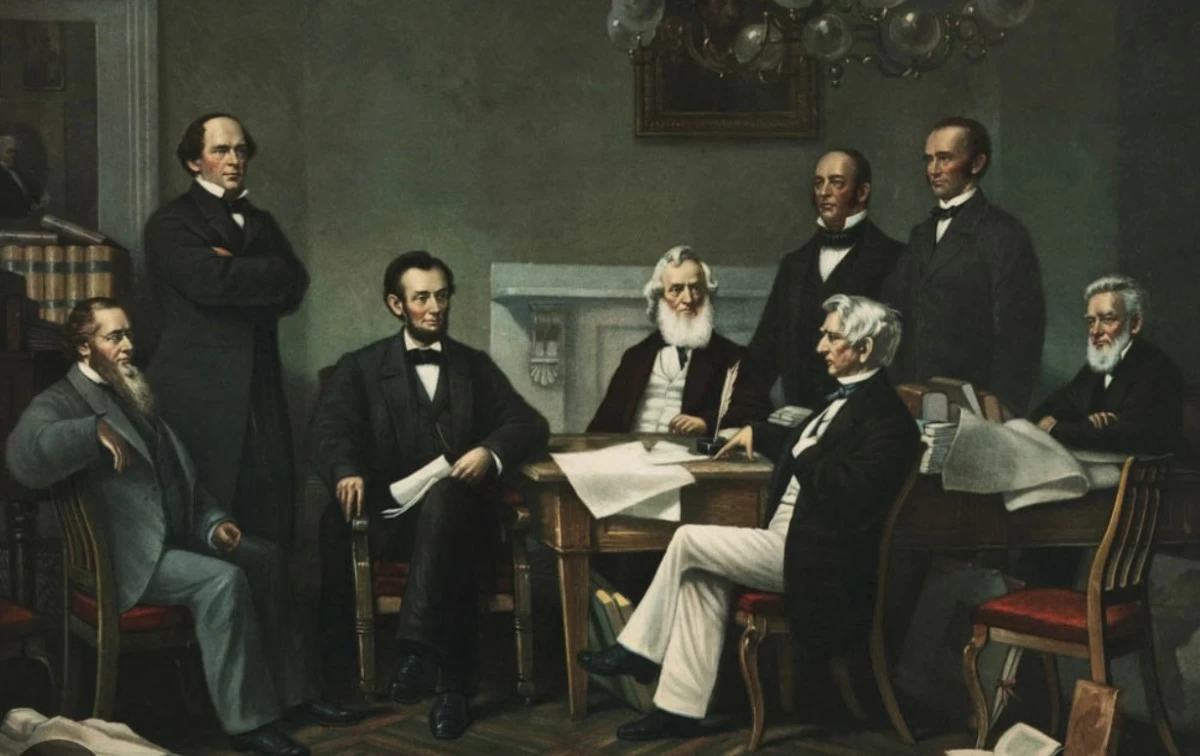
ABRAHAM LINCOLN, with his Cabinet in 1862
Back in 1862, Honest Abe declaimed, “The dogmas of the quiet past are inadequate to the stormy present. The occasion is piled high with difficulty, and we must rise with the occasion. As our case is new, so we must think anew, and act anew. We must disenthrall ourselves, and then we shall save our country.” While Lincoln uttered these words to set the stage and rally support for his Emancipation Proclamation to end slavery, and Sir Robinson was using these same words in the context of engendering a revolution in learning and education; ponder on how it perfectly applies to what we are facing today.
First, along with Sir Robinson, I like how it’s about rising “with” the occasion – it’s not just “to” the occasion for some momentary glimmer; but evolving along with the occasion, precipitating and sustaining the change that we are hoping for.
Then I love the use of the words “anew” and “disenthrall.” Repetition always helps emphasize something, helps make it stick in our memory banks – and so Lincoln forecasts that as this case is new, we need also think “anew,” and act “anew” – reminding us that it’s not just a matter of support or belief, but also acting on it to ensure it happens, and becomes a new standard. Corruption-free and transparency are the ideals we now clamor for and the reality is it won’t happen overnight. We have to be ready for whatever small gains are made, make sure they become the operating standard and we don’t slide back, and have trust in the legal process.
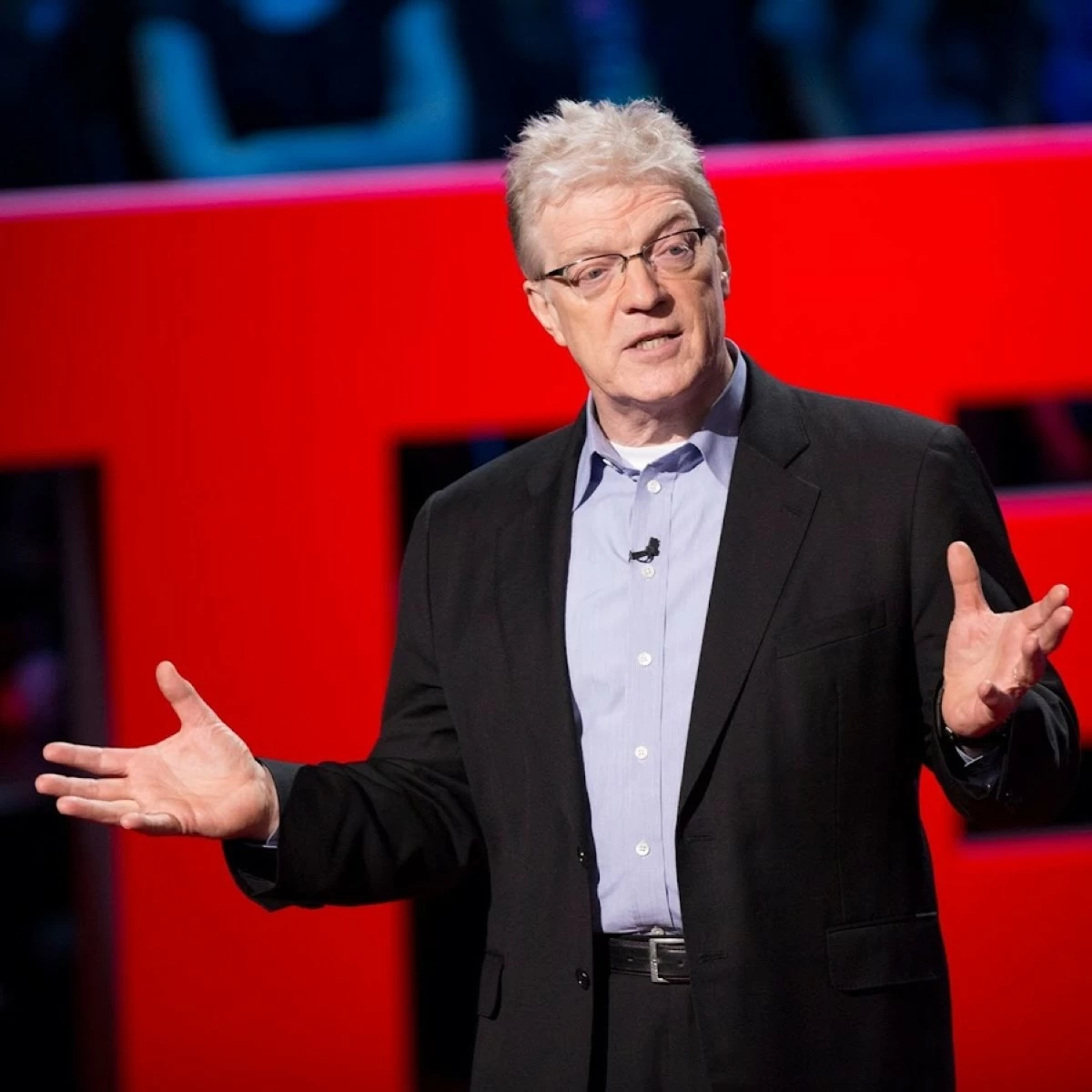
THE LATE Sir Ken Robinson; renowned author, orator, and advisor on education and the arts, at one of his TED Talks appearances
We can only surmise that it took years and even decades, of this insidious practice of insertions and corruption to be standard operating procedure before the “players” felt they could ratchet it up to a level that became the norm, even if this norm was so brazen and shameless. This will not be dismantled in one fell swoop; and it isn’t even isolated to one government department. If you describe the prevailing “climate” of the running of our government as one marked by rampant corruption and plunder, then we have our own form of “climate crisis.” And in our case, sadly, it has to do with the abuse of human resources.
Then take to heart what Lincoln said about how we “must disenthrall.” For me, this refers to being held captive by assumptions that may have worked or sufficed in the past, and are still influencing the words and thoughts of today. This is super important, as it’s a call to radicalize our thinking – to forego what so often becomes the excuse, the inertia, of how things don’t change in this country – or how we equate bringing back the previous as change. I’m sorry, but that only makes things cyclical; and isn’t substantive change.
With the years I’ve spent in various media platforms, I’ve been witness to how this inertia is so contagious, and creeps into different industries; so why not in government offices and the political sector as well. Whenever I hear the excuse of that’s how we are used to doing things, or the fear of change is evident, then I know we’re in trouble. Yes, not all change is automatically good, and we need to evaluate. But when something is obviously not going right, to be obstinate and insist that the next person can be the one to change, only leads to the sad state of “nothing will happen.” We all need to be “the solution.”
When Sir Robinson was giving his TED Talk, he was speaking about necessary changes in the education landscape. His three main points were the need to foster diversity by offering a broad curriculum, to promote curiosity through creative teaching, and to focus on awakening creativity through alternative didactic processes that put less emphasis on standardized testing. It was to reject any system that only encourages conformity, compliance, and standardization; and to embrace creative approaches. His other lecture, “Do schools kill creativity,” has been seen by an estimated 380 million people in 160 countries.
This 2026, let’s remember and execute Lincoln’s words, and appreciate the points raised by Sir Robinson. The Filipino does deserve better – but we have to claim it. We can live with “hope” – but “hope” isn’t gift-wrapped or drops from the sky, we have to earn it.