






Manila Bulletin
 Philippines
National
PH Embassy in Iraq launches Arabic translation of Rizal's Noli Me Tangere
Philippines
National
PH Embassy in Iraq launches Arabic translation of Rizal's Noli Me Tangere
Philippines
National
PH Embassy in Iraq launches Arabic translation of Rizal's Noli Me Tangere
PH Embassy in Iraq launches Arabic translation of Rizal's Noli Me Tangere
Published Jan 4, 2026 09:32 am
|
Updated Jan 4, 2026 01:54 pm


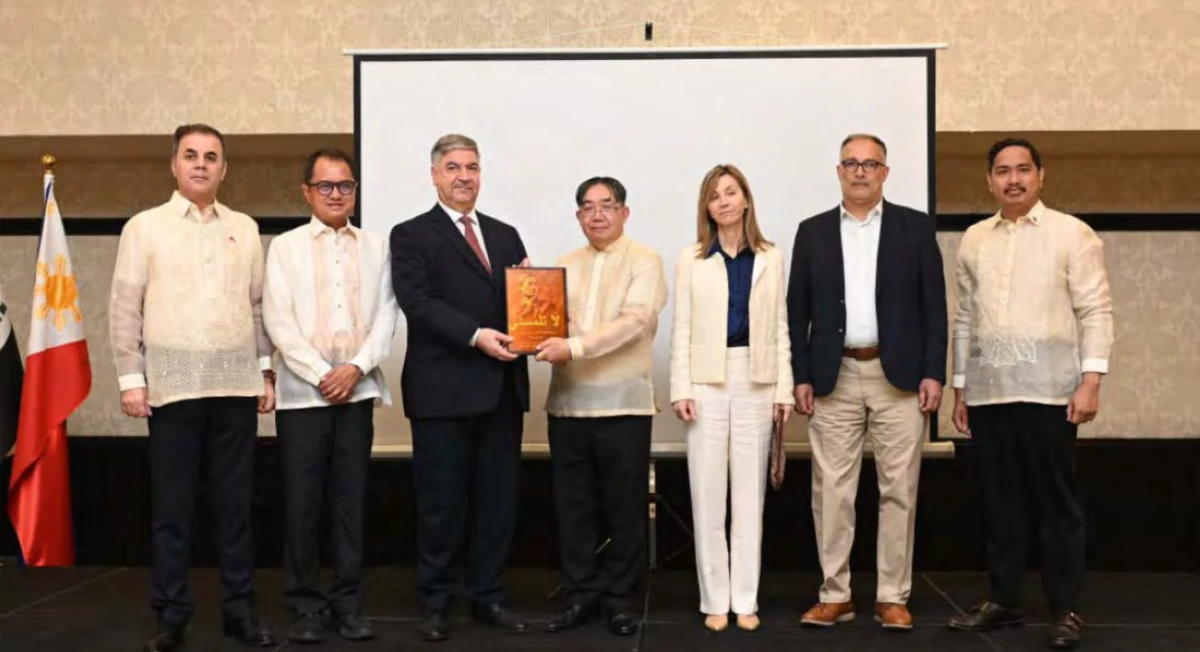
Philippine Embassy in Iraq/Facebook
The Philippine Embassy in Iraq has launched the Arabic translation project of Noli Me Tangere as part of activities marking 50 years of diplomatic relations between the Philippines and Iraq.
In a statement, the embassy said the project was formally introduced during a reception held on Dec. 10, 2025, led by Philippine Ambassador to Iraq Charlie Pacaña Manangan.
The embassy said the initiative marks the first time Noli Me Tangere has been translated into Arabic, a language spoken by over 400 million people worldwide.
According to the Philippine mission, the launch was attended by Iraqi government officials, members of the diplomatic corps, academics, and representatives of cultural heritage groups in Iraq.
The project was conceived in 2024 by Ambassador Manangan, a member of the Knights of Rizal, with the embassy’s cultural diplomacy team, led by Third Secretary and Vice Consul Anthon Cayaco.
The Arabic translation was completed by Prof. Dr. Reyadh Mahdi Jasim Al-Najjar of the University of Baghdad, the embassy said.
Funding and institutional support for the project were provided by the Philippine Embassy in Iraq, the Department of Foreign Affairs’ Office of Cultural Diplomacy, and the National Historical Commission of the Philippines.
A manuscript of the Arabic translation was formally turned over to the Iraqi government, represented by Deputy Foreign Minister for Political Planning Affairs Dr. Hisham Al-Alawi, during the event.
The handover was witnessed by Spanish Ambassador to Iraq Alicia Rico Perez del Pulgar, Philippine Honorary Consul to Kurdistan Falah Anwar Kahrur, and International Container Terminal Services, Inc. (ICTSI) Basra Gateway Terminal chief executive officer Romeo Salvador.
The embassy said copies of the Arabic translation are expected to be made available to the public in 2026.
Filipino hero Dr. Jose Rizal was a novelist and polymath whose writings helped inspire the Philippine revolution against Spanish colonial rule in the late 19th century.
Published in 1887, Noli Me Tangere exposed abuses by Spanish colonial authorities and the friars through the story of Crisostomo Ibarra and is considered one of the most important works in Philippine literature.
The novel has previously been translated into more than 40 languages, including English, French, German, Japanese, and Chinese, with the Arabic edition adding to its growing list of foreign-language versions.