







New year, new driving habits
By Inigo Roces
Published Jan 3, 2026 12:05 am
|
Updated Jan 2, 2026 06:12 pm


EDITORS DESK
Chances are, many of you will agree with me when I say that 2025 was not a good year to be driving. Traffic has not eased and has only seemed to worsened throughout the holidays. It was yet another year of viral road rage videos. Of course, the year also had its fair share of gruesome accidents.
With more coding-exempt hybrids and EVs set to join the road, some serious rehabilitation planned for major roads, and no real concrete solution to our flooding woes yet, it’s evident there’s little we can do about the worsening traffic. The best we can do is adapt to it.
The best way we can make it somewhat more palatable is not to contribute to the problems on the road. We can do this by being a conscientious driver. To be one, here are some tips to keep in mind.
Always signal
This goes without saying, but many drivers seem to think that signaling only applies when making 90-degree turns. Truth be told, our cars and motorcycles come with many ways to signal our intentions: turn signals, high beams, the horn, and hazard lamps.
Use these tools to more clearly broadcast your intentions. Use turn signals not just to make right angle turns, but also when changing lanes or pulling out of parking spaces.
Use high beams to let other vehicles know you are there. Flash your lights when a vehicle appears to be encroaching into your lane, or to signal to pedestrians and other cars that you’re coming through.
The horn may be seen as an aggressive communication tool, but when pressed very briefly, it also serves as a vital signal. Learn how to press it (tap the horn logo lightly) to let out a short beep. This can be used similarly to flashing high beams.
Finally, use the hazard lamps. Not during heavy downpours; that’sactually dangerous and highly discouraged. Rather, use it when you are parked temporarily in a place where you shouldn’t be parked, or even when backing up.
Don't tailgate
Many crashes, particularly on highways, could have been avoided if those involved were not tailgating. It’s important to maintain a safe distance from the car ahead, especially when at highway speeds. After all, the faster you go, the more distance you’ll need to safely slow down without hitting the car in front of you.
It’s prudent to maintain this mindset even when driving in the city. A good rule of thumb is to keep a car length away for every 200-km/h increase in speed (e.g. one car length away at 20-km/h, two car lengths away to 40-km/h, etc.). If you have trouble measuring car lengths, watch out for stationary objects. Count in seconds how long it takes for the car in front of you to pass a stationary object like a lamppost until that same lamppost passes you. Add a second for each 20-km/h increase in speed.
We should stop worry about tailgating to avoid “losing our place” in traffic and focus more on keeping far enough away to avoid crashes. Let the tailgating car in front crash into another car and deal with it.
Keep RFIDs loaded
This good habit can help avoid any altercations and angering fellow motorists on the tollways. Keep better track of your RFID balance and keep each loaded with at least ₱1,000, or ₱2,000 if you have a single sticker for both AutoSweep and EasyTrip tollways. This amount is usually more than enough to get from one end of an expressway to its other end, without issue.
If you’re not sure how much balance you have, try downloading the apps of each of these respective tollway operators. Both their apps have tools that can show you your RFID balance in real time. Reloading these RFIDs can easily be done with e-wallets like GCash or Maya or even the online banking apps of those of BPI or BDO and many other banks. It’s better to keep it loaded and ready to go rather than entering an expressway only to be held up at the tollgate.
Don't drive angry
Finally, keep your cool and learn to let go of other motorists' mistakes. Nobody is perfect and chances are, we’ve made mistakes behind the wheel, too. After all, you’re not a traffic enforcer, so it’s not your job to punish them.
If you’ve been cut off, nearly hit, or was on the receiving end of some bad driving, learn to let it go. Don’t take it upon yourself to teach the other driver a lesson. If he or she is angry too, this could trigger a back and forth situation of cutting-off and brake-checking, eventually leading to an accident or road rage. It is not worth it.
If their driving bothers you so much, install a dashcam, download footage of the incident, and upload it to social media later on. Perhaps the LTO will see it and issue a show cause order. But never take enforcement into your own hands.
Hopefully, these tips will make your traffic experience much more palatable and free of incident in 2026.
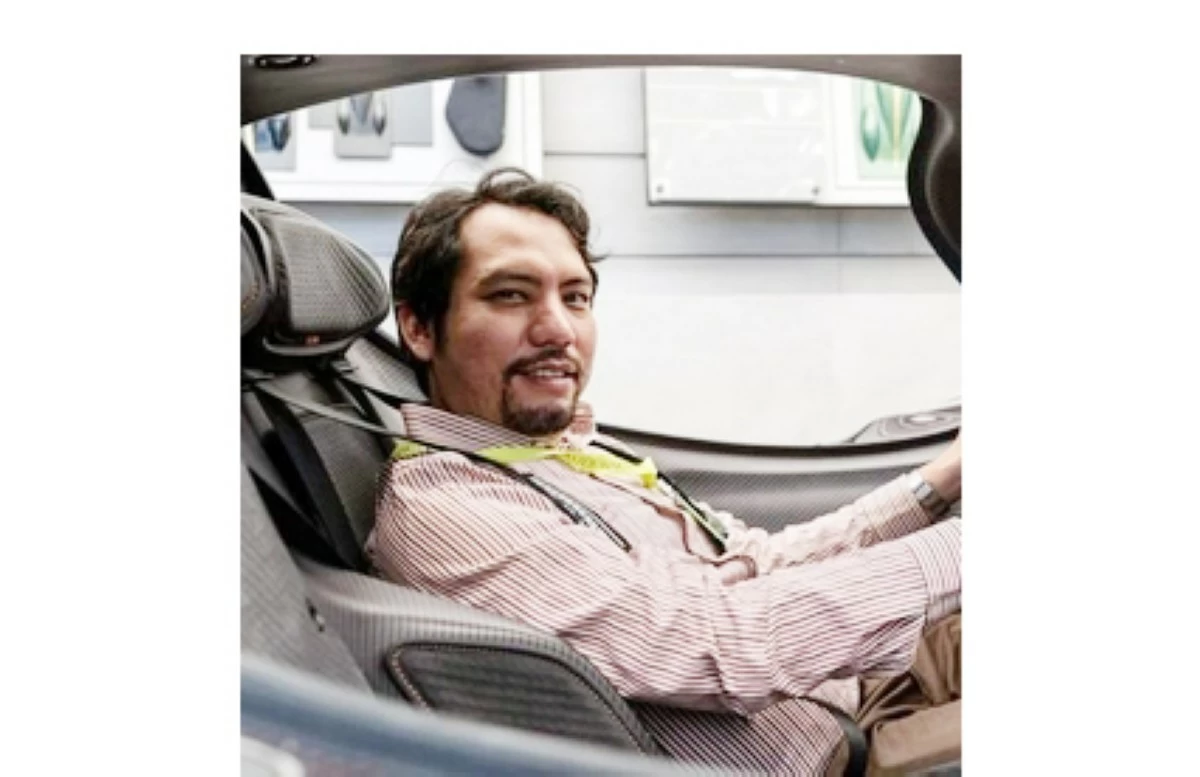
(Iñigo S. Roces is the editor of Manila Bulletin’s Motoring section.)