

ADVERTISEMENT

2026 kids and teens slang guide: 7 words every parent should know

From 6‑7 to rage bait, find out the meaning, origin, and examples of the words and phrases teens and Gen Alpha kids are using online and at school

Published Jan 3, 2026 10:38 am
Keeping up with today’s children can feel like decoding a new language. From social media trends to school hallways, Gen Alpha pre-teens and Gen Z teens are using words like 6‑7, aura farming, and rage bait every day.
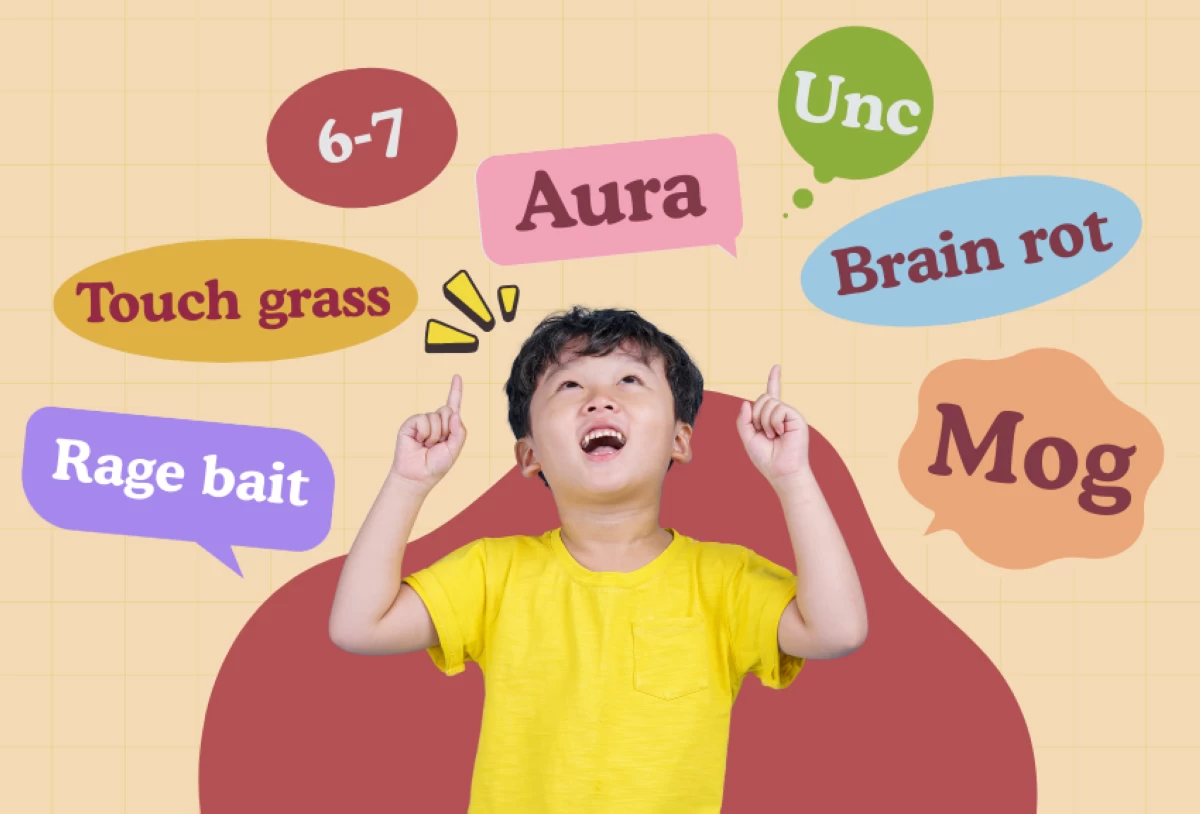
This parent-friendly guide explains the origin and meaning, along with examples of the 2026 slang your kids are actually saying, so you can understand, laugh, and even join the conversation.
1. 6‑7 (six‑seven)
Origin: This viral slang was everywhere in 2025. Inspired by rapper Skrilla’s song “Doot Doot (6 7),” its catchy, rhythmic hook had no literal meaning, but teens and Gen Alpha immediately adopted it.
Meaning: 6‑7 can mean anything — “so-so,” “maybe,” “I don’t know,” or sometimes, nothing at all. Its versatility, combined with the hand gesture (palms up, moving up and down), made it irresistible to younger users. Dictionary.com named it “Word of 2025” for this reason.
Example:
Parent: “Did you finish your homework?”
Child: “6-7”
2. Aura or aura farming
Origin: The word aura isn’t new, but teens have now combined it with the gaming term farming (repeating actions to gain points or rewards), creating a new phrase.
Meaning: Aura refers to a person’s vibe, presence, or energy. Aura farming is the act of deliberately creating moments—whether an outfit, a social media post— to look cool or make an impression.
Example: “Walking into school with those sneakers? That’s pure aura farming.”
3. Unc
Origin: Short for “uncool” or “uncle,” this word has been in Gen Alpha’s dictionary since 2023. It is now used to describe anyone who seems out of touch.
Meaning: Anyone or anything that is out of style, outdated, or not cool.
Example: “Dad trying to dance to that new song? Totally unc.”
4. Brain rot
Origin: Though the phrase existed long before, it gained traction among teens in 2024 to 2025.
Meaning: The mental fog or dullness caused by consuming too much low-quality or addictive content.
Example: “After binge-watching funny videos all morning, I think I have total brain rot.”
5. Mog
Origin: Derived from the acronym AMOG (Alpha Male Of Group) and popularized online by mid-2020s teen culture, it quickly spread in 2025 through gaming, social media, and meme culture.
Meaning: To mog someone is to outperform or outshine them—in style, skills, or social presence.
Example: “She mogged everyone in the school talent show with that dance routine.”
6. Touch grass
Origin: This term first emerged in online gaming culture in 2016 and surged in popularity among teens between 2023 and 2025, with Merriam‑Webster officially recognizing it in 2025.
Meaning: It’s a humorous way of telling someone to step away from the screen, get outside, and reconnect with the real world.
Example: “You’ve been on your phone for hours. Go touch grass for a bit.”
7. Rage bait
Origin: This term became widely used online to describe content designed to provoke anger and grab attention.
Meaning: It refers to posts, videos, or comments intentionally created to make people react emotionally and drive engagement. Teens often use it to warn friends about manipulative content.
Example: “Don’t click that comment thread — it’s pure rage bait.”
These slang words are more than just jargon. They reveal how teens express identity, humor, and social belonging online and offline. As parents, understanding these terms lets us stay in tune with our kids’ world.

Related Tags

Parenting
ADVERTISEMENT
.most-popular .layout-ratio{ padding-bottom: 79.13%; } @media (min-width: 768px) and (max-width: 1024px) { .widget-title { font-size: 15px !important; } }

{{ articles_filter_1561_widget.title }}

.most-popular .layout-ratio{ padding-bottom: 79.13%; } @media (min-width: 768px) and (max-width: 1024px) { .widget-title { font-size: 15px !important; } }

{{ articles_filter_1562_widget.title }}

.most-popular .layout-ratio{ padding-bottom: 79.13%; } @media (min-width: 768px) and (max-width: 1024px) { .widget-title { font-size: 15px !important; } }

{{ articles_filter_1563_widget.title }}

{{ articles_filter_1564_widget.title }}

.mb-article-details { position: relative; } .mb-article-details .article-body-preview, .mb-article-details .article-body-summary{ font-size: 17px; line-height: 30px; font-family: "Libre Caslon Text", serif; color: #000; } .mb-article-details .article-body-preview iframe , .mb-article-details .article-body-summary iframe{ width: 100%; margin: auto; } .read-more-background { background: linear-gradient(180deg, color(display-p3 1.000 1.000 1.000 / 0) 13.75%, color(display-p3 1.000 1.000 1.000 / 0.8) 30.79%, color(display-p3 1.000 1.000 1.000) 72.5%); position: absolute; height: 200px; width: 100%; bottom: 0; display: flex; justify-content: center; align-items: center; padding: 0; } .read-more-background a{ color: #000; } .read-more-btn { padding: 17px 45px; font-family: Inter; font-weight: 700; font-size: 18px; line-height: 16px; text-align: center; vertical-align: middle; border: 1px solid black; background-color: white; } .hidden { display: none; }
function initializeAllSwipers() { // Get all hidden inputs with cms_article_id document.querySelectorAll('[id^="cms_article_id_"]').forEach(function (input) { const cmsArticleId = input.value; const articleSelector = '#article-' + cmsArticleId + ' .body_images'; const swiperElement = document.querySelector(articleSelector); if (swiperElement && !swiperElement.classList.contains('swiper-initialized')) { new Swiper(articleSelector, { loop: true, pagination: false, navigation: { nextEl: '#article-' + cmsArticleId + ' .swiper-button-next', prevEl: '#article-' + cmsArticleId + ' .swiper-button-prev', }, }); } }); } setTimeout(initializeAllSwipers, 3000); const intersectionObserver = new IntersectionObserver( (entries) => { entries.forEach((entry) => { if (entry.isIntersecting) { const newUrl = entry.target.getAttribute("data-url"); if (newUrl) { history.pushState(null, null, newUrl); let article = entry.target; // Extract metadata const author = article.querySelector('.author-section').textContent.replace('By', '').trim(); const section = article.querySelector('.section-info ').textContent.replace(' ', ' '); const title = article.querySelector('.article-title h1').textContent; // Parse URL for Chartbeat path format const parsedUrl = new URL(newUrl, window.location.origin); const cleanUrl = parsedUrl.host + parsedUrl.pathname; // Update Chartbeat configuration if (typeof window._sf_async_config !== 'undefined') { window._sf_async_config.path = cleanUrl; window._sf_async_config.sections = section; window._sf_async_config.authors = author; } // Track virtual page view with Chartbeat if (typeof pSUPERFLY !== 'undefined' && typeof pSUPERFLY.virtualPage === 'function') { try { pSUPERFLY.virtualPage({ path: cleanUrl, title: title, sections: section, authors: author }); } catch (error) { console.error('ping error', error); } } // Optional: Update document title if (title && title !== document.title) { document.title = title; } } } }); }, { threshold: 0.1 } ); function showArticleBody(button) { const article = button.closest("article"); const summary = article.querySelector(".article-body-summary"); const body = article.querySelector(".article-body-preview"); const readMoreSection = article.querySelector(".read-more-background"); // Hide summary and read-more section summary.style.display = "none"; readMoreSection.style.display = "none"; // Show the full article body body.classList.remove("hidden"); } document.addEventListener("DOMContentLoaded", () => { let loadCount = 0; // Track how many times articles are loaded const offset = [1, 2, 3, 4, 5, 6, 7, 8, 9, 10]; // Offset values const currentUrl = window.location.pathname.substring(1); let isLoading = false; // Prevent multiple calls if (!currentUrl) { console.log("Current URL is invalid."); return; } const sentinel = document.getElementById("load-more-sentinel"); if (!sentinel) { console.log("Sentinel element not found."); return; } function isSentinelVisible() { const rect = sentinel.getBoundingClientRect(); return ( rect.top < window.innerHeight && rect.bottom >= 0 ); } function onScroll() { if (isLoading) return; if (isSentinelVisible()) { if (loadCount >= offset.length) { console.log("Maximum load attempts reached."); window.removeEventListener("scroll", onScroll); return; } isLoading = true; const currentOffset = offset[loadCount]; window.loadMoreItems().then(() => { let article = document.querySelector('#widget_1690 > div:nth-last-of-type(2) article'); intersectionObserver.observe(article) loadCount++; }).catch(error => { console.error("Error loading more items:", error); }).finally(() => { isLoading = false; }); } } window.addEventListener("scroll", onScroll); });

Sign up by email to receive news.