

ADVERTISEMENT

Venturing into robotics

Omoda and Jaecoo's AiMOGA

Published Jan 2, 2026 01:01 pm

At A Glance

  • We got a peek of what's in store for the Omoda and Jaecoo brands further in the future.
  • AiMOGA, are Omoda and Jaecoo's intelligent humanoid robot system designed to serve as a showcase of their advancements, and shift in strategy.
  • The intelligent technologies used for a vehicle's Advance Driver Assistance Systems (ADAS) and autonomous driving can also be the programmable brains for humanoid robots and robotic dogs.
The Omoda and Jaecoo brands in the Philippines are just a small slice of their larger stable of vehicles and products offered in their home country. To give Filipinos a better idea of what these two brands have to offer, Omoda and Jaecoo Philippines recently invited us to Wuhu, China to learn more about them.
As a follow up to our earlier feature on them, we continue where we left off. Right after sampling their vehicles in a performance handling course, we got a peek of what’s in store for the brand further in the future.
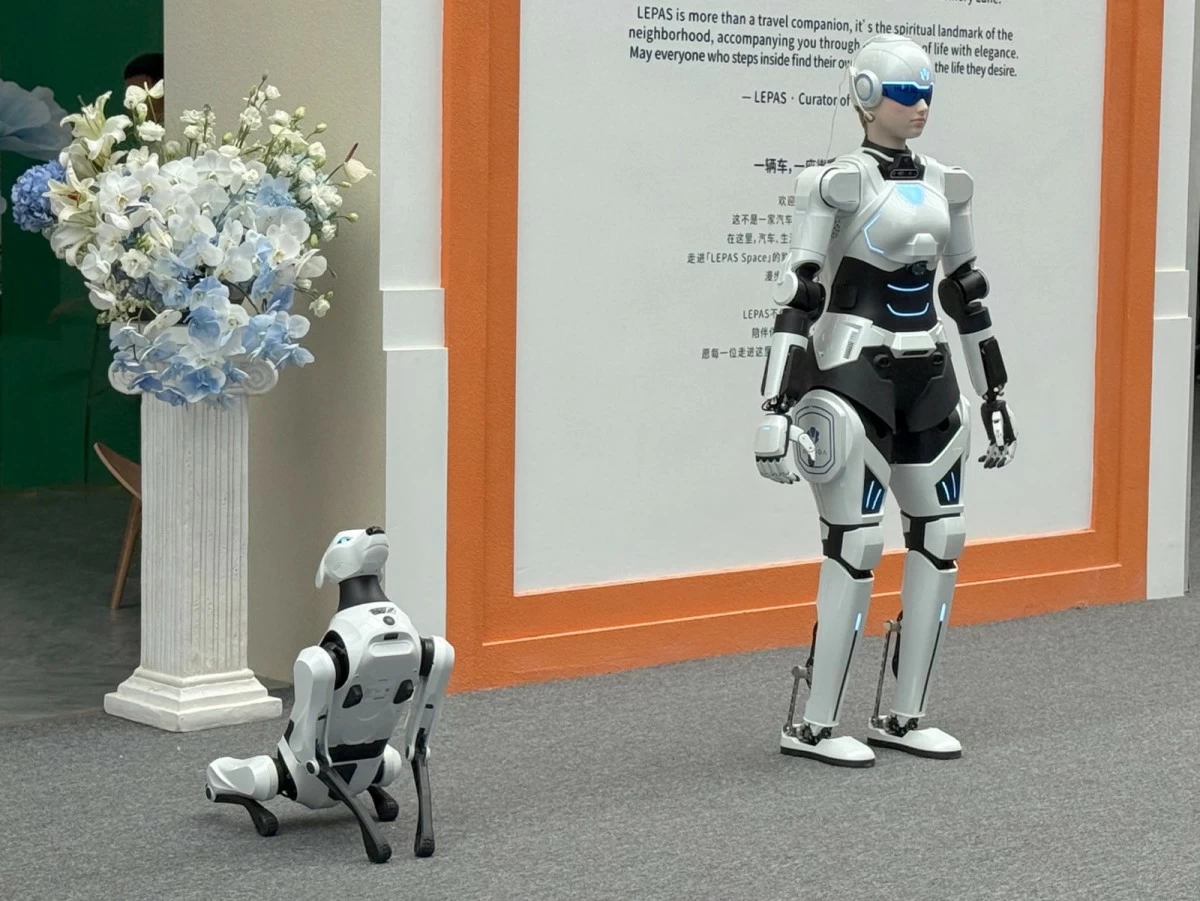
The brand presented AiMOGA, their intelligent humanoid robot system to serve as a showcase of their advancements, and shift in strategy. Having developed an intelligent ecosystem powered by the dual engines of “Automobile + Robotics,” AiMOGA will deeply integrate intelligent vehicle and robotics technologies by introducing a series of humanoid robots and robotic dogs for marketing, education, companionship, industrial, and household service.
The humanoid robot has already been deployed to help out with customers in their dealerships in more than 30 countries, including Malaysia, Indonesia and the United Arab Emirates
It turns out, the intelligent technologies used for a vehicle’s Advance Driver Assistance Systems (ADAS) and autonomous driving can also be the programmable brains for humanoid robots and robotic dogs. Omoda and Jaecoo hope to leverage this technology to help them transcend from being just an intelligent mobility brand to an intelligent ecosystem brand, combining to offer both “smart mobility” and “smart living.”
Omoda and Jaecoo are continuing to develop this technology. After three years of dedicated research, it was announced that AiMOGA has successfully leapt from L2 (collaborative level) to L3 (assistive level) intelligence, a big step toward realizing the brand’s vision of creating a true “human assistant.”
Their parent company, Chery, continues to support continuous research achieving more breakthroughs like AiMOGA’s “robust limbs” inspired by Chery’s advanced electric vehicle drivetrain and mechanical control systems.
Omoda and Jaecoo’s intelligent connected vehicles share the same cloud architecture with the robots’ “intelligent brain.” AiMOGA’s L3 capability is a demonstration of their philosophy of “technological synergy and ecosystem sharing.” This means we can expect them to experiment with robotic experience zones in flagship stores and brand experience centers globally.
This trip has shown us that Omoda and Jaecoo, along with their parent company, Chery, have made considerable advancements since we last went to China with them last year. It’s exciting to learn about the technologies that will be a big part of the vehicles they’ll produce and possibly bring to the Philippines in the future.

Related Tags

Omoda Jaecoo Philippines
ADVERTISEMENT
.most-popular .layout-ratio{ padding-bottom: 79.13%; } @media (min-width: 768px) and (max-width: 1024px) { .widget-title { font-size: 15px !important; } }

{{ articles_filter_1561_widget.title }}

.most-popular .layout-ratio{ padding-bottom: 79.13%; } @media (min-width: 768px) and (max-width: 1024px) { .widget-title { font-size: 15px !important; } }

{{ articles_filter_1562_widget.title }}

.most-popular .layout-ratio{ padding-bottom: 79.13%; } @media (min-width: 768px) and (max-width: 1024px) { .widget-title { font-size: 15px !important; } }

{{ articles_filter_1563_widget.title }}

{{ articles_filter_1564_widget.title }}

.mb-article-details { position: relative; } .mb-article-details .article-body-preview, .mb-article-details .article-body-summary{ font-size: 17px; line-height: 30px; font-family: "Libre Caslon Text", serif; color: #000; } .mb-article-details .article-body-preview iframe , .mb-article-details .article-body-summary iframe{ width: 100%; margin: auto; } .read-more-background { background: linear-gradient(180deg, color(display-p3 1.000 1.000 1.000 / 0) 13.75%, color(display-p3 1.000 1.000 1.000 / 0.8) 30.79%, color(display-p3 1.000 1.000 1.000) 72.5%); position: absolute; height: 200px; width: 100%; bottom: 0; display: flex; justify-content: center; align-items: center; padding: 0; } .read-more-background a{ color: #000; } .read-more-btn { padding: 17px 45px; font-family: Inter; font-weight: 700; font-size: 18px; line-height: 16px; text-align: center; vertical-align: middle; border: 1px solid black; background-color: white; } .hidden { display: none; }
function initializeAllSwipers() { // Get all hidden inputs with cms_article_id document.querySelectorAll('[id^="cms_article_id_"]').forEach(function (input) { const cmsArticleId = input.value; const articleSelector = '#article-' + cmsArticleId + ' .body_images'; const swiperElement = document.querySelector(articleSelector); if (swiperElement && !swiperElement.classList.contains('swiper-initialized')) { new Swiper(articleSelector, { loop: true, pagination: false, navigation: { nextEl: '#article-' + cmsArticleId + ' .swiper-button-next', prevEl: '#article-' + cmsArticleId + ' .swiper-button-prev', }, }); } }); } setTimeout(initializeAllSwipers, 3000); const intersectionObserver = new IntersectionObserver( (entries) => { entries.forEach((entry) => { if (entry.isIntersecting) { const newUrl = entry.target.getAttribute("data-url"); if (newUrl) { history.pushState(null, null, newUrl); let article = entry.target; // Extract metadata const author = article.querySelector('.author-section').textContent.replace('By', '').trim(); const section = article.querySelector('.section-info ').textContent.replace(' ', ' '); const title = article.querySelector('.article-title h1').textContent; // Parse URL for Chartbeat path format const parsedUrl = new URL(newUrl, window.location.origin); const cleanUrl = parsedUrl.host + parsedUrl.pathname; // Update Chartbeat configuration if (typeof window._sf_async_config !== 'undefined') { window._sf_async_config.path = cleanUrl; window._sf_async_config.sections = section; window._sf_async_config.authors = author; } // Track virtual page view with Chartbeat if (typeof pSUPERFLY !== 'undefined' && typeof pSUPERFLY.virtualPage === 'function') { try { pSUPERFLY.virtualPage({ path: cleanUrl, title: title, sections: section, authors: author }); } catch (error) { console.error('ping error', error); } } // Optional: Update document title if (title && title !== document.title) { document.title = title; } } } }); }, { threshold: 0.1 } ); function showArticleBody(button) { const article = button.closest("article"); const summary = article.querySelector(".article-body-summary"); const body = article.querySelector(".article-body-preview"); const readMoreSection = article.querySelector(".read-more-background"); // Hide summary and read-more section summary.style.display = "none"; readMoreSection.style.display = "none"; // Show the full article body body.classList.remove("hidden"); } document.addEventListener("DOMContentLoaded", () => { let loadCount = 0; // Track how many times articles are loaded const offset = [1, 2, 3, 4, 5, 6, 7, 8, 9, 10]; // Offset values const currentUrl = window.location.pathname.substring(1); let isLoading = false; // Prevent multiple calls if (!currentUrl) { console.log("Current URL is invalid."); return; } const sentinel = document.getElementById("load-more-sentinel"); if (!sentinel) { console.log("Sentinel element not found."); return; } function isSentinelVisible() { const rect = sentinel.getBoundingClientRect(); return ( rect.top < window.innerHeight && rect.bottom >= 0 ); } function onScroll() { if (isLoading) return; if (isSentinelVisible()) { if (loadCount >= offset.length) { console.log("Maximum load attempts reached."); window.removeEventListener("scroll", onScroll); return; } isLoading = true; const currentOffset = offset[loadCount]; window.loadMoreItems().then(() => { let article = document.querySelector('#widget_1690 > div:nth-last-of-type(2) article'); intersectionObserver.observe(article) loadCount++; }).catch(error => { console.error("Error loading more items:", error); }).finally(() => { isLoading = false; }); } } window.addEventListener("scroll", onScroll); });

Sign up by email to receive news.