






Manila Bulletin
 Entertainment
Music and Concerts
Our favorite OPM albums of 2025: IV of Spades, Cup of Joe, Janine Berdin and more
Entertainment
Music and Concerts
Our favorite OPM albums of 2025: IV of Spades, Cup of Joe, Janine Berdin and more
Entertainment
Music and Concerts
Our favorite OPM albums of 2025: IV of Spades, Cup of Joe, Janine Berdin and more
Our favorite OPM albums of 2025: IV of Spades, Cup of Joe, Janine Berdin and more
Published Jan 2, 2026 06:18 pm


By Ian Ureta
The best OPM albums of 2025 either went huge and cinematic or stayed painfully small, and some even did both at once; tender, ridiculous, sincere, and just a little unhinged, which sums up the year before. Not to mention, standout Filipino artists bend trends and influences into something proudly their own, making OPM that felt equally at home on radio ballads and internet playlists, and these are the records that captured all that chaos, creativity, and emotional overload the year was built on.
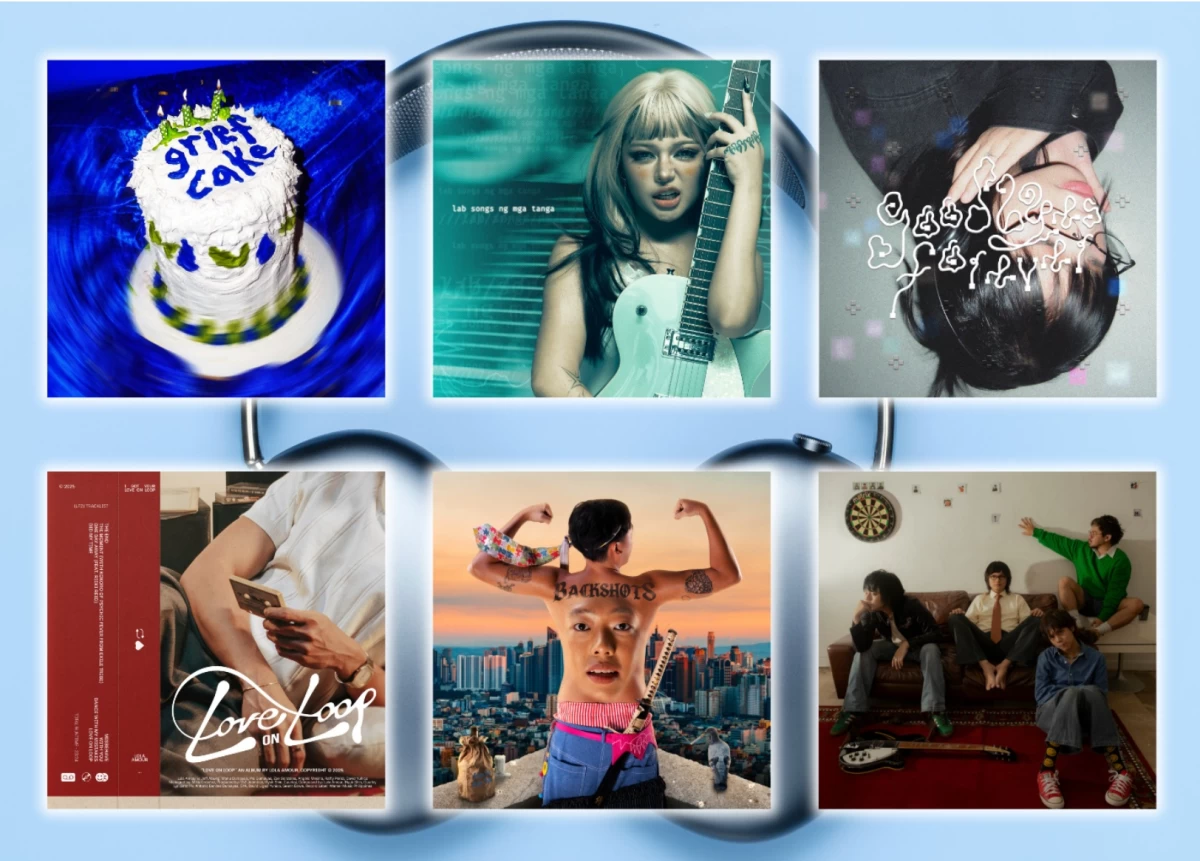
First row, from left: grief cake by New Lore; LAB SONGS NG MGA TANGA, Janine Berdin; and Goodbyes Forever, aunt robert. Second row, from left: Love On Loop, Lola Amour; BACKSHOTS, Waiian; and Andalucía, IV of Spades.
Here is a list of some of our favorite OPM releases from 2025, not necessarily in any order:
1. NEW LORE — grief cake
grief cake feels like what happens when a band finally admits their old name was holding them hostage. Formerly No Lore, NEW LORE didn’t just rebrand; they blew up their past and rebuilt it in glossy electropop and emotional honesty. The result actually sounds like a band that knows what it wants to be. The shiny synths aren’t empty polish; they work like stage lights, making every insecurity and romantic disaster feel huge and unavoidable. Tita Halaman’s songwriting, always sincere, finally gets to be theatrical, letting feelings explode or collapse in full view.
“OH MATURITY” sets the album’s contradiction in motion: it sounds bright, but it’s about how painfully slow growth really is. That tension defines the album; it isn’t about being healed, but about being emotionally stuck while pretending you aren’t. The production makes that conflict visceral: “DIRTY” and “GOODSIDES” pair glittering synths with bitterness, turning internal chaos into something danceable. “WHO HURT U” pushes it further, turning heartbreak into swaggering, petty fun. By the time “GRIEF CAKE” closes the loop, realizing you’re “just a kid” feels less tragic than freeing; a permission slip to keep messing up and trying again.
Ultimately, NEW LORE didn’t abandon their old self. They just finally stopped apologizing for wanting something brighter, louder, and more alive.
2. Janine Berdin — LAB SONGS NG MGA TANGA
Janine Berdin’s LAB SONGS NG MGA TANGA sounds like a breakup album written by someone who refused to suffer quietly. This isn’t soft pop heartbreak; it’s loud, messy emotional chaos, and that’s why it works. The album thrives on confrontation. Songs like “HAYUP KA” and “SITWASYONSHIP” don’t gently process pain; they throw it straight at you. Berdin’s voice is raw and confessional, making every line feel immediate and unfiltered. It’s dramatic, but it never feels fake. There’s also a clever fusion of styles here, blending early-2000s OPM angst with modern TikTok-era confessionals. It feels like Berdin speaking directly to a generation raised on oversharing and emotional honesty.
As a debut, it’s bold and emotionally honest. LAB SONGS NG MGA TANGA isn’t neat or polished; it’s messy, but heartbreak usually is, and Berdin isn’t afraid to show it.
3. aunt robert — Goodbyes Forever
Goodbyes Forever sounds like it was written during a panic attack, but in the best possible way. aunt robert turns emotional overload into something strangely beautiful, making ten tracks that feel like 3 a.m. diary entries you were never meant to read.
The album embraces chaos instead of fixing it, jumping between indie rock, pop-techno, and stripped-down ballads as if moods matter more than genre.
The opener “Frount Robert” lays this out immediately: bright and glitchy, but aching with longing underneath. The emotional core arrives with “Keepsake,” which pulls everything back and lets vulnerability sit in the open. It’s quiet, tender, and devastating in a way that makes the surrounding noise feel earned. By the time “Hoarse (I’ll Get Up Like I Always Do)” closes things out, the album sounds like self-therapy set to distortion. The repeated affirmations aren’t victorious; they’re desperate, which makes them feel real.
Ultimately, Goodbyes Forever is trying to be honest and that’s what gives it its power.
4. Lola Amour — Love On Loop
Love On Loop finds Lola Amour shifting from jammy jazz-pop into a more cinematic, tightly focused pop style, framing love as a cycle of longing, return, and emotional motion. Built from personal conversations, the lyrics feel intimate and cohesive, giving the album a clear emotional arc rather than a scattered playlist. Sonically, the band favors sleek grooves and city-pop gloss over instrumental sprawl, choosing precision and mood to tell its story.
The shift works best when Lola Amour lets their funk and jazz roots simmer beneath the pop surface. “Misbehave” keeps things playful, while “Did My Time” shows how effective restraint and tension can be. In the back half, tracks like “With You” and “Dance With My Mistakes” deepen the emotional core, leading to the title track’s quiet conclusion that love is messy, cyclical and irresistible.
Love On Loop is less a reinvention than a refinement, trading looseness for focus.
Lola Amour channels their groove-driven past into a polished, emotionally aware pop record that mirrors the loops of doubt, desire, and devotion that define modern love.
5. Waiian — BACKSHOTS
BACKSHOTS is Waiian finally coming into full form. The production is bigger, brighter, and more playful than anything he’s done before. The beats bounce, the hooks hit and Waiian sounds genuinely excited to be here. Instead of coasting on laid-back vibes, he leans into humor, swagger, and emotional honesty all at once.
Waiian talks about ego, masculinity, and the way men hide behind bravado. He mocks himself as much as anyone else, which makes the album feel self-aware rather than self-indulgent. This is the version of Waiian that was always hinted at but never fully unleashed. He’s funnier, more vulnerable and more confident than ever. Tracks like “SOFTIE” featuring Nicole Anjela highlights his ability to blend charm with tenderness, while “MOTIVATIONAL QUOTES” and “ASAN NA SI…” lean into satire and swagger without losing self-awareness.

First row, from left: Silakbo by Cup of Joe; Kolorcoaster, Maki; and RARARA, Dilaw. Second row, from left: Flames by BINI; and Simula at Wakas, SB19.
6. IV of Spades — Andalucía
Andalucía feels like IV of Spades stepping back into themselves after five years of absence, not by trying to sound bigger or more modern, but by remembering why they started making music together in the first place. Instead of chasing trends or bending toward whatever dominates the current pop landscape, the band leans into the sounds that shaped them both when they were together and from personal projects dabbled in during their hiatus from OPM melodrama, Britpop swagger, classic rock warmth, and just enough funk to keep everything in motion. It’s the sound of a group rediscovering their chemistry and trusting it again.
There’s a deep sense of ease running through the album. You can hear it in the way the guitars ring out, in how the grooves breathe, and in how the melodies seem to arrive without being forced. Songs like “Karma” and “Rewind” glide by with a confidence that doesn’t need to shout.
The hooks are strong, but they don’t feel engineered for virality; they feel like the natural result of musicians who understand how to write a great pop-rock song. Meanwhile, tracks like “Konsensya” and “Aura” could have easily belonged to the golden era of ’90s OPM or the Britpop wave that defined so much of that decade’s guitar music.
Andalucía isn’t just about returning; it’s about arriving somewhere new with old tools, sharper instincts and a renewed sense of purpose. It’s a record that reminds you why IV of Spades mattered in the first place and why, even after time apart, they still do.
7. Cup of Joe – Silakbo
Silakbo is Cup of Joe fully embracing their role as the Philippines’ premier emotional weather system. This album is like a sequence of carefully engineered storms, where every chord, harmony, and vocal crack feels designed to make you feel something, whether you asked for it or not.
“Bagyo” opens like a dramatic movie trailer for your own heartbreak. It sets up the album’s entire emotional philosophy: big feelings, delivered sincerely, without a shred of irony. And that’s the magic trick Cup of Joe pulls here. Tracks like “Wine” and “Kanelang Mata” glide forward on warm melodies and soft acoustics, proving that tenderness can be just as powerful as spectacle.
Then there’s the big hit of 2025 in “Multo,” which sneaks in pop sheen without sacrificing sincerity. It’s catchy, yes, but more importantly, it turns heartbreak into something communal, something you can scream-sing in the car at night.
By the time “Silakbo” closes the album, Cup of Joe offers something rare: emotional closure that actually feels earned. The joy doesn’t cancel out the pain. Rather, it grows out of it.
8. Dilaw – RARARA
RARARA is Dilaw’s glow-up album. Not because it’s louder or flashier, but because it’s more comfortable in its own skin. Where their earlier work leaned toward urgency, this record chooses ease. It sounds like a band finally realizing that being warm, catchy, and emotionally open is not a weakness; it’s a superpower.
This album is built for motion. It feels like driving through the city with the windows down, letting fuzzy guitars and breezy melodies blur into something quietly euphoric. Tracks like “ALL IN,” “RARARA,” and “BLACK N’ WHITE” don’t need to demand your attention; they gently invite it, and that’s what makes them so replayable, with the title track being a personal favorite of the year.
What RARARA really nails is the atmosphere. The garage-rock textures, playful production choices, and soft melodic hooks create a world that’s easy to slip into. It’s not trying to be revolutionary; it’s trying to be a companion. And that’s arguably more powerful.
This is the kind of album that grows on you. You might not remember every chorus immediately, but you’ll find yourself wanting to come back, because it feels good to be here.
9. Maki – Kolorcoaster
Kolorcoaster is one of the most charmingly ambitious debut albums in OPM as it is a literal rainbow of emotion that turns heartbreak into a full-color experience. Maki doesn’t just write songs here; he builds a narrative, where each track feels like a different shade of the same emotional journey.
“Namumula” kicks things off with explosive youthful energy, while “Kahel na Langit” pulls things into warmth and longing. These songs establish what Maki does best: turning sincerity into something cinematic. And then there’s “Dilaw,” the album’s glowing centerpiece, a rush of happiness so bright it borders on overwhelming, in the best way possible.
As the colors deepen, so does the emotional weight. “Bughaw” and “INDIGO” lean into memory and uncertainty with layered production and some of Maki’s strongest vocals. These songs don’t just sound sad; they sound reflective, like flipping through old photos you’re not ready to put away. By the time “Abelyana” and “ROYGBIV” arrive, the album feels like it’s slowly finding its way back into the light.
Ultimately, Kolorcoaster is heartfelt, colorful, and unafraid of melodrama. It’s a debut that feels honest, ambitious, and emotionally generous, which is exactly what great pop music should be.
10. BINI – Flames
Flames is BINI finally choosing bravery over safety, and it suits them. This album feels like a group stepping out of the idol-pop comfort zone and realizing that experimentation is where the real excitement lives.
Songs like “Sweet Tooth” and “Katabi” show BINI at their most natural: warm, melodic, and emotionally grounded. These tracks let the group’s chemistry breathe, proving they don’t need maximalism to be compelling. “Paruparo” and “Infinity” extend that emotional palette, offering softness and optimism in equal measure, while “Bikini” leans into confidence and self-expression.
What makes Flames exciting is how much it feels like a turning point. The production experiments with rhythm, tone, and mood, giving BINI space to grow into a more distinctive sound. As an album, Flames works because it feels like a journey. Some tracks are soft, some are bold, but all of them contribute to a story about finding your voice.
11. SB19 – Simula at Wakas EP
Simula at Wakas feels like SB19 standing at the top of a mountain they spent years climbing. As the final chapter in their EP trilogy, it doesn’t just summarize their journey. Instead, it celebrates it with confidence, vulnerability, and creative fire.
“DAM” and “Quit” turn struggle into catharsis, capturing the exhaustion and resilience that define the group’s story. These aren’t just songs about success; they’re songs about surviving long enough to earn it.
Tracks like “8tonball” and “Shooting for the Stars” show how wide SB19’s range has become.
One is hard-hitting and aggressive, the other dreamy and hopeful, but both pulse with the same hunger for something bigger.
What makes this EP special is how clearly you can hear each member’s voice inside it. Their solo growth didn’t fracture the group; it sharpened it. Simula at Wakas sounds like five artists moving together with absolute purpose.