







NAIA handled record 52 million travelers in 2025
Published Jan 2, 2026 08:24 am


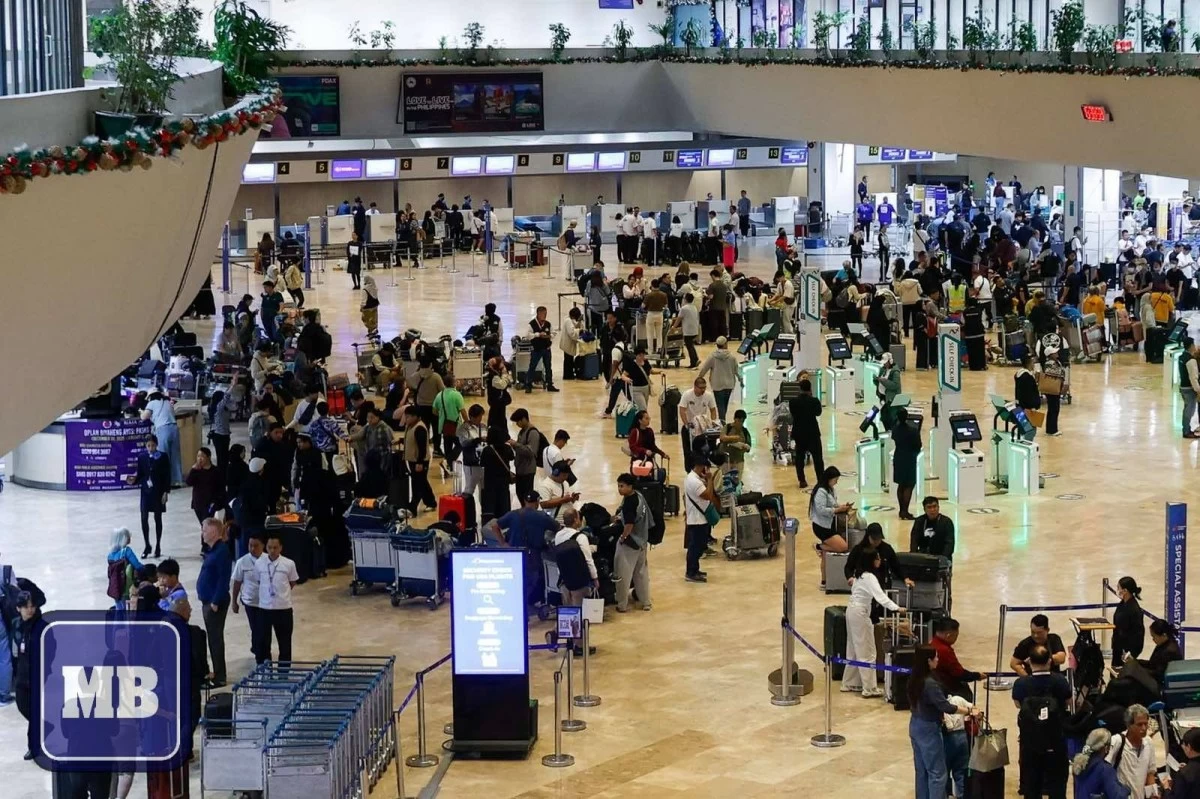
Passengers flock to NAIA Terminal 1 in Pasay City on Sunday, Dec. 21, as they travel abroad to celebrate Christmas and New Year, with airport authorities expecting increased passenger traffic during the peak holiday season. (Photo by John Louie Abrina I MB)
The Ninoy Aquino International Airport (NAIA) recorded its highest-ever passenger volume in 2025, with a total of 52.02 million passengers, as demand for air travel remained robust.
In a statement, airport operator New NAIA Infra Corp. (NNIC) said the country’s main gateway recorded 52.02 million in passenger traffic last year, nearly four percent higher than the previous record-high of 50.1 million passengers in 2024.
NAIA also posted its busiest month ever in December 2025, with the airport handling 4.86 million passengers or up five percent from 4.62 million passengers in the previous year.
Driven by strong travel demand during the holiday season, the month registered 2.37 million international travelers and 2.50 million domestic passengers.
Based on data from the Manila International Airport Authority (MIAA), NAIA logged 218,086 flights from January to September, roughly 75,000 short of breaking the record-high of 293,488 flights in 2024.
While it did not provide updated figures, NNIC said it banked on increased airport activity to accommodate more passengers last year, as airlines expanded their operations to new destinations.
This made NAIA a key gateway not only for leisure travel but also for business trips and connecting flights, the operator said.
Under NNIC, a consortium led by conglomerate San Miguel Corp., the airport will expand its passenger capacity to 62 million per year from the current 35 million.
It is also working to speed up traffic movement from an average of 40 to 42 flights per hour to 48, alongside making operations and maintenance of facilities up to global benchmarks.
These targets are part of the NNIC’s commitment to upgrade and modernize the country’s busiest airport under its ₱170.6 billion concession agreement, signed in September 2024.
While there are still years away before such goals are achieved, operational improvements over the last year kept NAIA operations stable even during peak periods.
Ahead of the busy period near Christmas, NNIC installed new biometric immigration e-gates to allow passengers to complete their immigration clearance in as fast as 20 seconds.
At the same time, it also upgraded passenger processing systems and terminal facilities to further ease congestion and minimize queues.
Aside from upgrading airport infrastructure, NNIC said it coordinated closely with airlines, government agencies, and airport stakeholders to manage higher passenger volumes better.
“The focus has been on improving flow, reducing bottlenecks, and ensuring the airport can handle peak demand more effectively,” NNIC said.