

ADVERTISEMENT

Karla Puno Garcia on dance, direction, and 'A Chorus Line'

Published Jan 2, 2026 06:30 pm
When Karla Puno Garcia visited the Philippines in October, she was daydreaming of some fun time at the beach—Bolinao in Pangasinan, to be specific. But things quickly geared up creatively, leading her to take a rain check on that vacation and focus on the task at hand: directing and choreographing the local production of “A Chorus Line.”

Karla Puno Garcia (Photo by Kate Mollison and Ernest Gatpandan III)
“A Chorus Line” is an American musical originally directed and choreographed by Michael Bennett and his associate, Baayork Lee. The show depicts the trials and triumphs of Broadway’s unsung heroes. When Theatre Group Asia’s (TGA) overall artistic and creative director, Tony Award–winner Clint Ramos, thought of bringing it to the Philippines, it was a natural decision to tap Karla to lead the production.
With her Broadway credits—most notably as the first Filipino cast member and dance captain in “Hamilton,” and as the first woman of color to choreograph the opening number of the Tony Awards, which earned her an Emmy for Outstanding Choreography for Variety or Reality Programming—Karla is the perfect artist to take on the role of director and choreographer. But the show calls for more than technical excellence.

Karla Puno Garcia won an Emmy award in 2024. (Photo by Jordan Strauss/Invision for the Television Academy/AP Content Services)
If TGA’s most recent production, “Into the Woods,” is any indication, “A Chorus Line” may also highlight elements of Filipino culture and artistry—something Karla is deeply familiar with.
Before the curtain rises on the local staging of “A Chorus Line,” Manila Bulletin Lifestyle got the chance to sit down with Karla as she shares her life on stage, her excitement for the upcoming production, and what makes dance a powerful form of art.
Can you tell us a bit about your journey—what first drew you to dance and choreography?
I started tap dancing at the age of three. I also began with traditional folk dances—I did itik-itik and bangkô. Those were my first memories of dancing with a group. Then I went on to dance competitively, learning American dance styles like tap, jazz, ballet, and more. After that, I studied dance at New York University and earned a BFA in Dance. I expanded my training in modern dance and concert work. Dancing on Broadway was always a specific goal for me. After college, I went on to perform in Broadway shows. That was my trajectory in a nutshell.
My growth as a choreographer came after I started dancing professionally and working with different choreographers in shows like “Hamilton,” “West Side Story,” and “Wicked.” Experiencing a diverse array of movement styles infused my work with new ways of moving. I was also inspired by hip-hop and the underground hip-hop scene. Overall, my aesthetic is a culmination of my experiences as a performer. That’s where my perspective comes from, along with a sensitivity to music and musicality.
Do you look up to any artists or dancers?
The person I looked up to at a young age was my godsister, LaMae Caparas. She went on to perform in “The King and I” national tour, “Fosse on Broadway,” and “The Lion King.” I literally watched her go from my hometown and dance studio to Broadway and work professionally. Seeing that made me believe that if she could do it, I could too.
What are the common misconceptions people have about dancers and choreographers?
I think choreographers are directors in their own right. When working on a musical, the choreographer and director are often co-piloting the show. My job is to help stage the production in tandem with the director’s vision. Taking on the role of a director isn’t that different from choreographing a piece—I’m still supporting the story and conveying it through movement and space.
People often think choreographers are just making up dance steps, but we’re also responsible for how the piece feels and how the show moves overall.
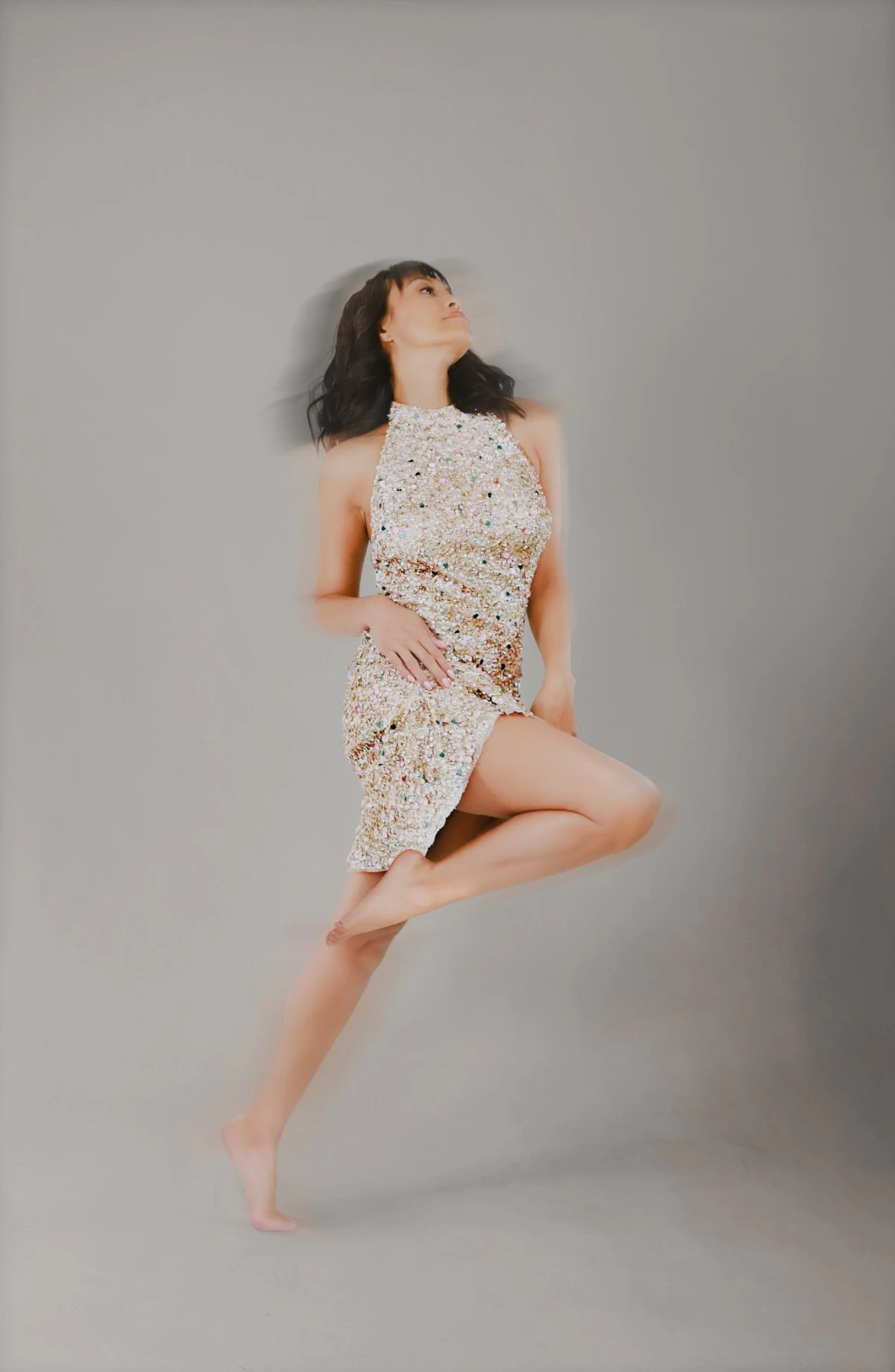
Karla Puno Garcia (Photo by Kate Mollison and Ernest Gatpandan III)
Let’s talk about ‘A Chorus Line.’ Can we expect a Filipino flair in the upcoming staging, much like in ‘Into the Woods’?
There has been a lot of thought and intentionality put into incorporating Filipino elements into the piece, and I’m excited for everyone to see how we do that.
For you, what makes dance—often seen as a form of entertainment—a unique form of art?
Dance has power because there are no words. It’s a visceral way of communicating and expressing how we naturally feel. My nine-month-old, whenever she hears music, immediately starts to move. That alone shows that we’re born to dance—it’s in our bones.
A Chorus Line will feature a stellar ensemble of Filipino performers and will run from March 12 to 29, 2026, at the Samsung Performing Arts Theater in Makati City, with performances on Thursdays and Fridays at 7:30 p.m., and Saturdays and Sundays at 2 p.m. and 7:30 p.m. Tickets are now available via TicketWorld.

Related Tags

Luminaries Karla Puno Garcia A Chorus Line
ADVERTISEMENT
.most-popular .layout-ratio{ padding-bottom: 79.13%; } @media (min-width: 768px) and (max-width: 1024px) { .widget-title { font-size: 15px !important; } }

{{ articles_filter_1561_widget.title }}

.most-popular .layout-ratio{ padding-bottom: 79.13%; } @media (min-width: 768px) and (max-width: 1024px) { .widget-title { font-size: 15px !important; } }

{{ articles_filter_1562_widget.title }}

.most-popular .layout-ratio{ padding-bottom: 79.13%; } @media (min-width: 768px) and (max-width: 1024px) { .widget-title { font-size: 15px !important; } }

{{ articles_filter_1563_widget.title }}

{{ articles_filter_1564_widget.title }}

.mb-article-details { position: relative; } .mb-article-details .article-body-preview, .mb-article-details .article-body-summary{ font-size: 17px; line-height: 30px; font-family: "Libre Caslon Text", serif; color: #000; } .mb-article-details .article-body-preview iframe , .mb-article-details .article-body-summary iframe{ width: 100%; margin: auto; } .read-more-background { background: linear-gradient(180deg, color(display-p3 1.000 1.000 1.000 / 0) 13.75%, color(display-p3 1.000 1.000 1.000 / 0.8) 30.79%, color(display-p3 1.000 1.000 1.000) 72.5%); position: absolute; height: 200px; width: 100%; bottom: 0; display: flex; justify-content: center; align-items: center; padding: 0; } .read-more-background a{ color: #000; } .read-more-btn { padding: 17px 45px; font-family: Inter; font-weight: 700; font-size: 18px; line-height: 16px; text-align: center; vertical-align: middle; border: 1px solid black; background-color: white; } .hidden { display: none; }
function initializeAllSwipers() { // Get all hidden inputs with cms_article_id document.querySelectorAll('[id^="cms_article_id_"]').forEach(function (input) { const cmsArticleId = input.value; const articleSelector = '#article-' + cmsArticleId + ' .body_images'; const swiperElement = document.querySelector(articleSelector); if (swiperElement && !swiperElement.classList.contains('swiper-initialized')) { new Swiper(articleSelector, { loop: true, pagination: false, navigation: { nextEl: '#article-' + cmsArticleId + ' .swiper-button-next', prevEl: '#article-' + cmsArticleId + ' .swiper-button-prev', }, }); } }); } setTimeout(initializeAllSwipers, 3000); const intersectionObserver = new IntersectionObserver( (entries) => { entries.forEach((entry) => { if (entry.isIntersecting) { const newUrl = entry.target.getAttribute("data-url"); if (newUrl) { history.pushState(null, null, newUrl); let article = entry.target; // Extract metadata const author = article.querySelector('.author-section').textContent.replace('By', '').trim(); const section = article.querySelector('.section-info ').textContent.replace(' ', ' '); const title = article.querySelector('.article-title h1').textContent; // Parse URL for Chartbeat path format const parsedUrl = new URL(newUrl, window.location.origin); const cleanUrl = parsedUrl.host + parsedUrl.pathname; // Update Chartbeat configuration if (typeof window._sf_async_config !== 'undefined') { window._sf_async_config.path = cleanUrl; window._sf_async_config.sections = section; window._sf_async_config.authors = author; } // Track virtual page view with Chartbeat if (typeof pSUPERFLY !== 'undefined' && typeof pSUPERFLY.virtualPage === 'function') { try { pSUPERFLY.virtualPage({ path: cleanUrl, title: title, sections: section, authors: author }); } catch (error) { console.error('ping error', error); } } // Optional: Update document title if (title && title !== document.title) { document.title = title; } } } }); }, { threshold: 0.1 } ); function showArticleBody(button) { const article = button.closest("article"); const summary = article.querySelector(".article-body-summary"); const body = article.querySelector(".article-body-preview"); const readMoreSection = article.querySelector(".read-more-background"); // Hide summary and read-more section summary.style.display = "none"; readMoreSection.style.display = "none"; // Show the full article body body.classList.remove("hidden"); } document.addEventListener("DOMContentLoaded", () => { let loadCount = 0; // Track how many times articles are loaded const offset = [1, 2, 3, 4, 5, 6, 7, 8, 9, 10]; // Offset values const currentUrl = window.location.pathname.substring(1); let isLoading = false; // Prevent multiple calls if (!currentUrl) { console.log("Current URL is invalid."); return; } const sentinel = document.getElementById("load-more-sentinel"); if (!sentinel) { console.log("Sentinel element not found."); return; } function isSentinelVisible() { const rect = sentinel.getBoundingClientRect(); return ( rect.top < window.innerHeight && rect.bottom >= 0 ); } function onScroll() { if (isLoading) return; if (isSentinelVisible()) { if (loadCount >= offset.length) { console.log("Maximum load attempts reached."); window.removeEventListener("scroll", onScroll); return; } isLoading = true; const currentOffset = offset[loadCount]; window.loadMoreItems().then(() => { let article = document.querySelector('#widget_1690 > div:nth-last-of-type(2) article'); intersectionObserver.observe(article) loadCount++; }).catch(error => { console.error("Error loading more items:", error); }).finally(() => { isLoading = false; }); } } window.addEventListener("scroll", onScroll); });

Sign up by email to receive news.