







Laurel: Philippines considers buying more US agricultural products


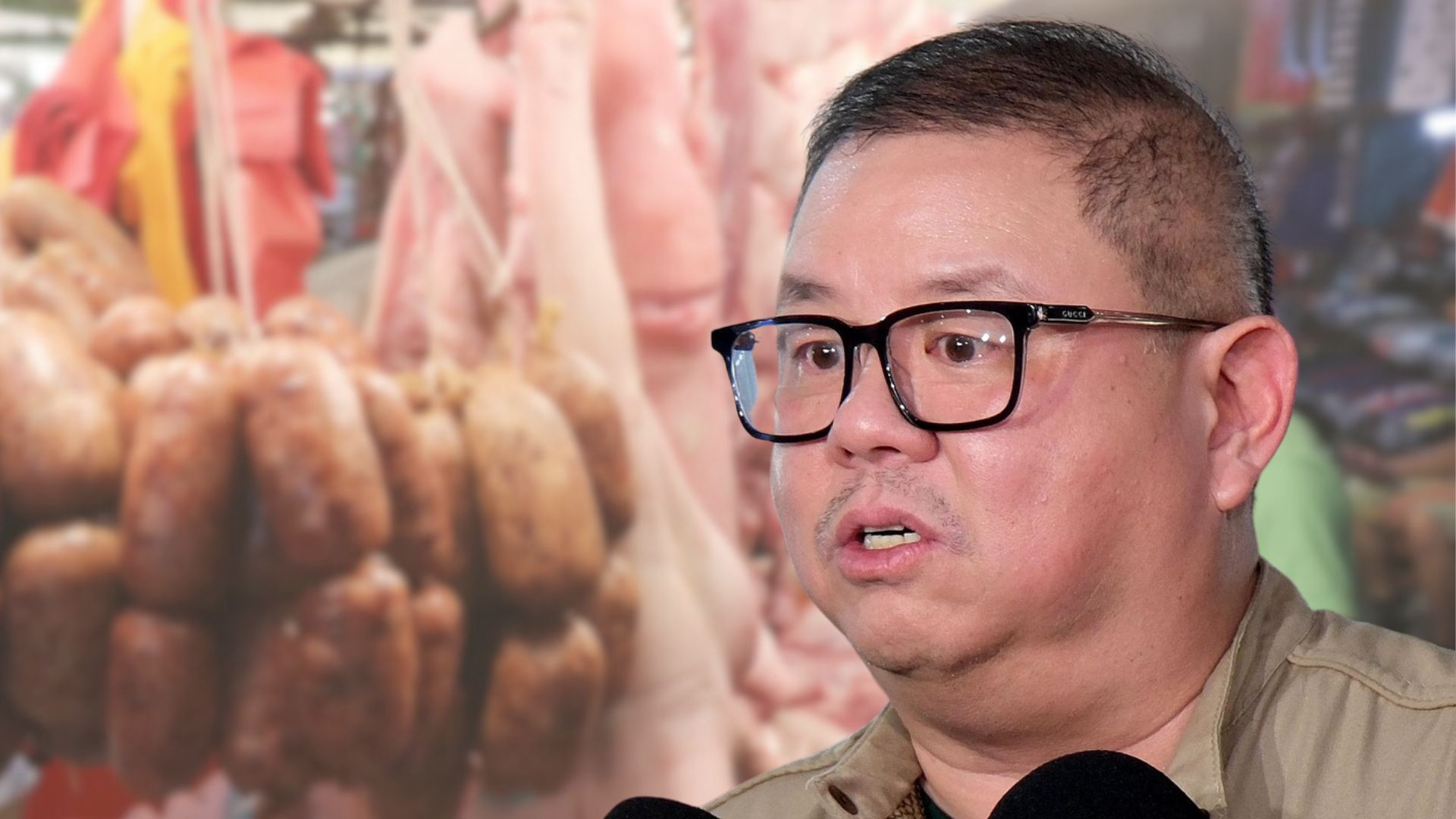
Department of Agriculture (DA) Secretary Francisco Tiu Laurel said he is open to shifting the importation of key agricultural goods to the United States (US) from other countries, as part of the government’s strategy to reduce the reciprocal tariffs imposed on Philippine goods.
A delegation of the country’s trade and economic officials is in Washington, D.C., this week to meet with their American counterparts to discuss several concerns, including the 17-percent tariffs.
Department of Trade and Industry (DTI) Secretary Cristina Roque earlier said the government is open to concessions, including providing greater access to American agricultural exports, to lower the tariffs.
In response, Laurel said he agrees with this strategy, noting that the practical move is to appease one of the Philippines’ leading trade partners.
The US, under President Donald Trump, is ramping up protectionist policies to address supposedly unfair trade practices of other countries.
“We will try to negotiate na baka mabigyan ng pabor ang Amerika dahil sila ‘yung isa sa biggest trade partners natin. So, kailangan din natin silang pagbigyan,” said Laurel in a recent interview.
(We will try to negotiate that America might be given a favor because they are one of our biggest trade partners. So, we also need to give them some leeway.)
“It’s shifting that we’re looking at; it’s not adding to more imports,” he added.
Laurel said the government could consider importing more meat products from the US, which Roque earlier suggested alongside soybeans.
According to Bureau of Animal Industry (BAI) data, meat imports reached 1.45 million metric tons (MT) in 2024.
Of the total, the US was the second-largest meat supplier to the Philippines, with 220,132 MT—only behind Brazil’s 536,340 MT.
“It’s just shifting of preference, meaning kung dati malakas ka bumili sa Brazil, ngayong may ganitong move ang Amerika baka pagbigyan silang makakuha ng mas malaking share at mabawasan naman ‘yung Brazil,” said Laurel.
(It’s just a shifting of preference; if before you were buying heavily from Brazil, now with this move by America, they might be given a chance to get a bigger share, and Brazil’s might be reduced.)
“Wala sigurong dapat ikatakot ‘yung ating mga industries (Our industries probably have nothing to worry about) because it’s not about adding the amount to be imported,” he added.
Data from the US Department of Agriculture’s Foreign Agricultural Service (USDA-FAS) showed that the Philippines is the ninth-largest US export market, with a total export value of $3.5 billion.
The 17-percent tariffs imposed on the Philippines are the second lowest in the Association of Southeast Asian Nations (ASEAN)—only behind Singapore’s 10 percent.
If the US retains this tax, Laurel said the local agriculture sector would benefit the most.
“Let’s say kung binigay sa atin tilapia na 17 percent, and Vietnam is [46 percent], ‘yung tilapia industry natin magbu-boom ‘yan,” he said as an example.
(Let’s say our tilapia is at 17 percent, and Vietnam’s is at 46 percent—our tilapia industry would boom.)
The higher reciprocal tariffs imposed by the US on countries with which it has a trade deficit are currently suspended until July.