






 Philippines
National
CHED, University of Adelaide boost medical training in the Philippines
Philippines
National
CHED, University of Adelaide boost medical training in the Philippines
CHED, University of Adelaide boost medical training in the Philippines
The partnership to enhance simulation-based training for Filipino medical educators using advanced tools and global expertise


More Filipino medical educators are set to receive world-class training in simulation-based medical education (SBME) through the strengthened partnership between the Commission on Higher Education (CHED) and the University of Adelaide in Australia.
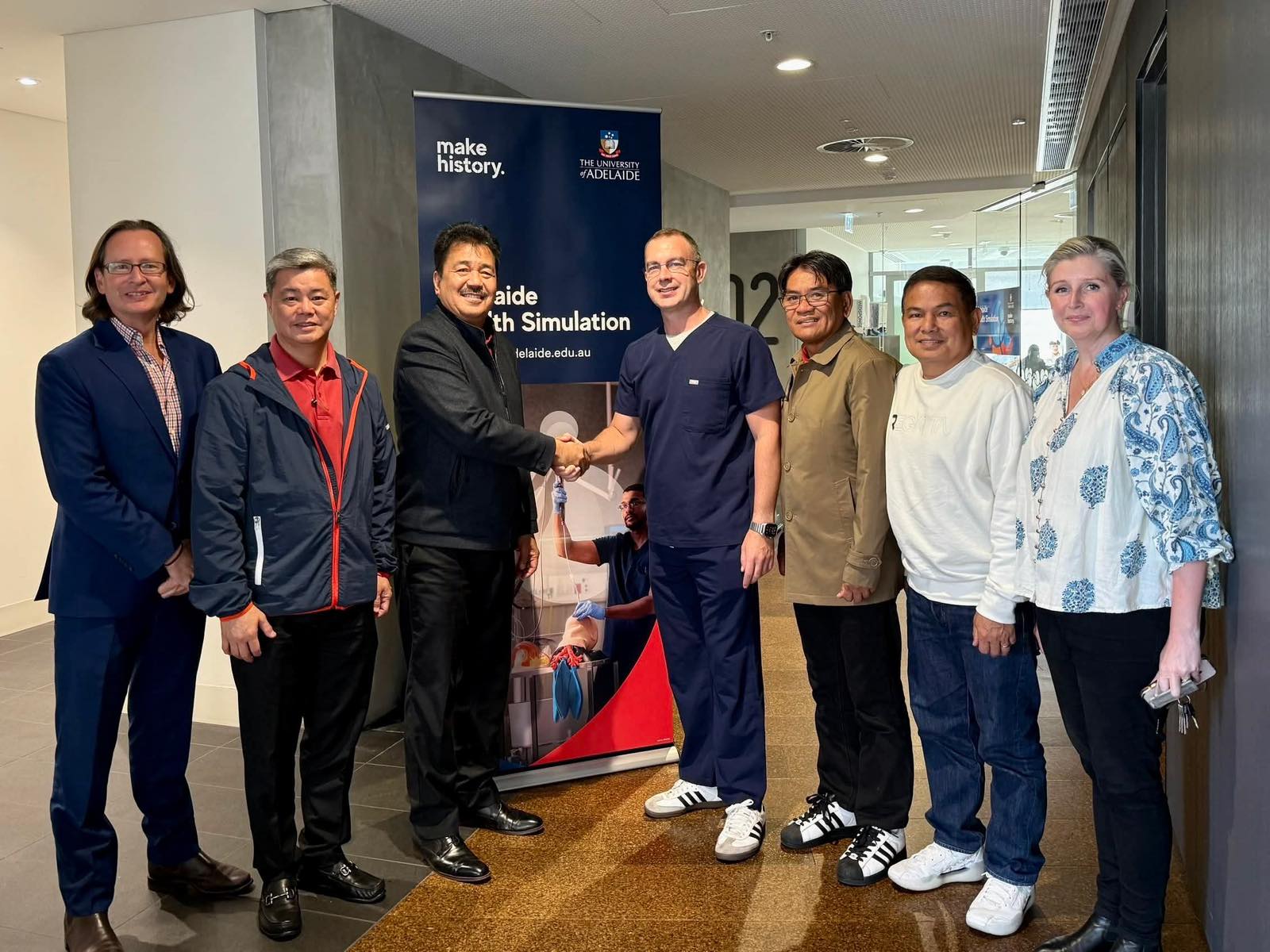
In a statement released on Thursday, May 1, CHED announced that this international collaboration aims to enhance faculty skills in medical schools across the Philippines through cutting-edge simulation technologies that replicate real-life clinical scenarios.
These tools include high-fidelity manikins, virtual reality systems, and standardized patients, enabling healthcare students to develop their skills in a safe, controlled environment.
Expanding international collaboration
As part of the second leg of CHED’s transnational education mission, CHED Chairperson J. Prospero “Popoy” De Vera III met with officials from the University of Adelaide to expand the ongoing SBME training initiative.
The program is being implemented in collaboration with the University of the Philippines (UP) Manila.
During the visit, the Philippine delegation toured the Adelaide Health Simulation (AHS) center—one of the most technologically advanced healthcare simulation centers in Australasia—to gather insights into best practices in simulation-based training.
De Vera said the simulation-based medical education program aligns with the “Doktor Para sa Bayan Law,” which mandates CHED to increase access to medical education by helping establish at least one public medical school in every region of the country.
“But the goal is not only to make medical education accessible, but also globally competitive,” De Vera said. “This partnership is part of CHED’s long-term vision to create a future where every Filipino medical student, regardless of region, has access to the best education possible,” he added.
De Vera noted that President Marcos has tasked CHED with creating more faculty development opportunities to ensure quality education that meets international standards.
Advancing technology-driven medical education
UP Manila Chancellor Michael Tee emphasized the significance of technology-driven education in medical training. He expressed gratitude to CHED for trusting UP Manila to collaborate with the University of Adelaide.
“Through technology-driven, simulation-based education, students will be able to practice what it’s like to be doctors even before they reach the clinics,” Tee said. “They will be able to experience clinical situations and perform procedures on high-fidelity mannequins and task trainers to ensure they are ready to meet their patients,” he added.
The CHED–University of Adelaide partnership began in 2020, initially training 30 faculty members from UP Manila, West Visayas State University (WVSU), and Mindanao State University–General Santos (MSU–GenSan).
In 2023, CHED reported that 107 faculty members completed online workshops.
In 2024, a total of 52 more educators underwent hands-on training at UP Manila under the guidance of Australian experts.
Training modules cover simulation center operations, curriculum integration, governance, and business modeling—all essential for launching and maintaining simulation-based learning environments.
Looking ahead: Scaling nationwide
By 2025, CHED plans to expand the program to include educators from four to five additional medical schools that already have simulation facilities.
“Our plan is to add four or five medical schools, public or private, that are also using simulation-based medical equipment to create a bigger network,” De Vera said.
He noted that two of the schools identified—University of Northern Philippines and Don Mariano Marcos State University—joined the Australian education mission.
CHED said it is also providing grants to state universities and colleges to help them acquire high-fidelity manikins and task trainers.
This initiative supports the broader goal of improving healthcare education and producing globally competent Filipino doctors.