

ADVERTISEMENT

Roxas City's 'aswang' float sparks debate

Published Apr 6, 2025 07:51 am

ILOILO CITY – The mythical “aswang” (shape-shifting evil creature) float depicted by the Roxas City government in the 2025 Capiztahan Festival parade has sparked an online debate.

People slammed the city government for highlighting the aswang and reinforcing the image of the city and province as the “Aswang Capital of the Philippines” instead of being the “Seafood Capital.”
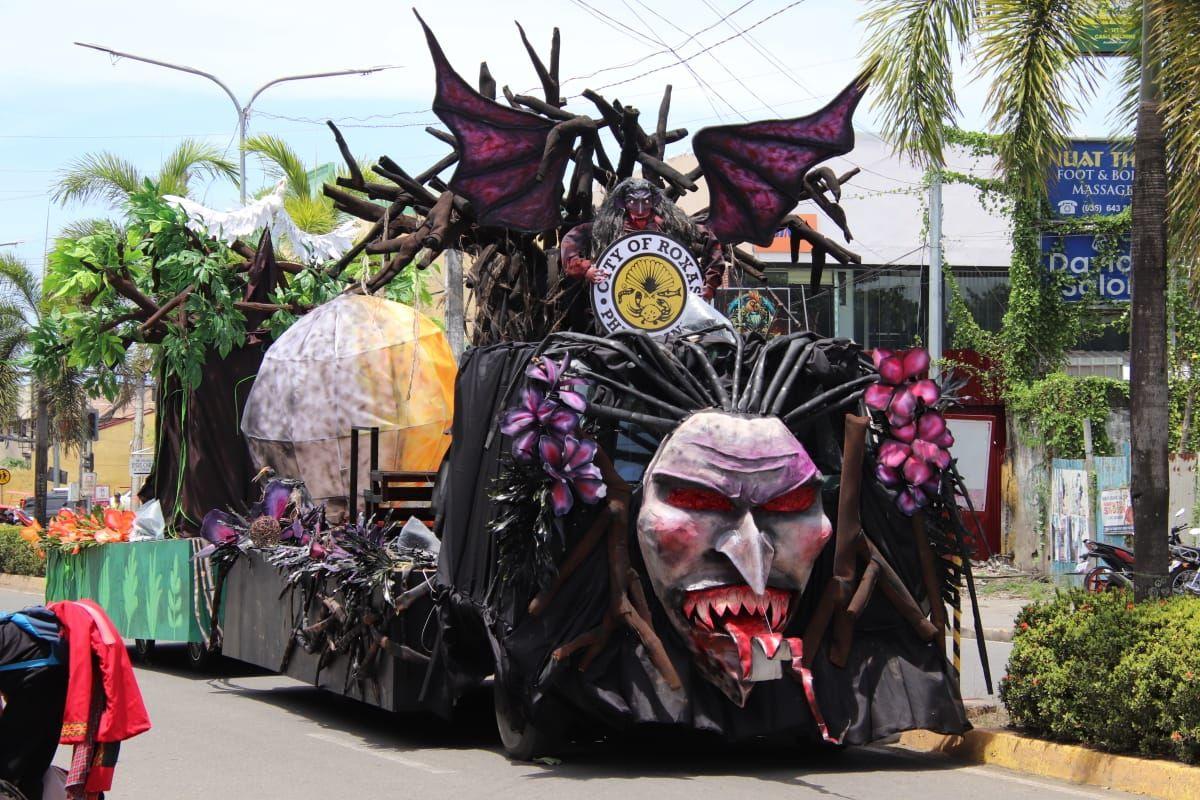
ASWANG FLOAT.jpg

A FLOAT  depicting the mythical ‘aswang’ in Roxas City during the historical and cultural parade of the 2025 Capitztahan Festival.  (Roxas City Information Division) 

The float was the official entry of Roxas City government at the April 5 Maragtas cultural and historical parade of the Capiztahan, the festival celebrating the 124th founding anniversary of Capiz.

“The Maragtas Historical Parade and Cultural Show did not glorify the aswang as Capiznons are known for their strong devotion to the Virgin Mary,” said Erwin Bonifacio, a historical consultant of the Capiz provincial government for the Capiztahan.

Roxas City Tourism Officer Bryan Mari Argos explained the metaphorical concept of the aswang in the pre-colonial and Spanish periods.

“Roxas City utilized the folklore of aswang and agurang as a metaphor for dungan (spirit), where aswang and its minions represents bad dungan and agurang and its charges represents good dungan,” Argos said.

“The dungan – being a timeless and spaceless force – plays a role and culminates in how early Capiznos were able to conquer the exploitation of the Moros as they enter a blood compact with the Spanish conquistadores who assisted them in protecting the early Capiznons from the Moros,” added Argos.

Bonifacio said that the Roxas city government was not the only local government unit that depicted the aswang.

The towns of Jamindan and Dumalag also featured a performance depicting the aswang as part of the storyline of the Epic of Panay,  the oral literature of the Panay Bukidnon indigenous peoples.

Bonifacio noted how the Colegio de la Purisima Concepcion, a school under the Archdiocese of Capiz, also presented a folk tale featuring two aswangs. “Please understand and appreciate the context of their presentation,” urged Bonifacio.

This was not the first time Capiz had controversy over  the presentation of the aswang. 

In 2004, Dugo Capiznon Inc. organized the Aswang Festival in an attempt to remove the negative stigma of Capiz and draw more visitors.  However, the Aswang Festival only lasted until 2006. 

Related Tags

Roxas City Aswang Capiztahan
ADVERTISEMENT
.most-popular .layout-ratio{ padding-bottom: 79.13%; } @media (min-width: 768px) and (max-width: 1024px) { .widget-title { font-size: 15px !important; } }

{{ articles_filter_1561_widget.title }}

.most-popular .layout-ratio{ padding-bottom: 79.13%; } @media (min-width: 768px) and (max-width: 1024px) { .widget-title { font-size: 15px !important; } }

{{ articles_filter_1562_widget.title }}

.most-popular .layout-ratio{ padding-bottom: 79.13%; } @media (min-width: 768px) and (max-width: 1024px) { .widget-title { font-size: 15px !important; } }

{{ articles_filter_1563_widget.title }}

{{ articles_filter_1564_widget.title }}

.mb-article-details { position: relative; } .mb-article-details .article-body-preview, .mb-article-details .article-body-summary{ font-size: 17px; line-height: 30px; font-family: "Libre Caslon Text", serif; color: #000; } .mb-article-details .article-body-preview iframe , .mb-article-details .article-body-summary iframe{ width: 100%; margin: auto; } .read-more-background { background: linear-gradient(180deg, color(display-p3 1.000 1.000 1.000 / 0) 13.75%, color(display-p3 1.000 1.000 1.000 / 0.8) 30.79%, color(display-p3 1.000 1.000 1.000) 72.5%); position: absolute; height: 200px; width: 100%; bottom: 0; display: flex; justify-content: center; align-items: center; padding: 0; } .read-more-background a{ color: #000; } .read-more-btn { padding: 17px 45px; font-family: Inter; font-weight: 700; font-size: 18px; line-height: 16px; text-align: center; vertical-align: middle; border: 1px solid black; background-color: white; } .hidden { display: none; }
function initializeAllSwipers() { // Get all hidden inputs with cms_article_id document.querySelectorAll('[id^="cms_article_id_"]').forEach(function (input) { const cmsArticleId = input.value; const articleSelector = '#article-' + cmsArticleId + ' .body_images'; const swiperElement = document.querySelector(articleSelector); if (swiperElement && !swiperElement.classList.contains('swiper-initialized')) { new Swiper(articleSelector, { loop: true, pagination: false, navigation: { nextEl: '#article-' + cmsArticleId + ' .swiper-button-next', prevEl: '#article-' + cmsArticleId + ' .swiper-button-prev', }, }); } }); } setTimeout(initializeAllSwipers, 3000); const intersectionObserver = new IntersectionObserver( (entries) => { entries.forEach((entry) => { if (entry.isIntersecting) { const newUrl = entry.target.getAttribute("data-url"); if (newUrl) { history.pushState(null, null, newUrl); let article = entry.target; // Extract metadata const author = article.querySelector('.author-section').textContent.replace('By', '').trim(); const section = article.querySelector('.section-info ').textContent.replace(' ', ' '); const title = article.querySelector('.article-title h1').textContent; // Parse URL for Chartbeat path format const parsedUrl = new URL(newUrl, window.location.origin); const cleanUrl = parsedUrl.host + parsedUrl.pathname; // Update Chartbeat configuration if (typeof window._sf_async_config !== 'undefined') { window._sf_async_config.path = cleanUrl; window._sf_async_config.sections = section; window._sf_async_config.authors = author; } // Track virtual page view with Chartbeat if (typeof pSUPERFLY !== 'undefined' && typeof pSUPERFLY.virtualPage === 'function') { try { pSUPERFLY.virtualPage({ path: cleanUrl, title: title, sections: section, authors: author }); } catch (error) { console.error('ping error', error); } } // Optional: Update document title if (title && title !== document.title) { document.title = title; } } } }); }, { threshold: 0.1 } ); function showArticleBody(button) { const article = button.closest("article"); const summary = article.querySelector(".article-body-summary"); const body = article.querySelector(".article-body-preview"); const readMoreSection = article.querySelector(".read-more-background"); // Hide summary and read-more section summary.style.display = "none"; readMoreSection.style.display = "none"; // Show the full article body body.classList.remove("hidden"); } document.addEventListener("DOMContentLoaded", () => { let loadCount = 0; // Track how many times articles are loaded const offset = [1, 2, 3, 4, 5, 6, 7, 8, 9, 10]; // Offset values const currentUrl = window.location.pathname.substring(1); let isLoading = false; // Prevent multiple calls if (!currentUrl) { console.log("Current URL is invalid."); return; } const sentinel = document.getElementById("load-more-sentinel"); if (!sentinel) { console.log("Sentinel element not found."); return; } function isSentinelVisible() { const rect = sentinel.getBoundingClientRect(); return ( rect.top < window.innerHeight && rect.bottom >= 0 ); } function onScroll() { if (isLoading) return; if (isSentinelVisible()) { if (loadCount >= offset.length) { console.log("Maximum load attempts reached."); window.removeEventListener("scroll", onScroll); return; } isLoading = true; const currentOffset = offset[loadCount]; window.loadMoreItems().then(() => { let article = document.querySelector('#widget_1690 > div:nth-last-of-type(2) article'); intersectionObserver.observe(article) loadCount++; }).catch(error => { console.error("Error loading more items:", error); }).finally(() => { isLoading = false; }); } } window.addEventListener("scroll", onScroll); });

Sign up by email to receive news.