






 Philippines
National
Gatchalian: Survey shows nearly 19 million Filipinos are not functional literate as of 2024
Philippines
National
Gatchalian: Survey shows nearly 19 million Filipinos are not functional literate as of 2024
Gatchalian: Survey shows nearly 19 million Filipinos are not functional literate as of 2024


A staggering 18.9 million Filipinos are considered not functional literate, or who cannot compute and comprehend, a trend which is very alarming, according to Senator Sherwin Gatchalian.
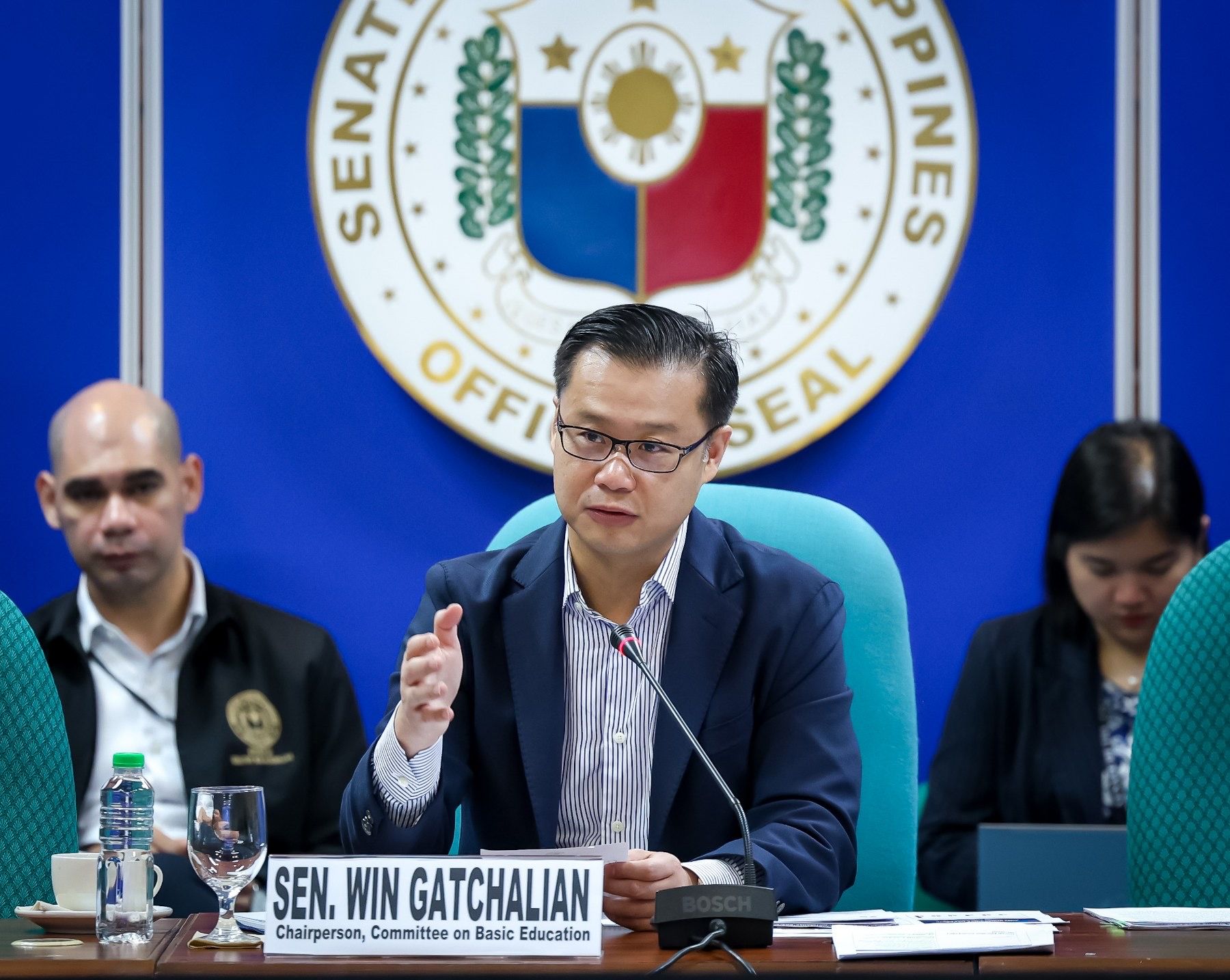
Gatchalian pointed this out as the Senate Committee on Basic Education took up the task of analyzing the result of the 2024 Functional Literacy, Education and Mass Media Survey (FLEMMS) conducted by the Philippine Statistics Authority (PSA), during a hearing on Wednesday, April 30.
FLEMMS is a survey conducted every five years and which, Gatchalian said, significantly provides government officials and other stakeholders data and an idea on how to address illiteracy in the country.
The FLEMM Survey is primarily used to measure the state of literacy in the country that will serve as basis in formulating policies and programs on the improvement of literacy and education status of the population.
During the hearing, PSA officials informed Gatchalian that they had redefined basic literacy in the previous surveys from those who can read and write, compute and comprehend.
And the initial results of the 2024 FLEMMS showed that there are around 5.8 million FIlipinos who cannot read, write or compute; 28.4 million Filipinos, on the other hand, have problems in understanding and comprehending.
“In the old definition, there were about 79.135 million constituents considered functional literate, but in the new definition, the number of functional literate went down to 60.170 million constituents or a difference of 18.965 million constituents,” Gatchalian noted, applying the figures to those who completed secondary education.
“In other words, there were high school graduates and junior high school graduates who graduated from our system but are not functional literate,” he said.
“…They can read , they can write but they cannot comprehend or they cannot understand. So this is the gravity of our situation right now and I support the new definition because, now they (PSA) have a good picture of where we are in terms of basic literacy and functional literacy,” Gatchalian stressed.
Adrian Cerezo, Assistant National Statistician, Social Sector Statistics Service of PSA, affirmed Gatchalian’s observation saying that they were able to test the accuracy of his estimation.
“We noted that there are actually a significant number who are passing or graduating but are not really functional literate, Mr. Chair,” Cerezo said during the hearing headed by Gatchalian.
“We note that the only 79 percent of senior high school graduates in the K-12 (program) are functionally literate, meaning there's around 21 percent who are not,” he further explained.
To which Gatchalian said, is “quite concerning, because that means one out of five of our graduates cannot comprehend and understand a simple story and that’s something we need to address.”
Gatchalian, then urged the Department of Education (DepEd) to step up and address the situation.
“That's the problem of basic education because how did they graduate when they are not functional literate? Iba yung hindi pumasok eh, iba rin yung pumasok ka but naka-graduate ka (It’s different if you did not attend, but it’s also different if you were able to go to school and graduated) but you are not functional literate,” he assessed.
“And this is where basic education comes in because that 18.9 million who graduated not being functional literate should not happen. No one should graduate in our basic education system, no one will graduate in our basic education system that will not be functional literate,” the senator reiterated.
Rosalina Villaneza, Chief Education Program Specialist, said the DepEd will be conducting the Philippine Informal Reading Inventory (PHIL-IRI) in the beginning of the school year assessment.
PHIL-IRI primarily aims to establish the reading skill and level profile of children in public elementary schools.
“The PHIL-IRI will guide us as to who are these learners who need intervention,” Villaneza told the Senate panel.
“There is a need for us to train a reading teacher for secondary (education) so that each secondary school will have a reading teacher who will address the needs of these learners,” Villaneza assured the senator.