ADVERTISEMENT

PH, US militaries conclude multilateral maritime event of Balikatan

Published Apr 29, 2025 08:23 am
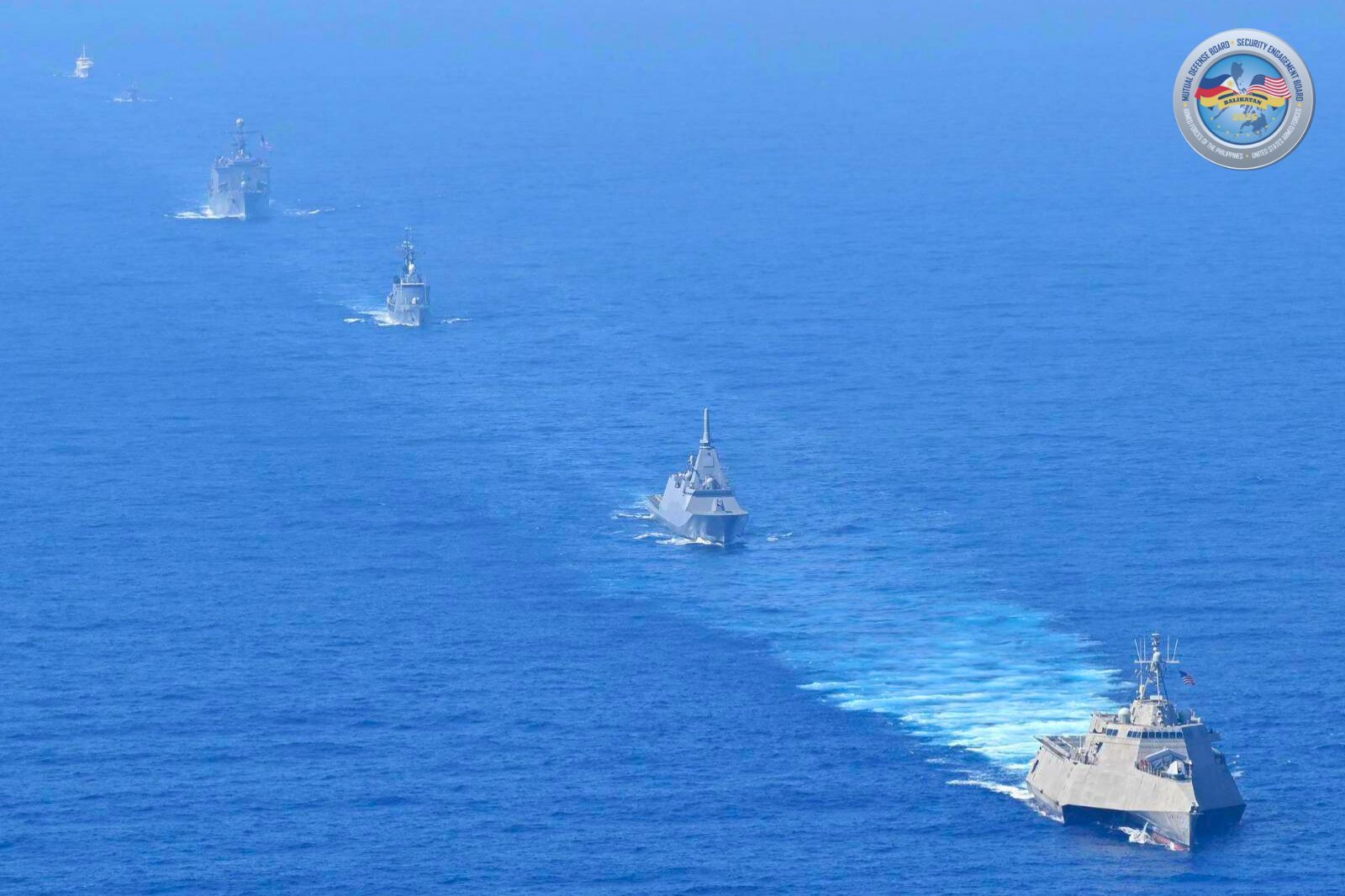
Balikatan MME.jpg
Allied vessels USS Savannah (LCS-28) from the US Navy, FFM-5 JS Yahagi from the Japan Maritime Self-Defense Forces, BRP Ramon Alcaraz (PS16) from Philippine Navy, USN's USS Comstock (LSD-45), PN's BRP Apolinario Mabini (PS36), and BRP Gabriela Silang (OPV 8301) from the Philippine Coast Guard, sail in formation during the Multilateral Maritime Event of Balikatan Exercises. (Photo: AFP)

After six days of complex and coordinated naval operations, the Armed Forces of the Philippines (AFP) and the United States Armed Forces concluded on Tuesday, April 29, the multilateral maritime event (MME) of this year’s Balikatan Exercises.

Since April 24, the opening of Balikatan, the Philippine Navy (PN) and its partners from the Philippine Coast Guard (PCG), US Navy, US Coast Guard, and Japan Maritime Self-Defense Force (JMSDF) sailed together spanning the waters of Subic Bay up to the Northern Luzon Command (Nolcom) joint operational area.

Lieutenant Colonel John Paul Salgado, chief of Balikatan’s combined joint information bureau, said that throughout the MME, the participating forces engaged in a wide array of high-end maritime activities including communications drills, division tactics, photo exercises, replenishment at sea, cross-deck landing qualifications, maritime search and rescue operations, and gunnery exercises.

The MME highlighted the capabilities of BRP Ramon Alcaraz (PS16) and BRP Apolinario Mabini (PS36) from the PN, BRP Gabriela Silang (OPV8301) from the PCG; USS Savannah (LCS-28) and USS Comstock (LSD-45) from the US Navy; and JS Yahagi (FFM-5) from JMSDF.

Aerial assets such as the PN’s AgustaWestland (AW) 109 helicopter (NH434), the US Navy’s MH-60R Seahawk (Stinger 44), and the JMSDF’s SH-60K (Super Auk26) further supported the integrated air-sea operations.

The MME “underscored the growing strength and unity of allied and partner nations in the Indo-Pacific,” according to Salgado.

Meanwhile, at Camp Aguinaldo in Quezon City, the AFP formally launched the Humanitarian Assistance and Disaster Response (HADR) Tabletop Exercise (TTX) which aims to improve coordination and collaboration among agencies and multinational partners in responding to large-scale humanitarian emergencies and natural disasters.
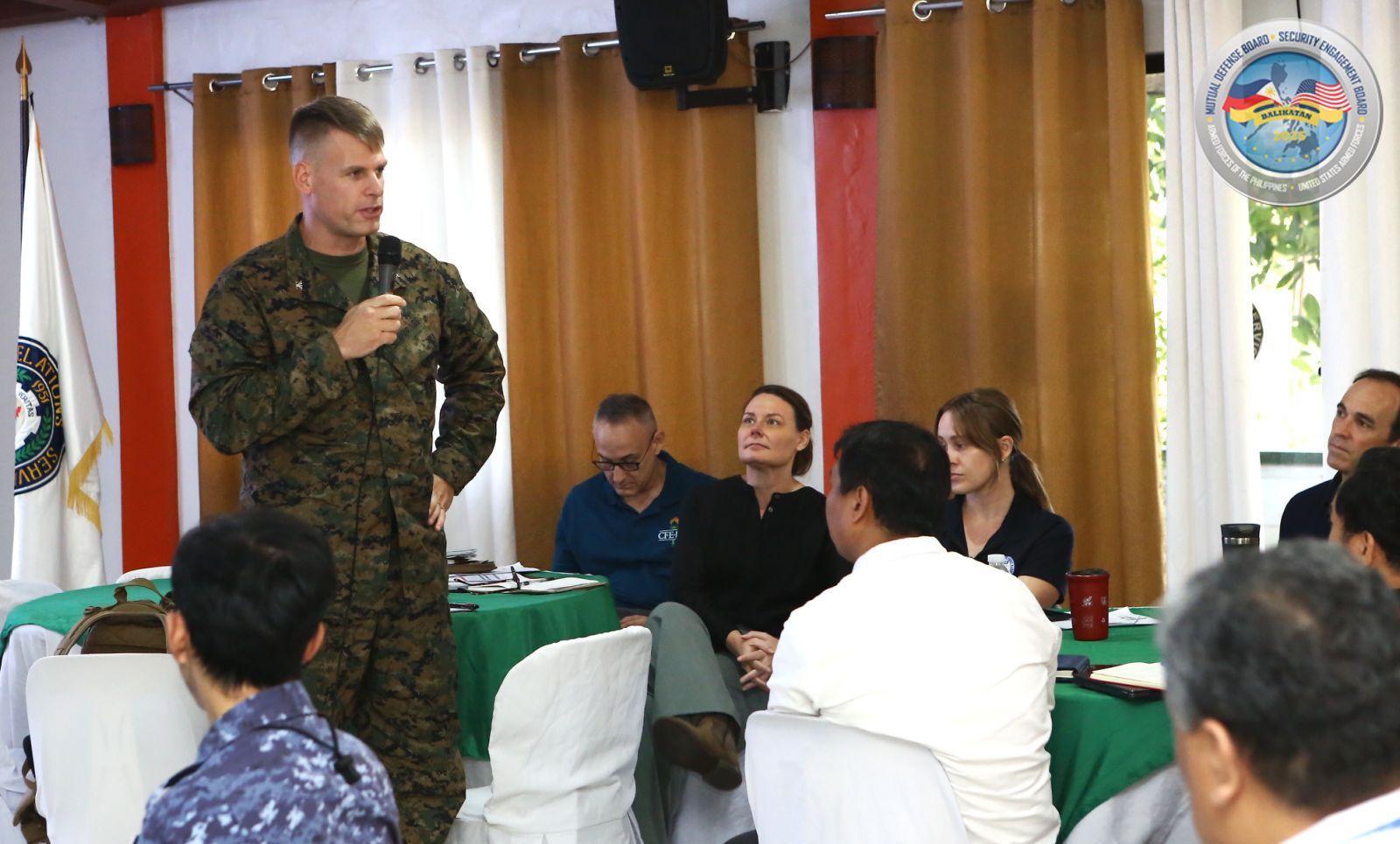
Balikatan HADR.jpg
A United States U.S. service member leads an interactive discussion, providing valuable operational strategies during the HADR Tabletop Exercise at Camp Aguinaldo in Quezon City on April 29, 2025. (Photo: AFP)

The exercise will run until May 1 and among the participants are representatives from the Office of Civil Defense (OCD), Department of National Defense (DND), Department of Social Welfare and Development (DSWD), Department of Foreign Affairs (DFA), Department of the Interior and Local Government (DILG), Philippine National Police (PNP), Japan Self-Defense Forces (JSDF), and the US Agency for International Development (USAID).

The exercise features activities such as Gap Analysis and Subject Matter Expert Exchange (SMEE) sessions to facilitate the exchange of knowledge and operational strategies, enhancing the ability to respond efficiently during crises.

“The HADR TTX highlights the commitment of Balikatan partners to strengthening regional resilience, improving crisis preparedness, and ensuring the swift and effective delivery of humanitarian assistance when needed most,” Salgado said.

Helocast training

Further, Philippine Army personnel from the 5th and 7th Infantry Divisions teamed up with the US Army Pacific’s (Usarpac) 25th Infantry Division for the conduct of a helocast training in Fort Magsaysay, Nueva Ecija.
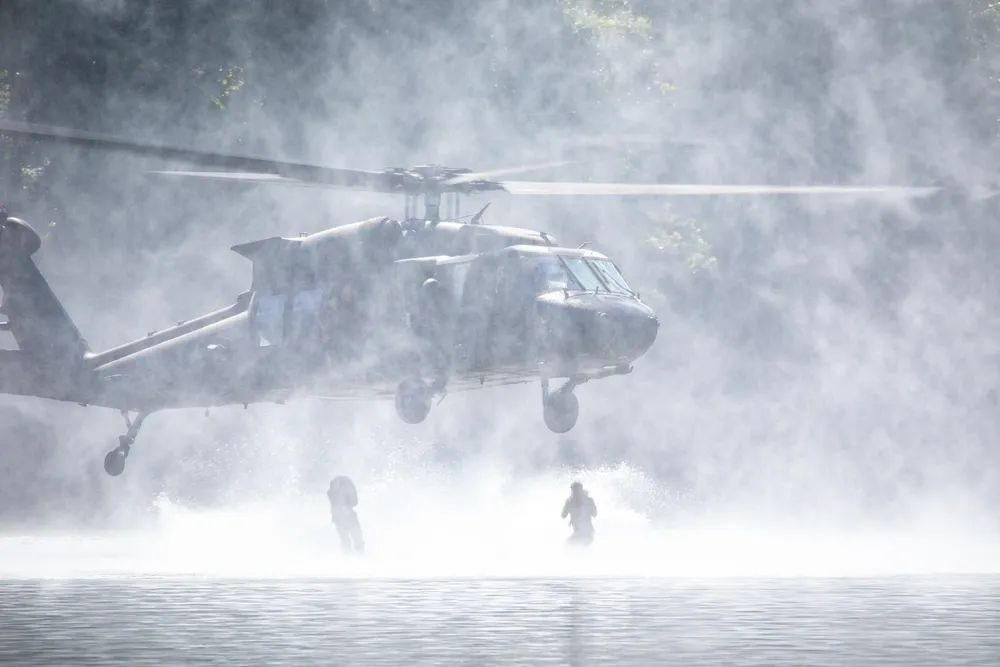
Balikatan helocast.jpg
Philippine Army soldiers join forces with US soldiers for a specialized helocast training as part of the 40th iteration of Exercise Balikatan in Fort Magsaysay, Nueva Ecija on April 27, 2025.⁩⁩ (Photo: Philippine Army)

Supervised by the Usarpac 25th Infantry Division's Lightning Academy Mobile Training Team, the exercise focused on helocasting, a specialized airborne technique that allows small military units to rapidly insert troops into maritime environments.

It featured the US Army UH-60 Black Hawk helicopters which transported the participating troops to designated maritime insertion points.

“Helocasting is considered a critical skill for both forces operating in the archipelagic landscape of the Philippines where rapid deployment across bodies of water can be essential for military operations,” PA spokesperson Colonel Louie Dema-ala said.

Counter-landing, live-fire

In Rizal, Palawan, the Philippine Marine Corps (PMC), US Marine Corps (USMC), and Australian Defence Force (ADF) showcased their combined strength and operational synergy during a large-scale counter-landing and live fire exercise.
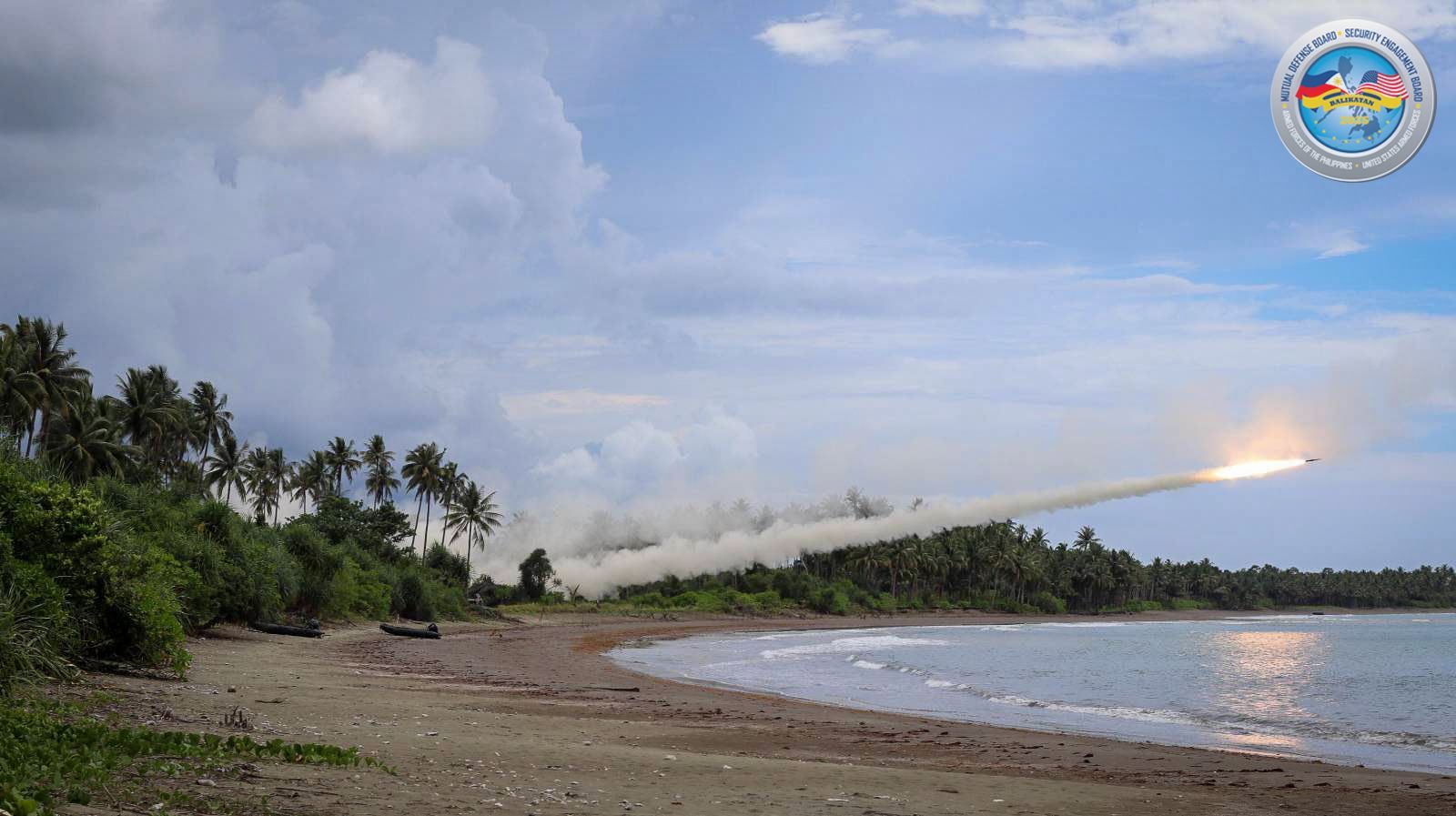
20250429_162917.jpg
The High Mobility Artillery Rocket System (HIMARS) roars to life as it launches a precision strike during a counter-landing and live fire exercise in Rizal, Palawan on April 28, 2025 as part of Balikatan Exercises. (Photo: AFP)

Troops from the Japan Self-Defense Forces (JSDF)observed the exercise, reinforcing ongoing efforts to enhance multilateral security cooperation and joint training initiatives in the Indo-Pacific region.

A maritime interdiction scenario marked the beginning of the exercise involving PN assets such as multi-purpose attack craft (MPACs) and fast attack interdiction craft (FAICs) which engaged and neutralized a simulated seaborne intrusion.

The operation also featured a demonstration of seamless coordination between naval and ground forces as they transitioned into an integrated coastal live fire mission.

The PMC deployed its howitzers to initiate the synchronized fire mission while the High Mobility Artillery Rocket System (HIMARS) was utilized to deliver rapid and precise strikes, reinforcing the allies’ ability to respond decisively to threats.

Supporting fire was provided using .50 caliber machine guns and M16 rifles, contributing to the overall firepower and coordination on the battlefield.

The drill culminated with a precision strike from the HIMARS, highlighting the allied forces’ capability to deliver fast, accurate, and decisive responses to amphibious threats—an essential element of regional deterrence.

Related Tags

Armed Forces of the Philippines PH-Japan PH-Australia ties PH-US Balikatan Exercises
ADVERTISEMENT
.most-popular .layout-ratio{ padding-bottom: 79.13%; } @media (min-width: 768px) and (max-width: 1024px) { .widget-title { font-size: 15px !important; } }

{{ articles_filter_1561_widget.title }}

.most-popular .layout-ratio{ padding-bottom: 79.13%; } @media (min-width: 768px) and (max-width: 1024px) { .widget-title { font-size: 15px !important; } }

{{ articles_filter_1562_widget.title }}

.most-popular .layout-ratio{ padding-bottom: 79.13%; } @media (min-width: 768px) and (max-width: 1024px) { .widget-title { font-size: 15px !important; } }

{{ articles_filter_1563_widget.title }}

{{ articles_filter_1564_widget.title }}

.mb-article-details { position: relative; } .mb-article-details .article-body-preview, .mb-article-details .article-body-summary{ font-size: 17px; line-height: 30px; font-family: "Libre Caslon Text", serif; color: #000; } .mb-article-details .article-body-preview iframe , .mb-article-details .article-body-summary iframe{ width: 100%; margin: auto; } .read-more-background { background: linear-gradient(180deg, color(display-p3 1.000 1.000 1.000 / 0) 13.75%, color(display-p3 1.000 1.000 1.000 / 0.8) 30.79%, color(display-p3 1.000 1.000 1.000) 72.5%); position: absolute; height: 200px; width: 100%; bottom: 0; display: flex; justify-content: center; align-items: center; padding: 0; } .read-more-background a{ color: #000; } .read-more-btn { padding: 17px 45px; font-family: Inter; font-weight: 700; font-size: 18px; line-height: 16px; text-align: center; vertical-align: middle; border: 1px solid black; background-color: white; } .hidden { display: none; }
function initializeAllSwipers() { // Get all hidden inputs with cms_article_id document.querySelectorAll('[id^="cms_article_id_"]').forEach(function (input) { const cmsArticleId = input.value; const articleSelector = '#article-' + cmsArticleId + ' .body_images'; const swiperElement = document.querySelector(articleSelector); if (swiperElement && !swiperElement.classList.contains('swiper-initialized')) { new Swiper(articleSelector, { loop: true, pagination: false, navigation: { nextEl: '#article-' + cmsArticleId + ' .swiper-button-next', prevEl: '#article-' + cmsArticleId + ' .swiper-button-prev', }, }); } }); } setTimeout(initializeAllSwipers, 3000); const intersectionObserver = new IntersectionObserver( (entries) => { entries.forEach((entry) => { if (entry.isIntersecting) { const newUrl = entry.target.getAttribute("data-url"); if (newUrl) { history.pushState(null, null, newUrl); let article = entry.target; // Extract metadata const author = article.querySelector('.author-section').textContent.replace('By', '').trim(); const section = article.querySelector('.section-info ').textContent.replace(' ', ' '); const title = article.querySelector('.article-title h1').textContent; // Parse URL for Chartbeat path format const parsedUrl = new URL(newUrl, window.location.origin); const cleanUrl = parsedUrl.host + parsedUrl.pathname; // Update Chartbeat configuration if (typeof window._sf_async_config !== 'undefined') { window._sf_async_config.path = cleanUrl; window._sf_async_config.sections = section; window._sf_async_config.authors = author; } // Track virtual page view with Chartbeat if (typeof pSUPERFLY !== 'undefined' && typeof pSUPERFLY.virtualPage === 'function') { try { pSUPERFLY.virtualPage({ path: cleanUrl, title: title, sections: section, authors: author }); } catch (error) { console.error('ping error', error); } } // Optional: Update document title if (title && title !== document.title) { document.title = title; } } } }); }, { threshold: 0.1 } ); function showArticleBody(button) { const article = button.closest("article"); const summary = article.querySelector(".article-body-summary"); const body = article.querySelector(".article-body-preview"); const readMoreSection = article.querySelector(".read-more-background"); // Hide summary and read-more section summary.style.display = "none"; readMoreSection.style.display = "none"; // Show the full article body body.classList.remove("hidden"); } document.addEventListener("DOMContentLoaded", () => { let loadCount = 0; // Track how many times articles are loaded const offset = [1, 2, 3, 4, 5, 6, 7, 8, 9, 10]; // Offset values const currentUrl = window.location.pathname.substring(1); let isLoading = false; // Prevent multiple calls if (!currentUrl) { console.log("Current URL is invalid."); return; } const sentinel = document.getElementById("load-more-sentinel"); if (!sentinel) { console.log("Sentinel element not found."); return; } function isSentinelVisible() { const rect = sentinel.getBoundingClientRect(); return ( rect.top < window.innerHeight && rect.bottom >= 0 ); } function onScroll() { if (isLoading) return; if (isSentinelVisible()) { if (loadCount >= offset.length) { console.log("Maximum load attempts reached."); window.removeEventListener("scroll", onScroll); return; } isLoading = true; const currentOffset = offset[loadCount]; window.loadMoreItems().then(() => { let article = document.querySelector('#widget_1690 > div:nth-last-of-type(2) article'); intersectionObserver.observe(article) loadCount++; }).catch(error => { console.error("Error loading more items:", error); }).finally(() => { isLoading = false; }); } } window.addEventListener("scroll", onScroll); });

Sign up by email to receive news.