






Manila Bulletin
 Philippines
National
NMC calls China's 'seizure' of Sandy Cay a 'clear example of disinformation'
Philippines
National
NMC calls China's 'seizure' of Sandy Cay a 'clear example of disinformation'
Philippines
National
NMC calls China's 'seizure' of Sandy Cay a 'clear example of disinformation'
NMC calls China's 'seizure' of Sandy Cay a 'clear example of disinformation'
Published May 3, 2025 03:36 pm


The Philippines has blasted China over its disinformation campaign through state-controlled media that intends to mislead its people and the international community over its claims that it has seized Sandy Cay.
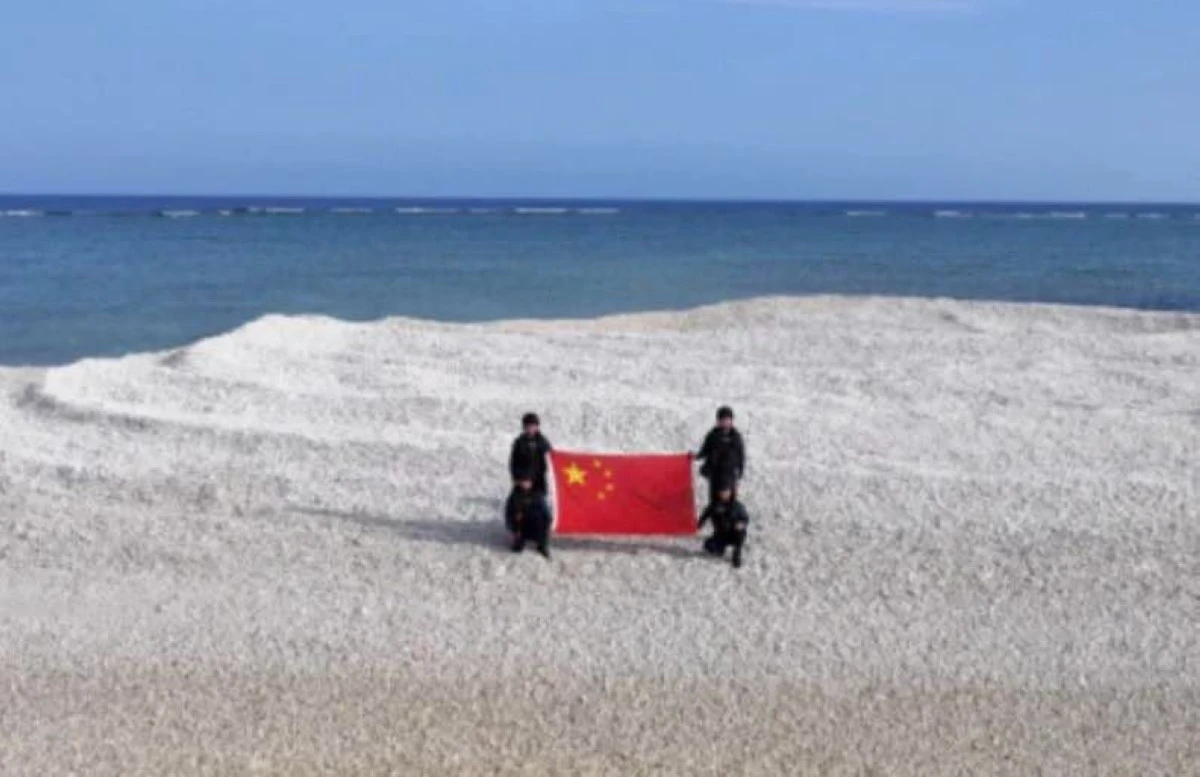
This photo from Chinese state media shows Chinese soldiers holding a flag of China at Sandy Cay in the West Philippine Sea.
The cay is a tiny sandbank near Pagasa Island where a Philippine military facility is located. It lies four nautical miles from Pagasa Island.
“The Philippines is firm in protecting its vast maritime domain, and is unwavering in fighting false allegations that detract from the country's lawful exercise of its sovereignty, sovereign rights and jurisdiction,” the National Maritime Council (NMC) said in a statement on Saturday, May 3.
“Through its State-controlled media, China uses disinformation to mislead its own people and the international community about the continuing illegality of its activities in the West Philippine Sea,” it added.
The statement read that a “clear example of the disinformation activities of the Chinese government” are its reports on Sandy Cay, having made it appear that Beijing has effective control of the cay “by displaying its flag and conducting waste collection.”
Instead, the NMC pointed out that the presence of Chinese vessels in the area and the “massive artificial island-building in Zamora Reef” have degraded the environment around Pagasa Island and its cays.
News on state-controlled Chinese media, as well as on its social media platforms, said Chinese personnel have raised the Chinese flag and conducted inspection of Sandy Cay.
The NMC reminded China “to comply with its obligations under international law,” particularly the United Nations Convention on the Law of the Sea (UNCLOS), the 2016 South China Sea Arbitral Award, and the 2002 Declaration of the Conduct of Parties in the South China Sea (DOC).
“The Philippines will consistently pursue peaceful means for resolving disputes and constructive approaches to managing differences, while also continuing its lawful and routine activities in the West Philippine Sea, consistent with its maritime entitlements under international law,” the council furthered.
Beijing sees almost the entire South China Sea, including the exclusive economic zones (EEZs) of other claimants, as its own. The sweeping claims have raised tensions in the region, with the Philippines eventually winning a 2016 arbitral tribunal case that invalidated the basis of China’s claims.