







Marcos to hold bilateral talks with Japan PM on Tuesday


Japanese Prime Minister Ishiba Shigeru will arrive on Tuesday, April 29, to meet with President Marcos to discuss regional maritime security, the Japanese Embassy in Manila disclosed.
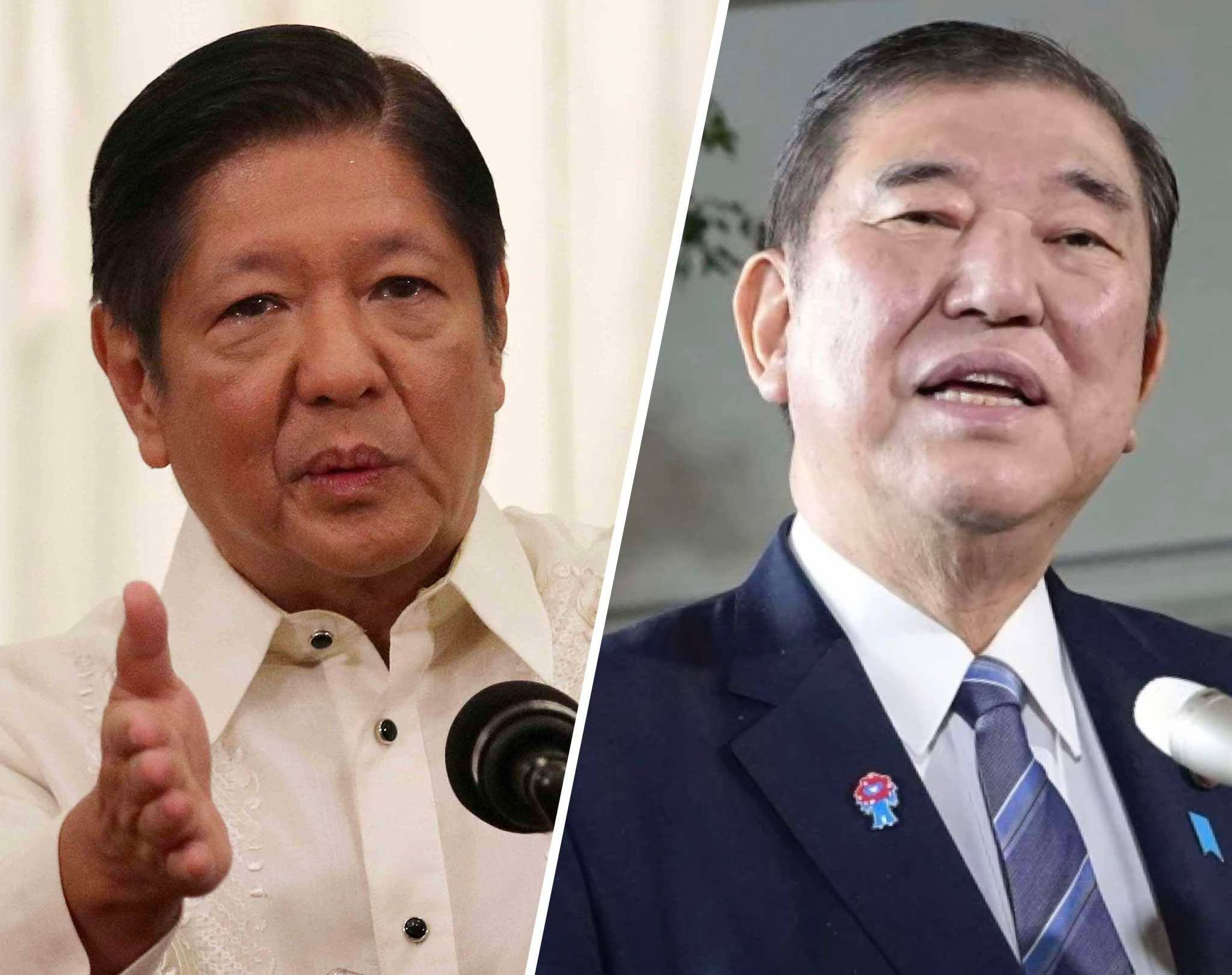
President Ferdinand 'Bongbong' Marcos Jr. and Japanese Prime Minister Ishiba Shigeru (MB, AP File Photos)
Ishiba will also be signing some agreements—ranging from political to economic to cultural, Department of Foreign Affairs (DFA) Secretary Enrique Manalo said in an earlier interview.
He also described the visit as “very important” because Japan and the Philippines are strategic partners.
“Very important because Japan is our strategic partner and we have very close relations with Japan in so many areas so it is a symbol of the strength and growing cooperation between our two countries,” Manalo emphasized.
Among the activities that Ishiba would be participating in while in the Philippines is a wreath-laying ceremony at the Rizal Monument. He will also be given arrival honors at Malacañang before his meeting with the President.
The Prime Minister is expected to sign the Palace’s guestbook before holding a bilateral meeting and a joint press conference for the presentation of the signed agreements.
The President will host an official banquet for the Japanese leader to conclude their meeting.
Ishiba will be in Manila until April 30.
Japanese Ambassador to the Philippines Endo Kazuya highlighted the need to center the discussions on how to achieve a “free and open Indo-Pacific” and the progress of the Japan-Philippines Reciprocal Access Agreement (RAA).
“The summit meeting with President Marcos will involve discussions on various matters, some of which relate to national security cooperation and maritime law enforcement cooperation,” Endo said in a previous statement, noting that aside from the RAA, there will also be discussions on the transfer of air surveillance radar systems and Japan’s Official Security Assistance to the Philippines.
Signed in July 2024, the RAA will allow Filipino soldiers to undergo combat training with their counterparts in Japan.