







Salceda hails signing of PHIVOLCS Modernization Act


At A Glance
- Albay 2nd district Rep. Joey Salceda--someone who is no stranger to the dangers of volcanic eruptions--has hailed President Marcos' signing of Republic Act No. 12180, or the PHIVOLCS Modernization Act.
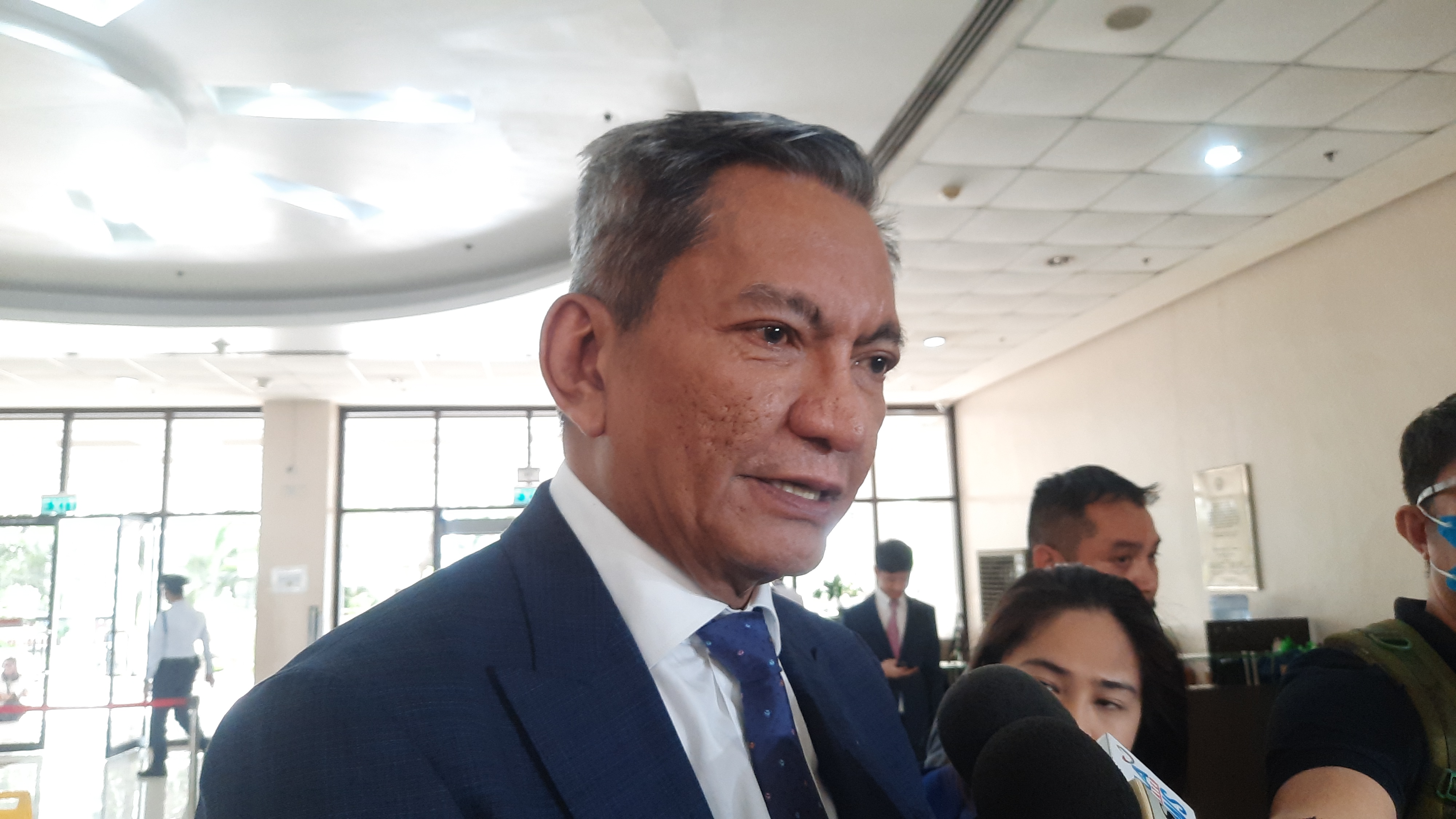 Albay 2nd district Rep. Joey Salceda (Ellson Quismorio/ MANILA BULLETIN)
Albay 2nd district Rep. Joey Salceda--someone who is no stranger to the dangers of volcanic eruptions--has hailed President Marcos' signing of Republic Act No. 12180, or the PHIVOLCS Modernization Act.
“This is a country of 24 active volcanoes and over 100 seismic faults. We don’t control the hazards—but we can control how prepared we are. This law gives us that preparedness. It is our investment in life-saving science,” Salceda said in a recent statement.
The law modernizes the Philippine Institute of Volcanology and Seismology (PHIVOLCS) by upgrading its monitoring networks, expanding regional observatories, establishing a Geoscience Academy, and digitizing decades of seismic and volcanic data.
It also enhances the country’s capacity to forecast and issue real-time alerts for eruptions, earthquakes, tsunamis, and landslides.
Salceda, chairman of the House Committee on Ways and Means, described the new law as a “vital shield for a volcanic nation like the Philippines” and a landmark in national disaster readiness.
The solon had overseen various calamity response efforts during his time as Albay governor, whenever the famous Mayon Volcano erupted.
Salceda expressed his full gratitude to President Marcos, who signed the measure on April 24.
“President Marcos was right to say that this law will help mitigate the impact of natural hazards. That’s the vision we share—one that puts science at the center of national defense. I thank the President for making this law a reality.”
Salceda, who served as Albay governor from 2007 to 2016, was globally recognized for turning the province into a model of zero-casualty disaster preparedness. Under his leadership, Albay developed pioneering protocols for evacuation, hazard mapping, and community-based early warning systems.
“As governor, I lived with the daily threat of Mayon Volcano. We had to be ready every hour, every day. We worked with PHIVOLCS hand-in-hand, and we built systems that are now being emulated across the country.”
He credited much of this success to his long-standing partnership with Dr. Renato Solidum, then Director of PHIVOLCS and now Secretary of the Department of Science and Technology (DOST).
“Secretary Solidum and I kept Albay safe through eruptions, earthquakes, and lahars. We modernized disaster governance in the province. Now, we are doing it for the whole country. With him leading the DOST, I know RA 12180 will be implemented with rigor and vision.”
Salceda also dedicated the law to the late Ed Laguerta, PHIVOLCS’ longtime resident volcanologist stationed in Albay.
“I dedicate this law to Ed Laguerta, the quiet sentinel of Mayon. For decades, he watched over us, issued warnings, and helped ensure we had zero casualties. This law honors that kind of dedication,” he said.