







Open day care, health centers on election day, DILG tells LGUs


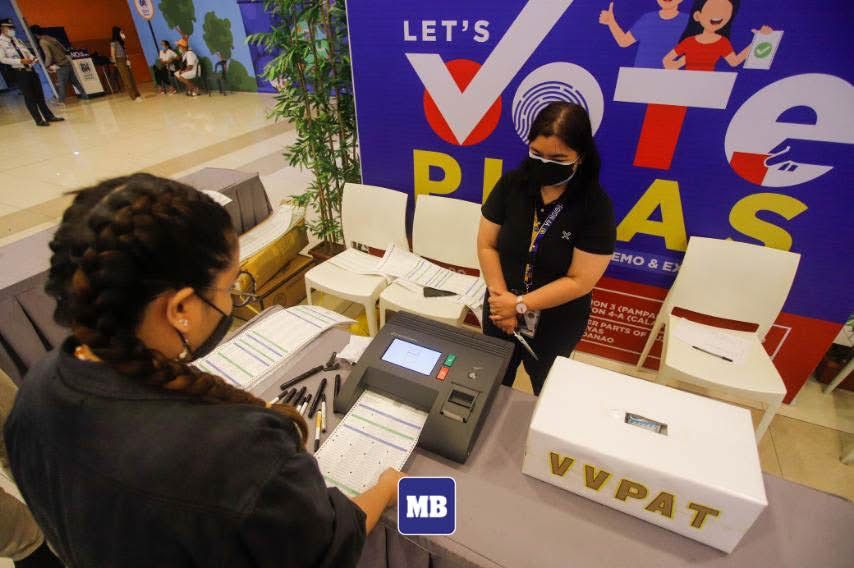
The Department of the Interior and Local Government (DILG) asked the local government units (LGUs) nationwide to open their day and health centers on the May 12 midterm polls to ensure the ability of the parents with children to vote without disruption.
“Sa darating na halalan, buksan nila (LGUs) ang kanilang daycare center nang sa ganun puwedeng dalhin ng mga magulang ang kanilang anak doon para makaboto sila nang maayos (In the coming elections, they should open their day care centers to enable the parents to bring their children there so that they can vote freely),’’ DILG Undersecretary Marlo Iringan said.
Iringan also saw the need for the LGUs to keep their health centers during the May 12 polls to prepare for any “medical incidents’’ that may occur with voters going to the polling precincts.
The DILG vowed to continue its support to the Commission on Elections (Comelec) in spreading key resolutions and guidelines, particularly those concerning vote buying, vote selling, and the misuse of state resources.
Through its “Kontra-Bigay” campaign, the DILG conducted a nationwide webinar viewed by over 50,000 netizens, focusing on the vital Comelec directives ahead of the elections.
DILG Secretary Juanito Victor “Jonvic” C. Remulla also had issued Memorandum Circular (MC) 2025-016, directing the LGUs to form local government transition teams that will handle the inventory of properties, records, and finances in preparation for the assumption of incoming local officials.
“We have already directed our field officers to ensure that the transition team is organized and doing the inventory. So that, come July 1, there will be a proper turnover of all these properties, records and finances to the new set of local officials,” Iringan stressed.
Earlier, the DILG stressed that incumbent local officials running for another elective post may still sign government documents except in records covered by the Comelec election ban.
In a statement, the DILG also asserted that the elected officials are still allowed to carry out their duties pertaining to their respective offices until the end of their term in office.
The DILG also noted that elected local officials may engage in political and electoral movements but reminded them that it is unlawful “to collect contributions from their constituent staff or push for the activities,’’ pursuant to Section 93 of the Local Government Code of 1991.
Pursuant to Section 93 of the Local Government Code of 1991, elected local officials may engage in political and electoral movements, but it would be illegal for them to collect contributions from their constituent staff or push for the activities.
The DILG issued the call reminding them to “refrain from any unlawful act in accordance with the Omnibus Election Code.
“Comelec Minute Resolution 24-1001 also affirmed this, which states that barangay and SK elected officials are not barred from any campaign or activity in accordance with the political activities of their party they are affiliated with,’’ the DILG insisted.
The DILG also stated the “mandatory requirements to operationalize the independence of the Sangguniang Kabataan.
It stressed that Section 20(b) of Republic Act (RA) 10742 states that “the Sangguniang Kabataan shall have financial independence in its operations, disbursements and encashment of its funds, income and expenditures.’’
“As such, the Sangguniang Kabataan funds shall be deposited in the name of the Sangguniang Kabataan of the concerned barangay in a government-owned bank situated in or nearest to its area of jurisdiction with the Sangguniang Kabataan chairperson and the Sangguniang Kabataan treasurer as the official signatories,” the DILG continued.
Further, the DILG called on all government employees, including barangay personnel, to adhere to the Civil Service Commission (CSC) ruling on non-partisan politics ahead of the May 2025 polls.
Under Joint Commission on Elections (Comelec)-CSC Advisory on Electioneering and Partisan Political Activities (Joint Circular No. 1, s. 2016), government employees are strictly prohibited from forming groups, associations, or committees to solicit votes or campaign for/against a candidate; hold political rallies, caucuses and meetings or parades for election campaigning.
In the same advisory, government personnel are barred from making speeches, announcements or media commentaries to support or oppose a candidate; publishing, distributing or displaying campaign materials promoting or opposing a candidate; directly or indirectly soliciting votes, pledges or support for a candidate or party.
Government employees are also prohibited from using government resources such as time, personnel, facilities, and equipment for political purposes; providing financial or material contributions to candidates or political parties; wearing campaign-related shirts, pins, caps, or accessories, unless authorized by the Comelec and serving as a watcher for a political party or candidate during the election.
The CSC stated that these prohibitions apply to all government employees, regardless of appointment status, which include the uniformed and active members of the Philippine National Police (PNP) and Armed Forces of the Philippines (AFP).
Government employees who engage in prohibited partisan political activities may face administrative sanctions under the 2017 Rules on Administrative Cases in the Civil Service (RACCS).
First time offenders are suspended for one month and one day to six months while government personnel committing the same offense the second time will be dismissed from the service, including loss of benefits and disqualification from future government employment.