ADVERTISEMENT

Coal-reliant Philippines slow in renewable energy adoption—ADB

Published Apr 26, 2025 10:17 am

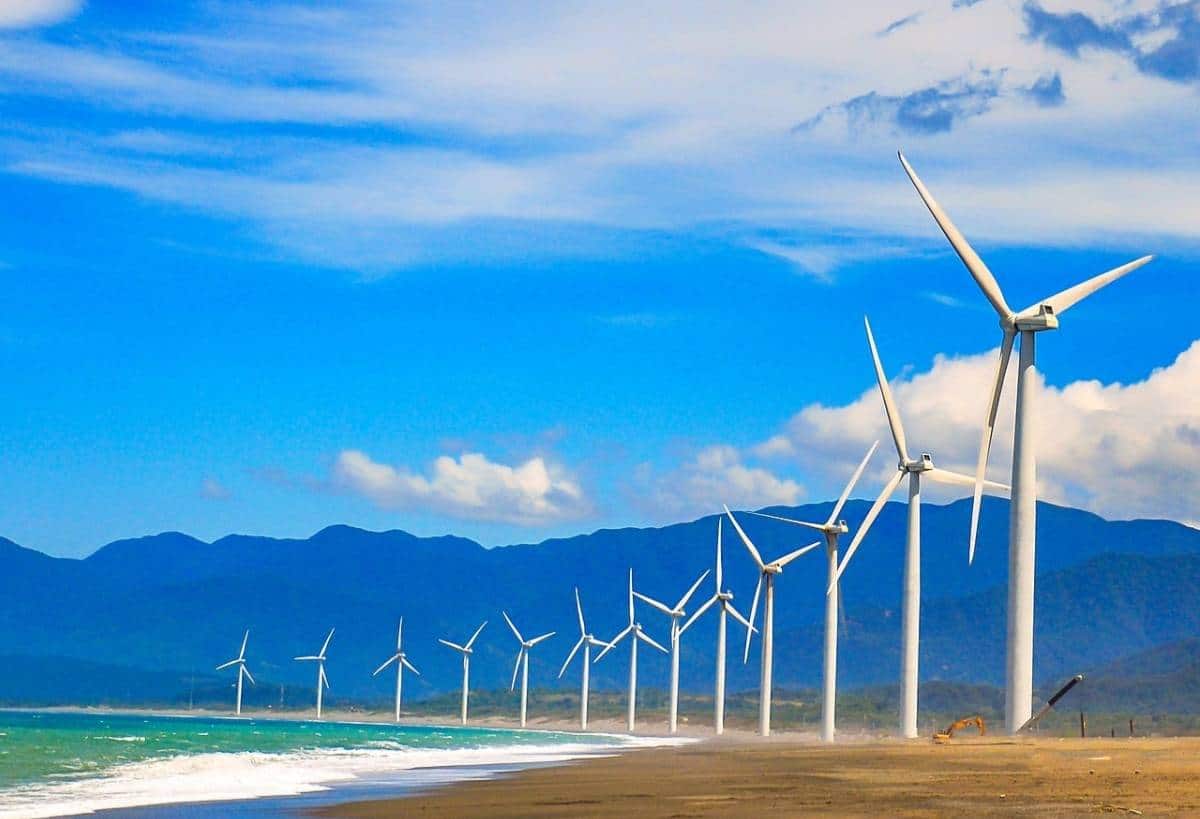
Marcos urged to develop wind energy farms in WPS

The Philippines and many of its Southeast Asian neighbors have been sluggish in tapping renewable energy (RE), according to the Manila-based multilateral lender Asian Development Bank (ADB).

"In 2022, renewables—as a share of new power generation capacity installed—exceeded 75 percent in nine countries, including China, India, and Kazakhstan, illustrating these countries demonstrated capability, willingness, and enabling ecosystem to install renewable energy infrastructure," the ADB said in a report titled "Energy Transition Readiness Assessment for Developing Asia and the Pacific," published on April 25.

"On the other hand, carbon‑intensive economies in Southeast Asia, such as Malaysia, Indonesia, the Philippines, and Thailand, as well as in Central and West Asia—including Azerbaijan, Turkmenistan, and Uzbekistan—have shown the opposite with low adoption of renewable energy generation and capacity," the ADB said.

The report primarily blamed the existing capacity of coal-fired power plants (CFPPs) in the region as the biggest obstacle to accelerating clean energy transition and expanding RE capacity.

"CFPPs in developing Asia are very young and have an average remaining life span of over 25 years," it noted.

ADB estimates showed that in 2022, the residual life of coal plants in the Philippines stood at 27.1 years, above the regional average of 18.7 and the world's only 3.6 years.

"By the end of 2023, legacy coal-based power plants accounted for more than 60 percent of electricity generation in China, India, Indonesia, and the Philippines," according to the report.

Cost and availability are also major considerations, as coal is not only cheaper but also more abundant, the ADB pointed out.

"As these power plants are relatively young and provide a stable energy source, developing Asian economies will need support to secure cleaner and more reliable energy sources and address stranded asset risks," it added.

For the ADB, the Philippines and other countries in the region that have been slow in RE rollout "need to set the appropriate policy directions and enabling environments to meet massive investment requirements."

"Developing Asian countries will need to set incentives, align subsidies targeting and financial incentives, and encourage private sector participation to meet massive investment requirement," it said.

The ADB report came up with a so-called energy transition readiness assessment (ETRA), whose inspiration was the World Economic Forum's (WEF) long-running energy transition index (ETI).

ETRA "borrows from the ETI's framework, methodology, and indicator selection while building around the unique conditions and needs of developing Asia and the Pacific," it explained.

Across seven ETRA indicators, where the highest score is 100, the Philippines' scores mostly fell in the bottom half.

The Philippines scored the highest in the energy economy linkages indicator, with a score of 72.8, which was higher than the world average and among its peers in developing Asia.

The country scored 53 in macroeconomic and investment environment, also better than both the global and regional averages.

It scored 50.2 in infrastructure system, beneath the worldwide average.

In the social system indicator, the Philippines' score was 49.9, lower than the global and regional scores.

In energy system, the country's score was 49.7, below the global average but above the regional score.

The Philippines scored 45.4 in regulatory environment, above the global level but below the regional average.

The country scored the lowest in technology and diffusion ecosystem, even as its 30.5 was fared better than the world and developing Asia averages.

Related Tags

renewable energy (RE) Asian Development Bank (ADB)
ADVERTISEMENT
.most-popular .layout-ratio{ padding-bottom: 79.13%; } @media (min-width: 768px) and (max-width: 1024px) { .widget-title { font-size: 15px !important; } }

{{ articles_filter_1561_widget.title }}

.most-popular .layout-ratio{ padding-bottom: 79.13%; } @media (min-width: 768px) and (max-width: 1024px) { .widget-title { font-size: 15px !important; } }

{{ articles_filter_1562_widget.title }}

.most-popular .layout-ratio{ padding-bottom: 79.13%; } @media (min-width: 768px) and (max-width: 1024px) { .widget-title { font-size: 15px !important; } }

{{ articles_filter_1563_widget.title }}

{{ articles_filter_1564_widget.title }}

.mb-article-details { position: relative; } .mb-article-details .article-body-preview, .mb-article-details .article-body-summary{ font-size: 17px; line-height: 30px; font-family: "Libre Caslon Text", serif; color: #000; } .mb-article-details .article-body-preview iframe , .mb-article-details .article-body-summary iframe{ width: 100%; margin: auto; } .read-more-background { background: linear-gradient(180deg, color(display-p3 1.000 1.000 1.000 / 0) 13.75%, color(display-p3 1.000 1.000 1.000 / 0.8) 30.79%, color(display-p3 1.000 1.000 1.000) 72.5%); position: absolute; height: 200px; width: 100%; bottom: 0; display: flex; justify-content: center; align-items: center; padding: 0; } .read-more-background a{ color: #000; } .read-more-btn { padding: 17px 45px; font-family: Inter; font-weight: 700; font-size: 18px; line-height: 16px; text-align: center; vertical-align: middle; border: 1px solid black; background-color: white; } .hidden { display: none; }
function initializeAllSwipers() { // Get all hidden inputs with cms_article_id document.querySelectorAll('[id^="cms_article_id_"]').forEach(function (input) { const cmsArticleId = input.value; const articleSelector = '#article-' + cmsArticleId + ' .body_images'; const swiperElement = document.querySelector(articleSelector); if (swiperElement && !swiperElement.classList.contains('swiper-initialized')) { new Swiper(articleSelector, { loop: true, pagination: false, navigation: { nextEl: '#article-' + cmsArticleId + ' .swiper-button-next', prevEl: '#article-' + cmsArticleId + ' .swiper-button-prev', }, }); } }); } setTimeout(initializeAllSwipers, 3000); const intersectionObserver = new IntersectionObserver( (entries) => { entries.forEach((entry) => { if (entry.isIntersecting) { const newUrl = entry.target.getAttribute("data-url"); if (newUrl) { history.pushState(null, null, newUrl); let article = entry.target; // Extract metadata const author = article.querySelector('.author-section').textContent.replace('By', '').trim(); const section = article.querySelector('.section-info ').textContent.replace(' ', ' '); const title = article.querySelector('.article-title h1').textContent; // Parse URL for Chartbeat path format const parsedUrl = new URL(newUrl, window.location.origin); const cleanUrl = parsedUrl.host + parsedUrl.pathname; // Update Chartbeat configuration if (typeof window._sf_async_config !== 'undefined') { window._sf_async_config.path = cleanUrl; window._sf_async_config.sections = section; window._sf_async_config.authors = author; } // Track virtual page view with Chartbeat if (typeof pSUPERFLY !== 'undefined' && typeof pSUPERFLY.virtualPage === 'function') { try { pSUPERFLY.virtualPage({ path: cleanUrl, title: title, sections: section, authors: author }); } catch (error) { console.error('ping error', error); } } // Optional: Update document title if (title && title !== document.title) { document.title = title; } } } }); }, { threshold: 0.1 } ); function showArticleBody(button) { const article = button.closest("article"); const summary = article.querySelector(".article-body-summary"); const body = article.querySelector(".article-body-preview"); const readMoreSection = article.querySelector(".read-more-background"); // Hide summary and read-more section summary.style.display = "none"; readMoreSection.style.display = "none"; // Show the full article body body.classList.remove("hidden"); } document.addEventListener("DOMContentLoaded", () => { let loadCount = 0; // Track how many times articles are loaded const offset = [1, 2, 3, 4, 5, 6, 7, 8, 9, 10]; // Offset values const currentUrl = window.location.pathname.substring(1); let isLoading = false; // Prevent multiple calls if (!currentUrl) { console.log("Current URL is invalid."); return; } const sentinel = document.getElementById("load-more-sentinel"); if (!sentinel) { console.log("Sentinel element not found."); return; } function isSentinelVisible() { const rect = sentinel.getBoundingClientRect(); return ( rect.top < window.innerHeight && rect.bottom >= 0 ); } function onScroll() { if (isLoading) return; if (isSentinelVisible()) { if (loadCount >= offset.length) { console.log("Maximum load attempts reached."); window.removeEventListener("scroll", onScroll); return; } isLoading = true; const currentOffset = offset[loadCount]; window.loadMoreItems().then(() => { let article = document.querySelector('#widget_1690 > div:nth-last-of-type(2) article'); intersectionObserver.observe(article) loadCount++; }).catch(error => { console.error("Error loading more items:", error); }).finally(() => { isLoading = false; }); } } window.addEventListener("scroll", onScroll); });

Sign up by email to receive news.