







Big guns out in Balikatan


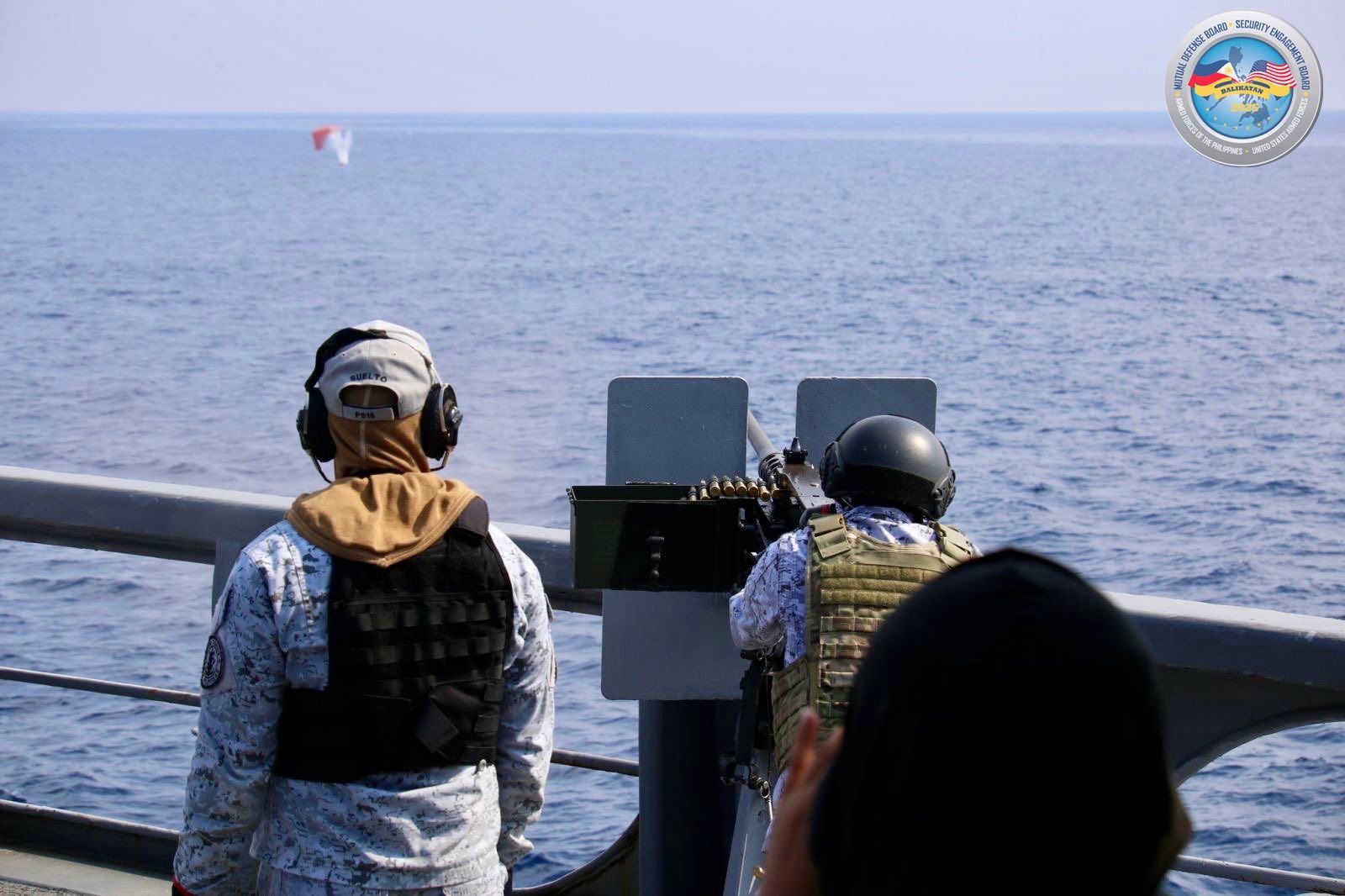
The Armed Forces of the Philippines (AFP) said Saturday, April 26, that it successfully tested its weapons aboard two Philippine Navy (PN) warships during a gunnery exercise (Gunnex) with the United States Armed Forces as part of the ongoing Balikatan Exercises.
The Gunnex involved live-fire maneuvers using .50 caliber guns aboard BRP Ramon Alcaraz (PS16) and BRP Apolinario Mabini (PS36).
The United States’ littoral combat ship USS Savannah (LCS 28) and dock landing ship USS Comstock (LSD 45), as well as Philippine Coast Guard (PCG) offshore patrol vessel BRP Gabriela Silang (OPV 8301) also took part in the training held last Friday.
“The Gunnex served as a platform for the joint forces to refine naval surface warfare tactics, improve communication interoperability, and strengthen maritime domain awareness in the West Philippine Sea,” said Lt. Col. John Paul Salgado, chief of Balikatan’s Combined Joint Information Bureau.
On the same day, guided missile frigate BRP Jose Rizal (FF 150) took part in a fire drill, first aid response, and casualty evacuation exercise.
“Held at sea, the activities aimed to enhance the crew’s readiness and coordination in responding to onboard emergencies, with emphasis on fire suppression, immediate medical response, and safe evacuation procedures in order to respond to various maritime emergencies,” Salgado explained.
Both the Gunnex and FF150 drills were part of the Multilateral Maritime Event (MME) of Balikatan Exercises.
‘Spyder’ training
Meanwhile, the Philippine Air Force’s (PAF) 960th Air and Missile Defense Group (960AMDG) shared their knowledge and operational experience with counterparts from the US, Japan, and United Kingdom during a subject matter expert exchange (SMEE) training on its Surface-to-Air Python and Derby (Spyder) medium-range air defense system at the Naval Education, Training and Doctrine Command (NETDC) in San Antonio, Zambales.
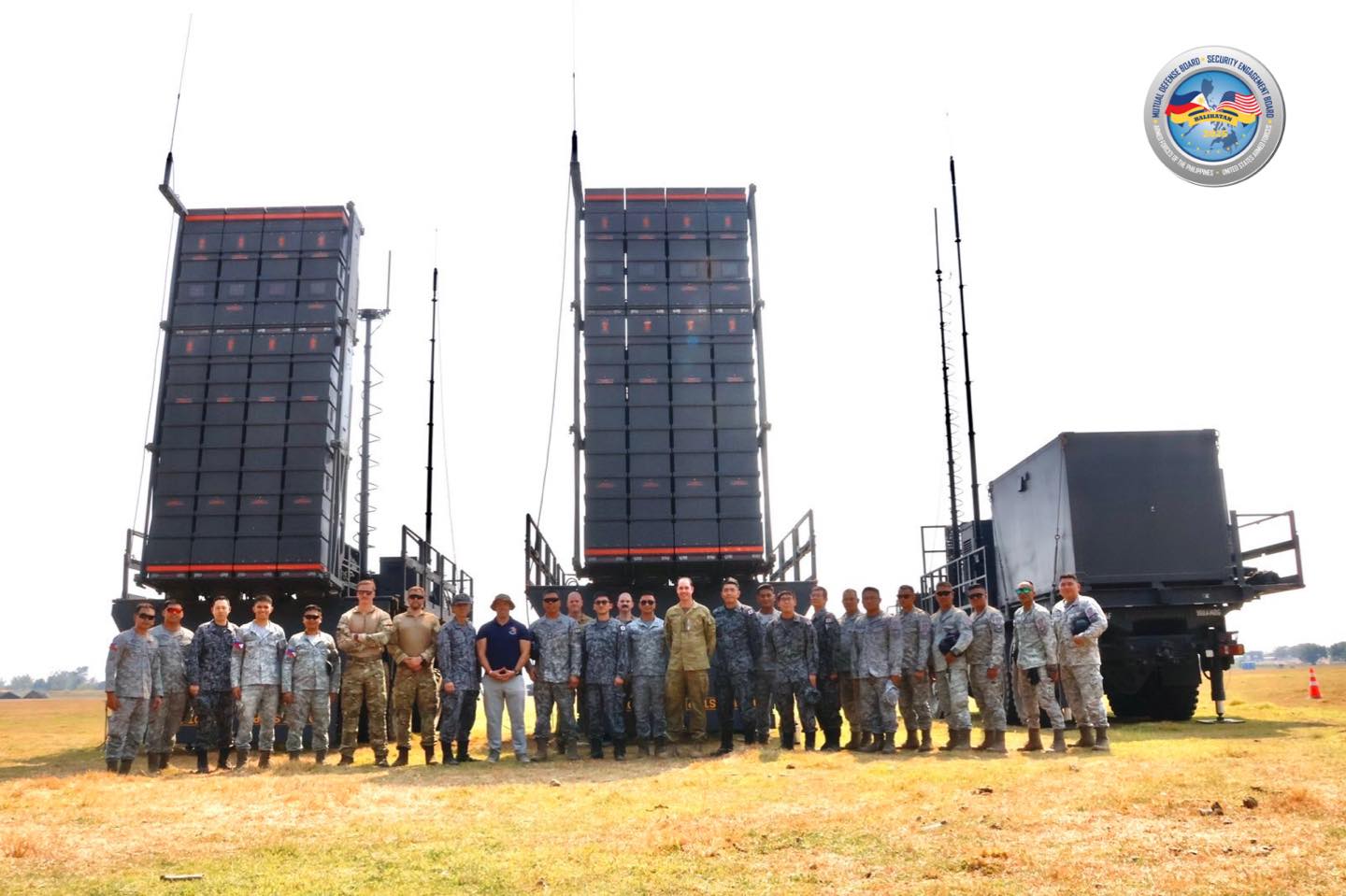
The PAF personnel worked alongside their partners to integrate the Spyder with the US Marine Air Defense Integrated System (MADIS) and Avenger systems.
This would enhance joint air and missile defense capabilities by the two forces and support stronger interoperability for future operations.
‘Spike’ firing
The PN also hit another modernization milestone after it successfully demonstrated the capabilities of its Spike Non-Line of Sight (NLOS) missile system aboard patrol gunboat BRP Albert Majini (PG909) during a missile exercise (Missilex) off the sea in Mariveles, Bataan.
During the exercise, the crew of BRP Albert Majini scored a direct hit on a target 24 km away from the patrol gunboat by launching two types of Spike NLOS missiles, a fragmentation missile and a penetration blast-fragmentation missile.
Both missiles hit their targets with precision, according to PN spokesperson Capt. John Percie Alcos.
The exercise also featured a swarm exercise (Swarmex) by BRP Albert Majini and BRP Tomas Campo (PG908) where they showcased their precise close-range firepower and tactical coordination using a 30mm Typhoon gun and two .50 mm caliber mini-Typhoon machine guns.
Alcos said the exercise demonstrated the Navy’s “superior firepower and tactical maneuvering in a real-world scenario.”
Jungle combat drills
Philippine Army (PA) troops also enhanced their jungle combat skills during a training with counterparts from the US Army Pacific’s (USARPAC) 25th Infantry Division during a jungle operations training course and jungle tracker course at Camp Tecson in San Miguel, Bulacan.
The combined training featured a Philippine Army-led Jungle Tracker Course alongside a U.S.-led jungle operations training course, which challenged participating soldiers in endurance, survival, navigation, and combat skills in dense tropical terrain.
The concluding event, known as the “Green Mile,” tested participating troops through a series of physically demanding stations, concluding with a lake swim to retrieve their course tabs.
PA troops and their U.S. counterparts also trained on knot-tying, one-rope bridges, and Z-pulley systems to enhance mobility, load security, and personnel recovery in challenging terrain.
Community engagement
Aside from testing out their weapons, the participants of the Balikatan also held a collaborative community health engagement with residents of Brgy. Pulong Sampalok in Doña Remedios Trinidad, Bulacan.
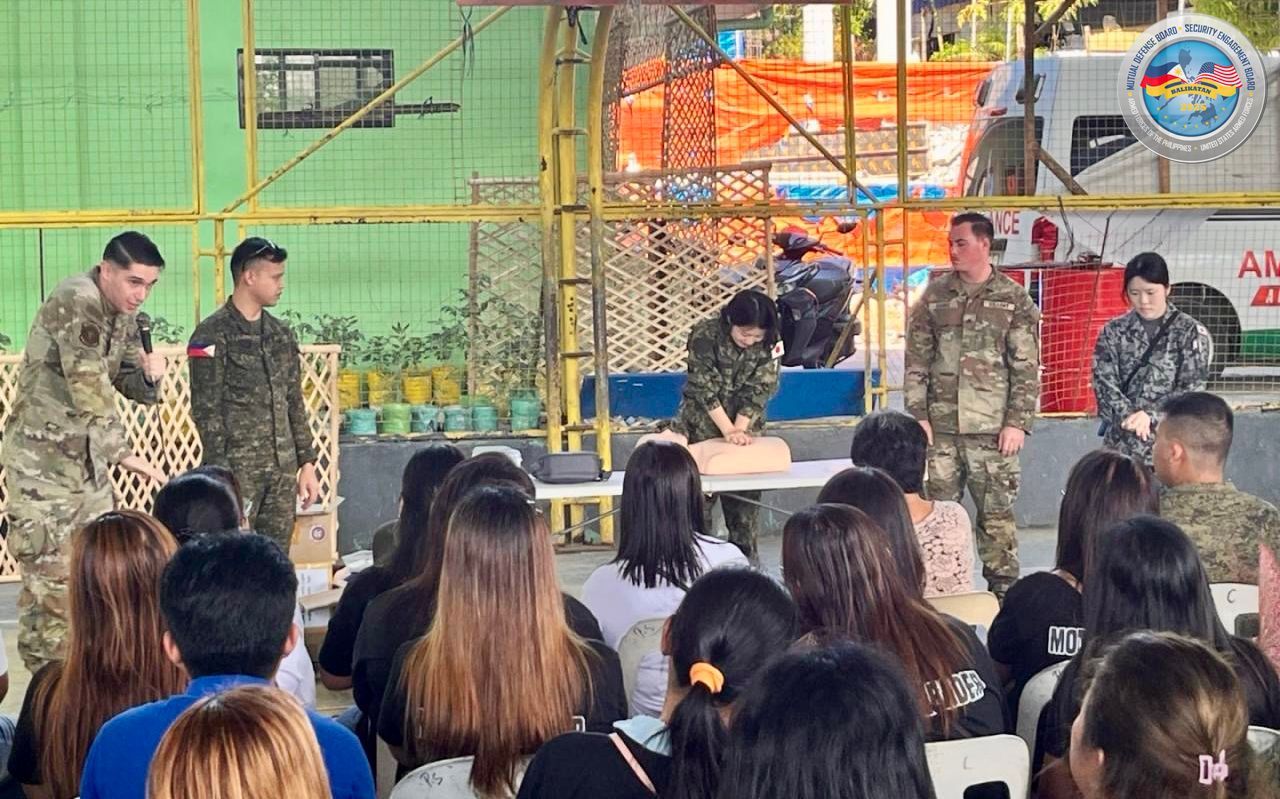
Personnel of the AFP, US Air Force (SAF), and Japan Self-Defense Forces (JSDF) launched health lectures on proper nutrition, diabetes awareness, responsible antibiotic use, and basic life support (BLS) training.
The lectures were aimed at improving community health knowledge and resilience, according to Salgado.
“By working together, the participating forces not only reinforced their interoperability but also deepened their ties with the community through meaningful, people-centered engagement,” he said.