

ADVERTISEMENT

The beauty of flaws

A dive into Filipino visual artist Eugene Cubillo's 10th solo exhibit, "Imperfections"

Published Apr 25, 2025 03:32 pm

At A Glance

  • The core message of the exhibit is clear, 'Our imperfections are qualities and characteristics that make us human.'
BATTLE SCARS IN PROGRESS, oil on canvas, 16x12 inches, 2025.jpg
'BATTLE SCARS IN PROGRESS,' oil on canvas, 16x12 inches, 2025

“To err is human,” Filipino visual artist Eugene Cubillo stated. His ongoing exhibit “Imperfections” reflects the idea that flaws are an undeniable aspect of human existence.
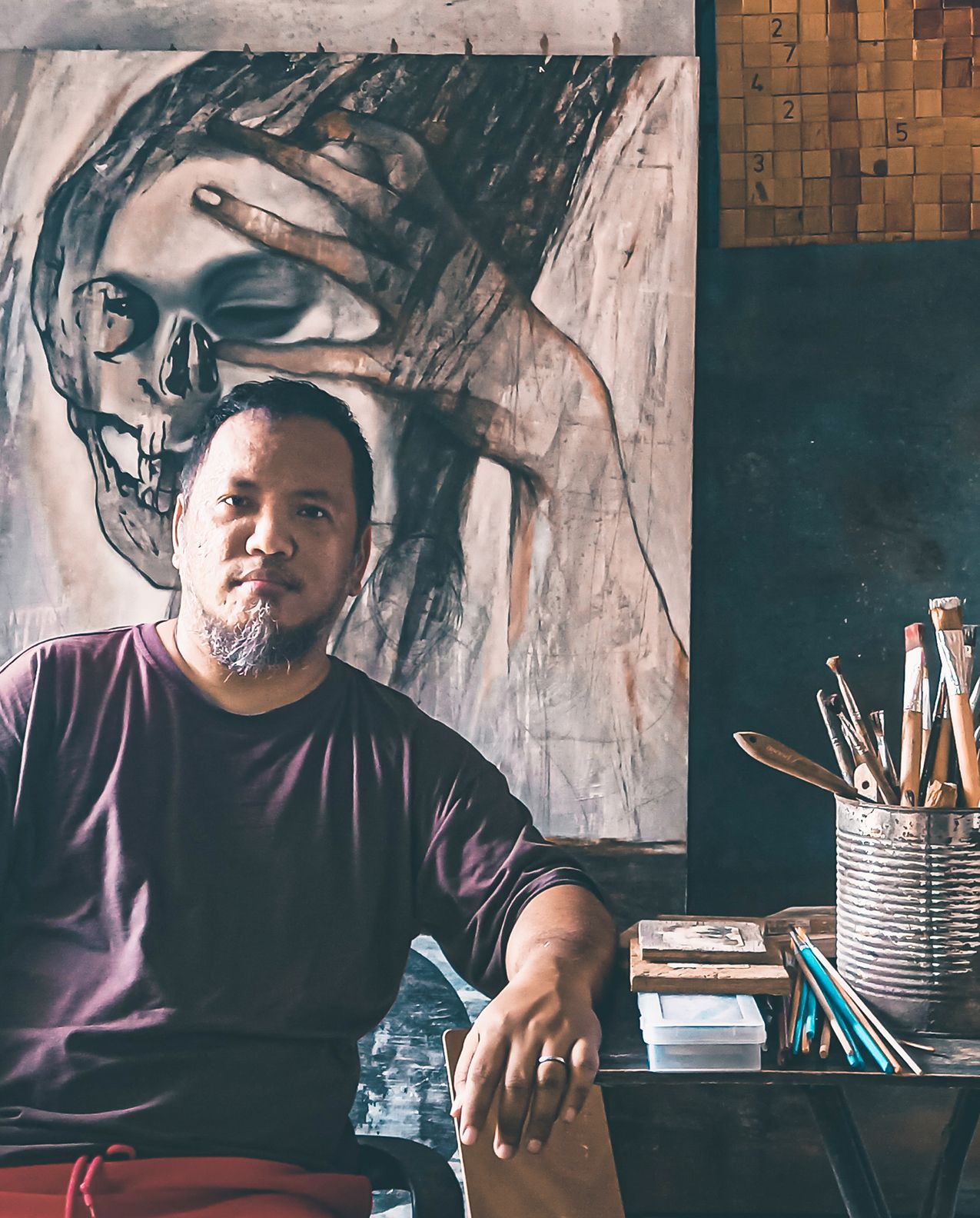
EUGENE CUBILLO.jpg
MEET THE ARTIST Eugene Cubillo

“For me, imperfections are relatable. They humanize us and our creations because we can all relate to imperfections more easily than an imaginary idea of perfection,” he shares.

SILENCESKIN, oil on wooden palette mounted on painted canvas, 40x30 cm, 2025.jpg
'SILENCESKIN,' oil on wooden palette mounted on painted canvas, 15.7x11.8 in, 2025

On display at the Kalyehon Cafe in Imus, Cavite, until April 30, the exhibit features Cubillo’s curated collection of mixed media artworks created from 2022 to the present. It delves into personal experiences, social commentary, and elements of Filipino culture, all while challenging viewers to reconsider their definitions of beauty.

BATTLE SCARSKIN, oil on wooden palette mounted on painted canvas, 40x30 cm, 2025.jpg
'BATTLE SCARSKIN,' oil on wooden palette mounted on painted canvas, 15.7x11.8 in, 2025

The core message of the exhibit is clear: “Our imperfections are qualities and characteristics that make us human.” Cubillo uses his art to assert that flaws are not deficits but rather essential components of our shared humanity. To convey this powerful idea, he employs a distinctive visual language, incorporating warm, earthy tones of rust and techniques such as defacing, distorting, and overlaying paint.
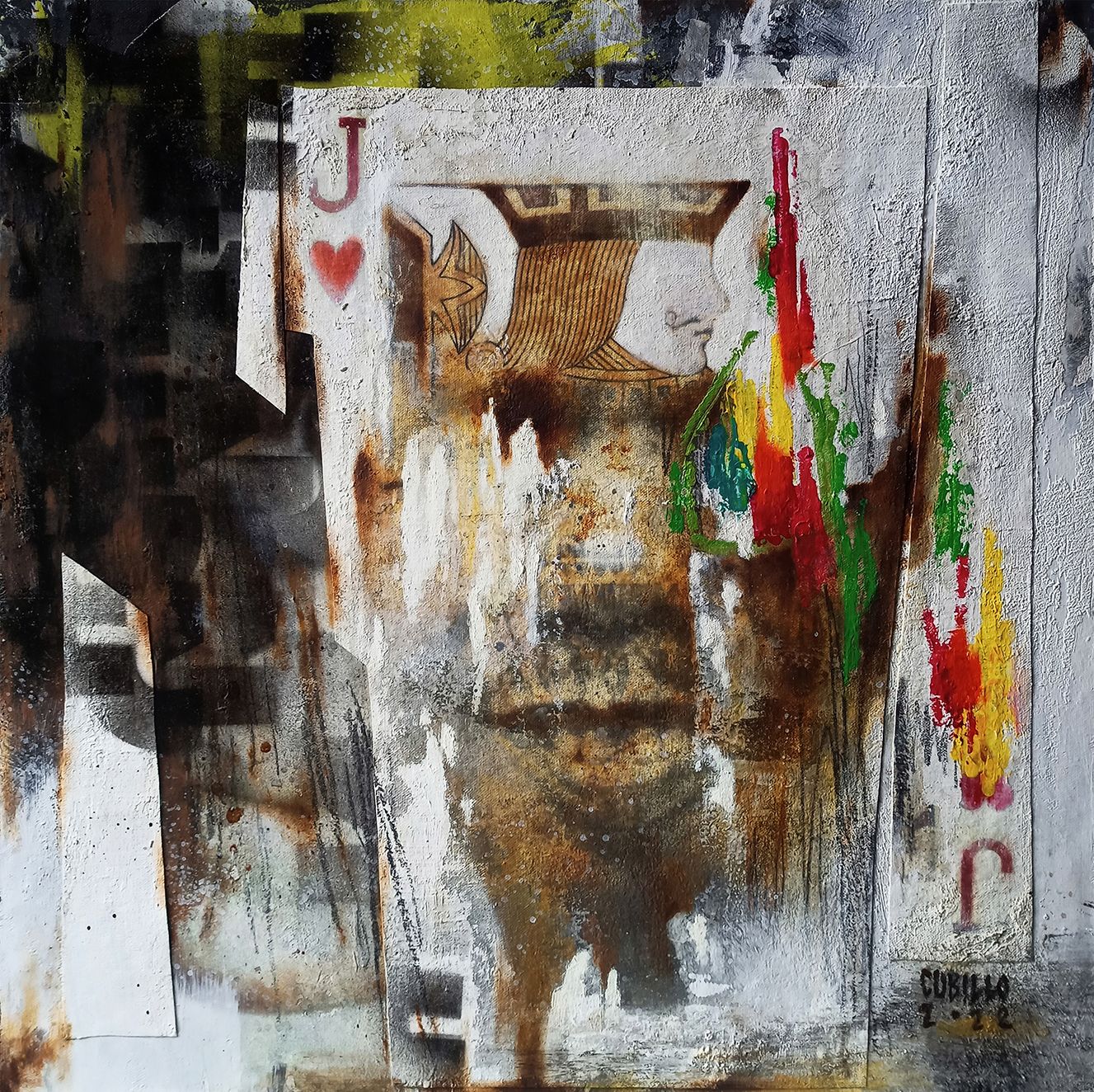
BLURRED, mixed media on canvas, 24x24 inches, 2022.jpg
'BLURRED,' mixed media on canvas, 24x24 inches, 2022

Cubillo’s strength is seen in his mastery of diverse media. By seamlessly blending acrylics, oils, graphite, and even found objects like playing cards, he creates works that embody the intricate layers of life itself. His fusion of abstract and figurative elements offers a novel perspective within contemporary Filipino art, inviting viewers into a space where they can reflect their personal narratives and intersect with broader social observations. As Cubillo describes it, his art functions as his “visual diary,” his means of processing and communicating his emotions that he hopes will resonate with audiences both locally and globally. He also highlighted the evolution of his technique, characterized by textured brushstrokes and a distinctive palette of earthy tones evoking rust.

PABALAT NG BALAT SIBUYASSKIN, oil on wooden palette mounted on painted canvas, 40x30 cm, 2025.jpg
'PABALAT NG BALAT SIBUYASSKIN,' oil on wooden palette mounted on painted canvas, 15.7x11.8 in, 2025

“I think my work is recognizable as ‘Cubillo’ because of my way of making artwork that is personally connected to me like a visual diary and the viewer can relate on what story I am saying on my painting. Mostly, I want my medium to speak for itself,” he explained.

SKIN, oil on wooden palette mounted on painted canvas, 40x30 cm, 2025.jpg
'SKIN,' oil on wooden palette mounted on painted canvas, 15.7x11.8 in, 2025

The creation of “Imperfections” was not without challenges. Cubillo cited budget constraints for art supplies and the time-consuming nature of art production as significant hurdles. He dedicated a significant portion of 2024 and early 2025 to bringing the exhibit to its fruition. The culmination of his efforts brought immense satisfaction. “The rewarding moment is when you see all the collections one by one are slowly done before the exhibit date,” he shared.

SUMASAYAW SA HANGINSKIN, oil on wooden palette mounted on painted canvas, 40x30 cm, 2025.jpg
SUMASAYAW SA HANGINSKIN, oil on wooden palette mounted on painted canvas, 15.7x11.8 in, 2025

“Seeing beauty regarding our own imperfections not as a weakness, but as a unique gift that has the power to inspire others - this is the beauty I see when looking closely at these discarded things like rust,” he concluded.
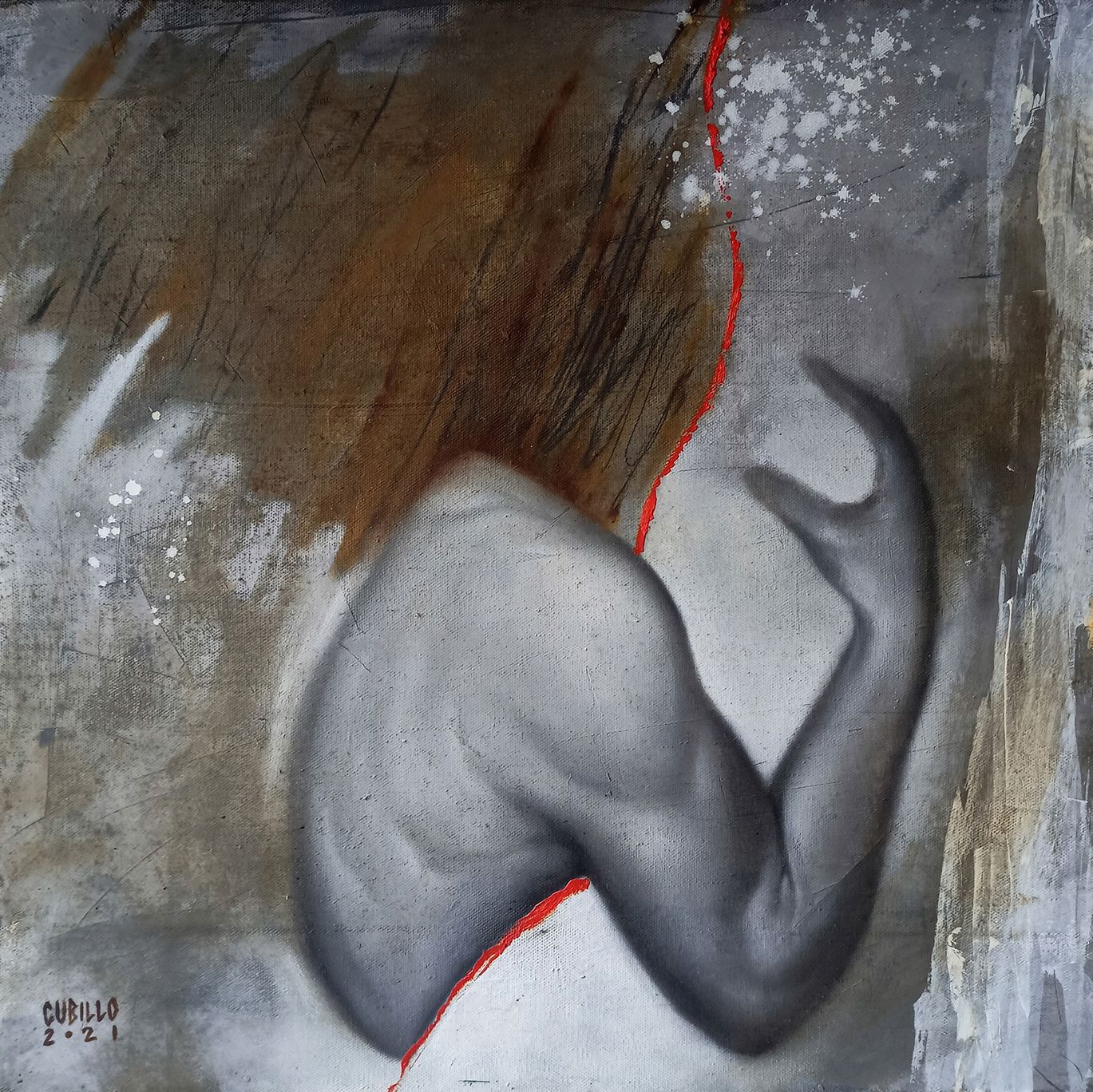
THIN RED LINE, oil on canvas, 20x20 inches, 2021.jpg
'THIN RED LINE,' oil on canvas, 20x20 inches, 2021

“Imperfections” is an invitation to embrace a more compassionate and nuanced understanding of ourselves and the world around us.

Related Tags

Lifestyle S.C Fojas Arts and Culture Artist At Work
ADVERTISEMENT
.most-popular .layout-ratio{ padding-bottom: 79.13%; } @media (min-width: 768px) and (max-width: 1024px) { .widget-title { font-size: 15px !important; } }

{{ articles_filter_1561_widget.title }}

.most-popular .layout-ratio{ padding-bottom: 79.13%; } @media (min-width: 768px) and (max-width: 1024px) { .widget-title { font-size: 15px !important; } }

{{ articles_filter_1562_widget.title }}

.most-popular .layout-ratio{ padding-bottom: 79.13%; } @media (min-width: 768px) and (max-width: 1024px) { .widget-title { font-size: 15px !important; } }

{{ articles_filter_1563_widget.title }}

{{ articles_filter_1564_widget.title }}

.mb-article-details { position: relative; } .mb-article-details .article-body-preview, .mb-article-details .article-body-summary{ font-size: 17px; line-height: 30px; font-family: "Libre Caslon Text", serif; color: #000; } .mb-article-details .article-body-preview iframe , .mb-article-details .article-body-summary iframe{ width: 100%; margin: auto; } .read-more-background { background: linear-gradient(180deg, color(display-p3 1.000 1.000 1.000 / 0) 13.75%, color(display-p3 1.000 1.000 1.000 / 0.8) 30.79%, color(display-p3 1.000 1.000 1.000) 72.5%); position: absolute; height: 200px; width: 100%; bottom: 0; display: flex; justify-content: center; align-items: center; padding: 0; } .read-more-background a{ color: #000; } .read-more-btn { padding: 17px 45px; font-family: Inter; font-weight: 700; font-size: 18px; line-height: 16px; text-align: center; vertical-align: middle; border: 1px solid black; background-color: white; } .hidden { display: none; }
function initializeAllSwipers() { // Get all hidden inputs with cms_article_id document.querySelectorAll('[id^="cms_article_id_"]').forEach(function (input) { const cmsArticleId = input.value; const articleSelector = '#article-' + cmsArticleId + ' .body_images'; const swiperElement = document.querySelector(articleSelector); if (swiperElement && !swiperElement.classList.contains('swiper-initialized')) { new Swiper(articleSelector, { loop: true, pagination: false, navigation: { nextEl: '#article-' + cmsArticleId + ' .swiper-button-next', prevEl: '#article-' + cmsArticleId + ' .swiper-button-prev', }, }); } }); } setTimeout(initializeAllSwipers, 3000); const intersectionObserver = new IntersectionObserver( (entries) => { entries.forEach((entry) => { if (entry.isIntersecting) { const newUrl = entry.target.getAttribute("data-url"); if (newUrl) { history.pushState(null, null, newUrl); let article = entry.target; // Extract metadata const author = article.querySelector('.author-section').textContent.replace('By', '').trim(); const section = article.querySelector('.section-info ').textContent.replace(' ', ' '); const title = article.querySelector('.article-title h1').textContent; // Parse URL for Chartbeat path format const parsedUrl = new URL(newUrl, window.location.origin); const cleanUrl = parsedUrl.host + parsedUrl.pathname; // Update Chartbeat configuration if (typeof window._sf_async_config !== 'undefined') { window._sf_async_config.path = cleanUrl; window._sf_async_config.sections = section; window._sf_async_config.authors = author; } // Track virtual page view with Chartbeat if (typeof pSUPERFLY !== 'undefined' && typeof pSUPERFLY.virtualPage === 'function') { try { pSUPERFLY.virtualPage({ path: cleanUrl, title: title, sections: section, authors: author }); } catch (error) { console.error('ping error', error); } } // Optional: Update document title if (title && title !== document.title) { document.title = title; } } } }); }, { threshold: 0.1 } ); function showArticleBody(button) { const article = button.closest("article"); const summary = article.querySelector(".article-body-summary"); const body = article.querySelector(".article-body-preview"); const readMoreSection = article.querySelector(".read-more-background"); // Hide summary and read-more section summary.style.display = "none"; readMoreSection.style.display = "none"; // Show the full article body body.classList.remove("hidden"); } document.addEventListener("DOMContentLoaded", () => { let loadCount = 0; // Track how many times articles are loaded const offset = [1, 2, 3, 4, 5, 6, 7, 8, 9, 10]; // Offset values const currentUrl = window.location.pathname.substring(1); let isLoading = false; // Prevent multiple calls if (!currentUrl) { console.log("Current URL is invalid."); return; } const sentinel = document.getElementById("load-more-sentinel"); if (!sentinel) { console.log("Sentinel element not found."); return; } function isSentinelVisible() { const rect = sentinel.getBoundingClientRect(); return ( rect.top < window.innerHeight && rect.bottom >= 0 ); } function onScroll() { if (isLoading) return; if (isSentinelVisible()) { if (loadCount >= offset.length) { console.log("Maximum load attempts reached."); window.removeEventListener("scroll", onScroll); return; } isLoading = true; const currentOffset = offset[loadCount]; window.loadMoreItems().then(() => { let article = document.querySelector('#widget_1690 > div:nth-last-of-type(2) article'); intersectionObserver.observe(article) loadCount++; }).catch(error => { console.error("Error loading more items:", error); }).finally(() => { isLoading = false; }); } } window.addEventListener("scroll", onScroll); });

Sign up by email to receive news.