

ADVERTISEMENT

PH ready for 'bigger role’ as middle-income country—Manalo

Published Apr 24, 2025 11:27 am

The Philippines and other countries with middle-income status are poised to take on a “bigger role” in shaping discussions on the path toward 21st-century development and “new generation partnerships,” Department of Foreign Affairs (DFA) Secretary Enrique Manalo said on Thursday, April 24.
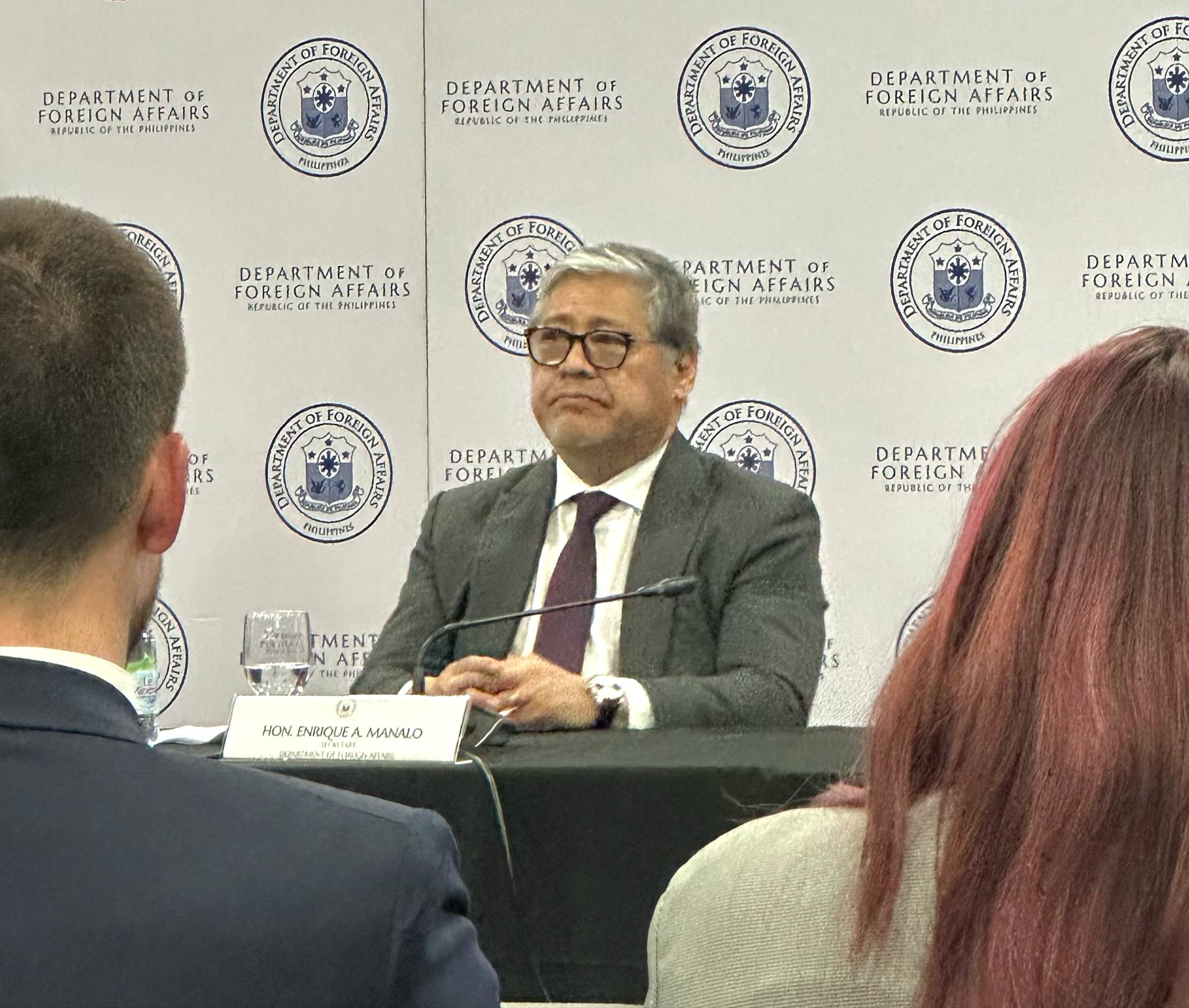
 

Manalo_HLC-MICs2.jpegDFA Secretary Enrique Manalo at the press conference on the High-Level Conference of Middle-Income Countries (HLC-MICs) to be hosted by the Philippines on April 28-29, 2025. (Raymund Antonio/MANILA BULLETIN)


The DFA chief held a press briefing on the Philippines’ hosting of the High-Level Conference of Middle-Income Countries (HLC-MICs) in Makati City next week.
 

The conference, he said, aims to bring together like-minded MICs in the common purpose to shape “a more equal world and fairer international system.”
 

“At the same time, this conference acknowledges that middle income countries such as the Philippines are well positioned to take on a bigger role -both economically and politically - in the global stage,” he said.
 

“United in our numbers, we enjoy considerable influence in shaping global discussions and redefining the 21st century development paradigm as we become more and more agents, rather than mere recipients, of new generation partnerships,” he added.
 

The Philippines, in particular, is fully conscious of its role as a “partner, pathfinder, and peacemaker.”
 

As one of the fastest-growing economies, Manalo said the country is at “pivotal crossroads.”
 

“We are shifting economic gears along the track of becoming an upper-middle-income country by 2026, as we manage climate risks, and address hurdles to investing more in our people, institutions, infrastructure,” he stated.
 

According to the World Bank, MICs are home to 75 percent of the world’s population and 62 percent of the world’s poor.
 

They also represent about one-third of global gross domestic product.
 

In the 2024 fiscal year, lower middle-income economies are those with a gross national income (GNI) per capita between $1,136 and $4,465, while upper middle-income economies are those with a GNI per capita between $4,466 and $13,845.
 

Manalo described the more than 100 MICs as “powerful symbols of promise and potential, and also resilience amidst vulnerability.”
 

As the Philippines prepares to take on the chairmanship duties of the Like-Minded Group of Middle-Income Countries at the United Nations from Morocco, the DFA chief said they will aim “to rally middle income countries to becoming a unified voice in the global stage, to advocate for more support and partnership, and to be responsible contributors to peace and progress of nations.”
 

“This is a defining moment for middle-income countries to emerge, not as passive beneficiaries of global progress, but as dynamic architects of a more inclusive, resilient, and just world,” Manalo added.


Achieving upper-middle income status
 

The Philippines’ chairmanship of the group will also give it platform to address issues,  gather more support, and strengthen common interests and objectives for it to graduate to the upper-middle income status.
 

Among the issues he hopes to address are inequalities between nations, amongst nations, climate vulnerability, more access to technology, financing, innovation, among others.
 

“We're also seeking to address outdated models of development and also metrics, for example, issues such as GDP (gross domestic product), for example, are they really reflective of the economic situation of a country or its development? We're trying to see whether we can develop more robust and accurate formulas redesign to take into account the real situation in countries,” Manalo said.
 

“These are issues which the middle income countries are have been working on and will continue to work on, and in the context of present day realities, I think it's the same. We have common issues,” he added.
 

The group is also pushing for free and open economies, which is another topic that will be taken up.
 

“So, all of these are related and should be taking together the efforts of the big countries, mixed countries, and as chair, the Philippines will do its best to see how we can harness this grouping to achieve these various objectives, which I mentioned,” Manalo stressed.
 

Related Tags

Enrique Manalo middle-income countries Gross domestic product
ADVERTISEMENT
.most-popular .layout-ratio{ padding-bottom: 79.13%; } @media (min-width: 768px) and (max-width: 1024px) { .widget-title { font-size: 15px !important; } }

{{ articles_filter_1561_widget.title }}

.most-popular .layout-ratio{ padding-bottom: 79.13%; } @media (min-width: 768px) and (max-width: 1024px) { .widget-title { font-size: 15px !important; } }

{{ articles_filter_1562_widget.title }}

.most-popular .layout-ratio{ padding-bottom: 79.13%; } @media (min-width: 768px) and (max-width: 1024px) { .widget-title { font-size: 15px !important; } }

{{ articles_filter_1563_widget.title }}

{{ articles_filter_1564_widget.title }}

.mb-article-details { position: relative; } .mb-article-details .article-body-preview, .mb-article-details .article-body-summary{ font-size: 17px; line-height: 30px; font-family: "Libre Caslon Text", serif; color: #000; } .mb-article-details .article-body-preview iframe , .mb-article-details .article-body-summary iframe{ width: 100%; margin: auto; } .read-more-background { background: linear-gradient(180deg, color(display-p3 1.000 1.000 1.000 / 0) 13.75%, color(display-p3 1.000 1.000 1.000 / 0.8) 30.79%, color(display-p3 1.000 1.000 1.000) 72.5%); position: absolute; height: 200px; width: 100%; bottom: 0; display: flex; justify-content: center; align-items: center; padding: 0; } .read-more-background a{ color: #000; } .read-more-btn { padding: 17px 45px; font-family: Inter; font-weight: 700; font-size: 18px; line-height: 16px; text-align: center; vertical-align: middle; border: 1px solid black; background-color: white; } .hidden { display: none; }
function initializeAllSwipers() { // Get all hidden inputs with cms_article_id document.querySelectorAll('[id^="cms_article_id_"]').forEach(function (input) { const cmsArticleId = input.value; const articleSelector = '#article-' + cmsArticleId + ' .body_images'; const swiperElement = document.querySelector(articleSelector); if (swiperElement && !swiperElement.classList.contains('swiper-initialized')) { new Swiper(articleSelector, { loop: true, pagination: false, navigation: { nextEl: '#article-' + cmsArticleId + ' .swiper-button-next', prevEl: '#article-' + cmsArticleId + ' .swiper-button-prev', }, }); } }); } setTimeout(initializeAllSwipers, 3000); const intersectionObserver = new IntersectionObserver( (entries) => { entries.forEach((entry) => { if (entry.isIntersecting) { const newUrl = entry.target.getAttribute("data-url"); if (newUrl) { history.pushState(null, null, newUrl); let article = entry.target; // Extract metadata const author = article.querySelector('.author-section').textContent.replace('By', '').trim(); const section = article.querySelector('.section-info ').textContent.replace(' ', ' '); const title = article.querySelector('.article-title h1').textContent; // Parse URL for Chartbeat path format const parsedUrl = new URL(newUrl, window.location.origin); const cleanUrl = parsedUrl.host + parsedUrl.pathname; // Update Chartbeat configuration if (typeof window._sf_async_config !== 'undefined') { window._sf_async_config.path = cleanUrl; window._sf_async_config.sections = section; window._sf_async_config.authors = author; } // Track virtual page view with Chartbeat if (typeof pSUPERFLY !== 'undefined' && typeof pSUPERFLY.virtualPage === 'function') { try { pSUPERFLY.virtualPage({ path: cleanUrl, title: title, sections: section, authors: author }); } catch (error) { console.error('ping error', error); } } // Optional: Update document title if (title && title !== document.title) { document.title = title; } } } }); }, { threshold: 0.1 } ); function showArticleBody(button) { const article = button.closest("article"); const summary = article.querySelector(".article-body-summary"); const body = article.querySelector(".article-body-preview"); const readMoreSection = article.querySelector(".read-more-background"); // Hide summary and read-more section summary.style.display = "none"; readMoreSection.style.display = "none"; // Show the full article body body.classList.remove("hidden"); } document.addEventListener("DOMContentLoaded", () => { let loadCount = 0; // Track how many times articles are loaded const offset = [1, 2, 3, 4, 5, 6, 7, 8, 9, 10]; // Offset values const currentUrl = window.location.pathname.substring(1); let isLoading = false; // Prevent multiple calls if (!currentUrl) { console.log("Current URL is invalid."); return; } const sentinel = document.getElementById("load-more-sentinel"); if (!sentinel) { console.log("Sentinel element not found."); return; } function isSentinelVisible() { const rect = sentinel.getBoundingClientRect(); return ( rect.top < window.innerHeight && rect.bottom >= 0 ); } function onScroll() { if (isLoading) return; if (isSentinelVisible()) { if (loadCount >= offset.length) { console.log("Maximum load attempts reached."); window.removeEventListener("scroll", onScroll); return; } isLoading = true; const currentOffset = offset[loadCount]; window.loadMoreItems().then(() => { let article = document.querySelector('#widget_1690 > div:nth-last-of-type(2) article'); intersectionObserver.observe(article) loadCount++; }).catch(error => { console.error("Error loading more items:", error); }).finally(() => { isLoading = false; }); } } window.addEventListener("scroll", onScroll); });

Sign up by email to receive news.