ADVERTISEMENT

From 1M to 163K: Fewer Pinoy kids without vaccines — DOH

Published Apr 24, 2025 08:04 am


IMG_4933.jpeg
(MB FILE PHOTO)


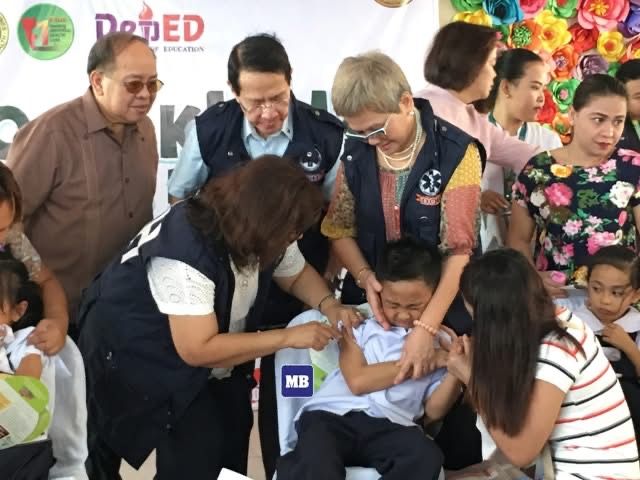
The number of Filipino children who have never received a single vaccine or zero-dose children dropped sharply from over one million in 2020–2021 to 163,000 in 2023, the Department of Health (DOH) reported on Thursday, April 24.


The agency attributed the significant decline to strengthened vaccination efforts at both the national and local levels.


According to the DOH, as of February 2025, 1,542,282 of the 2,392,392 children aged 0–12 months in the country have been fully immunized. 


Coverage for pneumococcal vaccines among indigent senior citizens is at 66 percent, while influenza vaccination has reached 65.57 percent of the eligible population, which includes senior citizens, healthcare workers, and individuals with comorbidities.


Despite the gains, health officials warned that the progress could stall, or even reverse, without continued funding, supply chain support, and political will at all levels of government.


“Vaccination is a cornerstone of the DOH’s 8-Point Action Agenda. Towards Universal Health Care, we continue to engage local leaders, parents, health workers, and partners to build a strong and resilient immunization system, where the promise of improved vaccination coverage rates is realized, and more lives across life stages are protected from vaccine-preventable diseases,” DOH Secretary Teodoro J. Herbosa said in a statement. 


The agency is marking World Immunization Week (April 24–30) with a nationwide campaign, beginning with a launch in Calbayog City, Samar, where over 31,000 individuals are expected to be vaccinated. 


Children aged 0 to 12 months will receive shots for tuberculosis, polio, pneumonia, measles, mumps, rubella, and through the pentavalent vaccine. 


Meanwhile, the DOH said flu and pneumonia vaccines will be administered to senior citizens, girls aged 9 to 14 will be given the HPV vaccine, and pregnant women will receive the tetanus-diphtheria vaccine.


UNICEF Philippines acting representative Behzad Noubary warned that decades of progress in childhood immunization remain fragile without sustained action. 


“Routine immunization has saved many lives in the Philippines by eliminating maternal and neonatal tetanus, containing measles outbreaks, and ending polio transmission in 2021,” he said.


“The government’s continued investment in the national immunization programme will build resilient, sustainable systems, especially in the last mile.”


The World Health Organization (WHO) also expressed concern over persistent gaps in vaccine equity.


“WHO commends the National Immunization Program Acceleration Plan and the growing efforts to engage local governments, civil society, and partners. Yet, persistent inequities remain a significant challenge—many unvaccinated children live in underserved communities,” Dr. Rui Paulo de Jesus, WHO representative to the Philippines, said.


“Leaders across all sectors must champion immunization and promote equity to reach every child, because every child vaccinated is a step toward a safer, healthier future — and a reminder of what is humanly possible.”


Health authorities said the goal is to hit at least 95 percent vaccination coverage across all eligible groups to prevent future outbreaks of vaccine-preventable diseases (VPDs). 

ADVERTISEMENT
.most-popular .layout-ratio{ padding-bottom: 79.13%; } @media (min-width: 768px) and (max-width: 1024px) { .widget-title { font-size: 15px !important; } }

{{ articles_filter_1561_widget.title }}

.most-popular .layout-ratio{ padding-bottom: 79.13%; } @media (min-width: 768px) and (max-width: 1024px) { .widget-title { font-size: 15px !important; } }

{{ articles_filter_1562_widget.title }}

.most-popular .layout-ratio{ padding-bottom: 79.13%; } @media (min-width: 768px) and (max-width: 1024px) { .widget-title { font-size: 15px !important; } }

{{ articles_filter_1563_widget.title }}

{{ articles_filter_1564_widget.title }}

.mb-article-details { position: relative; } .mb-article-details .article-body-preview, .mb-article-details .article-body-summary{ font-size: 17px; line-height: 30px; font-family: "Libre Caslon Text", serif; color: #000; } .mb-article-details .article-body-preview iframe , .mb-article-details .article-body-summary iframe{ width: 100%; margin: auto; } .read-more-background { background: linear-gradient(180deg, color(display-p3 1.000 1.000 1.000 / 0) 13.75%, color(display-p3 1.000 1.000 1.000 / 0.8) 30.79%, color(display-p3 1.000 1.000 1.000) 72.5%); position: absolute; height: 200px; width: 100%; bottom: 0; display: flex; justify-content: center; align-items: center; padding: 0; } .read-more-background a{ color: #000; } .read-more-btn { padding: 17px 45px; font-family: Inter; font-weight: 700; font-size: 18px; line-height: 16px; text-align: center; vertical-align: middle; border: 1px solid black; background-color: white; } .hidden { display: none; }
function initializeAllSwipers() { // Get all hidden inputs with cms_article_id document.querySelectorAll('[id^="cms_article_id_"]').forEach(function (input) { const cmsArticleId = input.value; const articleSelector = '#article-' + cmsArticleId + ' .body_images'; const swiperElement = document.querySelector(articleSelector); if (swiperElement && !swiperElement.classList.contains('swiper-initialized')) { new Swiper(articleSelector, { loop: true, pagination: false, navigation: { nextEl: '#article-' + cmsArticleId + ' .swiper-button-next', prevEl: '#article-' + cmsArticleId + ' .swiper-button-prev', }, }); } }); } setTimeout(initializeAllSwipers, 3000); const intersectionObserver = new IntersectionObserver( (entries) => { entries.forEach((entry) => { if (entry.isIntersecting) { const newUrl = entry.target.getAttribute("data-url"); if (newUrl) { history.pushState(null, null, newUrl); let article = entry.target; // Extract metadata const author = article.querySelector('.author-section').textContent.replace('By', '').trim(); const section = article.querySelector('.section-info ').textContent.replace(' ', ' '); const title = article.querySelector('.article-title h1').textContent; // Parse URL for Chartbeat path format const parsedUrl = new URL(newUrl, window.location.origin); const cleanUrl = parsedUrl.host + parsedUrl.pathname; // Update Chartbeat configuration if (typeof window._sf_async_config !== 'undefined') { window._sf_async_config.path = cleanUrl; window._sf_async_config.sections = section; window._sf_async_config.authors = author; } // Track virtual page view with Chartbeat if (typeof pSUPERFLY !== 'undefined' && typeof pSUPERFLY.virtualPage === 'function') { try { pSUPERFLY.virtualPage({ path: cleanUrl, title: title, sections: section, authors: author }); } catch (error) { console.error('ping error', error); } } // Optional: Update document title if (title && title !== document.title) { document.title = title; } } } }); }, { threshold: 0.1 } ); function showArticleBody(button) { const article = button.closest("article"); const summary = article.querySelector(".article-body-summary"); const body = article.querySelector(".article-body-preview"); const readMoreSection = article.querySelector(".read-more-background"); // Hide summary and read-more section summary.style.display = "none"; readMoreSection.style.display = "none"; // Show the full article body body.classList.remove("hidden"); } document.addEventListener("DOMContentLoaded", () => { let loadCount = 0; // Track how many times articles are loaded const offset = [1, 2, 3, 4, 5, 6, 7, 8, 9, 10]; // Offset values const currentUrl = window.location.pathname.substring(1); let isLoading = false; // Prevent multiple calls if (!currentUrl) { console.log("Current URL is invalid."); return; } const sentinel = document.getElementById("load-more-sentinel"); if (!sentinel) { console.log("Sentinel element not found."); return; } function isSentinelVisible() { const rect = sentinel.getBoundingClientRect(); return ( rect.top < window.innerHeight && rect.bottom >= 0 ); } function onScroll() { if (isLoading) return; if (isSentinelVisible()) { if (loadCount >= offset.length) { console.log("Maximum load attempts reached."); window.removeEventListener("scroll", onScroll); return; } isLoading = true; const currentOffset = offset[loadCount]; window.loadMoreItems().then(() => { let article = document.querySelector('#widget_1690 > div:nth-last-of-type(2) article'); intersectionObserver.observe(article) loadCount++; }).catch(error => { console.error("Error loading more items:", error); }).finally(() => { isLoading = false; }); } } window.addEventListener("scroll", onScroll); });

Sign up by email to receive news.