

ADVERTISEMENT

Philippines faces spying from China like never before - Tolentino

Published Apr 23, 2025 09:16 am

Senate Majority Leader Francis Tolentino said on Wednesday, April 23, that the Philippines is currently facing a kind of spying by China that the country has never experienced before in its history and that this didn’t happen just once, but continuously.
viber_image_2025-04-23_15-56-17-093.jpg
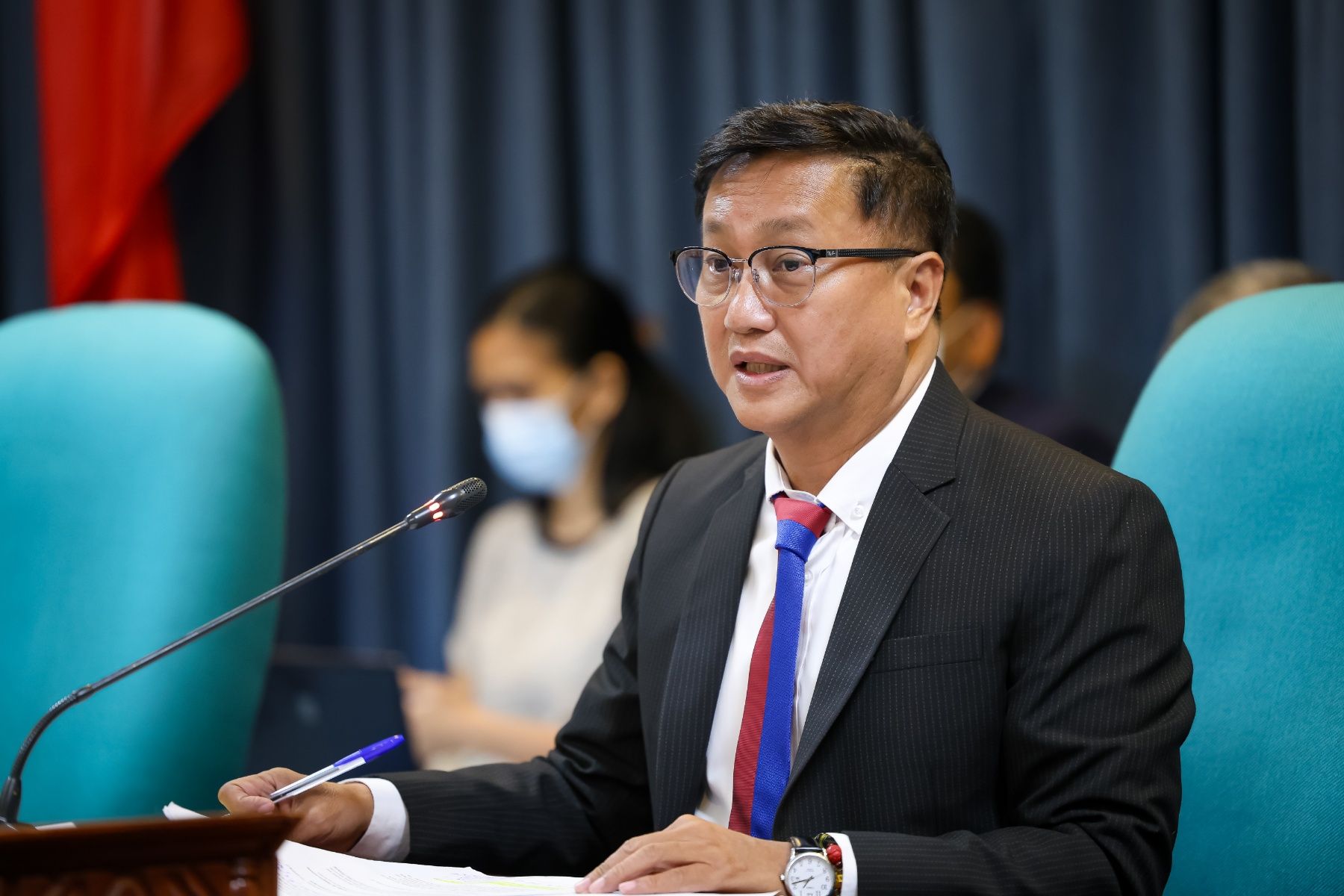
 Sen. Francis “Tol” N. Tolentino, chairperson of the Special Committee on Philippine Maritime and Admiralty Zones, presides over Wednesday’s second public hearing, April 23, 2025 on the discovery of a submersible drone off the coast of Brgy. Inawaran, San Pascual, Masbate. The committee also took into consideration Senate Resolution No. 1328 which is seeking an investigation on the alleged maritime spying activities conducted by six Chinese nationals and a Filipino in Subic, Zambales who were arrested by the National Bureau of Investigation (NBI) last March 19, 2025.

"Kinakaharap natin ngayon ang isang uri ng pag-eespiya ng China na hindi pa kailanman naranasan sa kasaysayan ng ating bansa. At hindi lang po ito naganap minsan, kundi patuloy (I just want to make it clear. We are currently facing a kind of spying by China that our country has never experienced before in its history. And this didn’t happen just once, but continuously)," he said during the hearing of the Special Committee on Philippine Maritime and Admiralty Zones.

Tolentino said this as the Senate panel tackled the capture of alleged Chinese spies, seizure of espionage equipment, and the recovery of submersible drones in different parts of the country.

"We have discovered that what they are doing inside our country is wrong and that we have gradually pulled the thread on their illegal activities; we continually discovered more and more,"  he added.

Philippine authorities disclosed that they have barely scratched the surface when it came to the seizure of espionage equipment from a suspected Chinese spy, to sea drones likely deployed by the People’s Republic of China (PRC).

Van Homer Angluben, Executive Officer of the National Bureau of Investigation (NBI) Cybercrime Division, confirmed that their confiscation of an espionage equipment from a suspected Chinese spy that's capable of collating comprehensive image of the terrains and structure and overall topography of potential targets is just "the tip of the iceberg".

The arrested Chinese national was identified as Deng Yuanqing, who was apprehended along with Filipino companions who were identified as Ronnel Jojo Balundo Besa and Jayson Amado Fernandez. Deng is believed to be conducting surveillance operations on military camps and other vital installations in the Philippines.

NBI operatives seized from the three a Toyota Rav 4 vehicle where the espionage equipment was found mounted. In the NBI's presentation during the Senate panel hearing, Angluben said that they made use of a LiDAR sensor and a concealed Triple Camera device linked to a Video Data Logger.

According to Angluben, it's possible that there are hundreds more of such equipment around since it's available for assembly in the Philippines. He also stated that they suspect that the information collected is being transmitted to China.

Meanwhile, Rear Admiral Roy Vincent Trinidad, Philippine Navy spokesperson for the West Philippine Sea (WPS), said that this same case for the submersible drones found in different parts of the country.

Based on data provided by PN, five drones have so far been recovered. The first drone was recovered in July 2022 in Pasuquin, Ilocos Norte; the second one in September 2022 off the coast of Zambales; the third and most intact one in August 2024 in Calayan Island, Cagayan; the fourth one in October 2024 in Initao, Misamis Oriental; and the last one in December 2024 in San Pascual, Masbate.

"This is only the tip of the iceberg," Trinidad said.

He also said that it's possible that this may have something to do with the Philippine government's plan for oil exploration since the information being gathered underwater has academic research, commercial oil exploration, and military uses.

In addition to this, Commodore Edwin Nera stated that in underwater warfare, the information can be used to draft crisis action plans or even battle plans.

"I would be able to know where to place my fleet, to maximize the capability of my ships, most especially my submarines," he said.

Related Tags

People's Republic of China Philippine Navy Senator Francis Tolentino National Bureau of Investigation (NBI) Special Committee on Philippine Maritime and Admiralty Zones
ADVERTISEMENT
.most-popular .layout-ratio{ padding-bottom: 79.13%; } @media (min-width: 768px) and (max-width: 1024px) { .widget-title { font-size: 15px !important; } }

{{ articles_filter_1561_widget.title }}

.most-popular .layout-ratio{ padding-bottom: 79.13%; } @media (min-width: 768px) and (max-width: 1024px) { .widget-title { font-size: 15px !important; } }

{{ articles_filter_1562_widget.title }}

.most-popular .layout-ratio{ padding-bottom: 79.13%; } @media (min-width: 768px) and (max-width: 1024px) { .widget-title { font-size: 15px !important; } }

{{ articles_filter_1563_widget.title }}

{{ articles_filter_1564_widget.title }}

.mb-article-details { position: relative; } .mb-article-details .article-body-preview, .mb-article-details .article-body-summary{ font-size: 17px; line-height: 30px; font-family: "Libre Caslon Text", serif; color: #000; } .mb-article-details .article-body-preview iframe , .mb-article-details .article-body-summary iframe{ width: 100%; margin: auto; } .read-more-background { background: linear-gradient(180deg, color(display-p3 1.000 1.000 1.000 / 0) 13.75%, color(display-p3 1.000 1.000 1.000 / 0.8) 30.79%, color(display-p3 1.000 1.000 1.000) 72.5%); position: absolute; height: 200px; width: 100%; bottom: 0; display: flex; justify-content: center; align-items: center; padding: 0; } .read-more-background a{ color: #000; } .read-more-btn { padding: 17px 45px; font-family: Inter; font-weight: 700; font-size: 18px; line-height: 16px; text-align: center; vertical-align: middle; border: 1px solid black; background-color: white; } .hidden { display: none; }
function initializeAllSwipers() { // Get all hidden inputs with cms_article_id document.querySelectorAll('[id^="cms_article_id_"]').forEach(function (input) { const cmsArticleId = input.value; const articleSelector = '#article-' + cmsArticleId + ' .body_images'; const swiperElement = document.querySelector(articleSelector); if (swiperElement && !swiperElement.classList.contains('swiper-initialized')) { new Swiper(articleSelector, { loop: true, pagination: false, navigation: { nextEl: '#article-' + cmsArticleId + ' .swiper-button-next', prevEl: '#article-' + cmsArticleId + ' .swiper-button-prev', }, }); } }); } setTimeout(initializeAllSwipers, 3000); const intersectionObserver = new IntersectionObserver( (entries) => { entries.forEach((entry) => { if (entry.isIntersecting) { const newUrl = entry.target.getAttribute("data-url"); if (newUrl) { history.pushState(null, null, newUrl); let article = entry.target; // Extract metadata const author = article.querySelector('.author-section').textContent.replace('By', '').trim(); const section = article.querySelector('.section-info ').textContent.replace(' ', ' '); const title = article.querySelector('.article-title h1').textContent; // Parse URL for Chartbeat path format const parsedUrl = new URL(newUrl, window.location.origin); const cleanUrl = parsedUrl.host + parsedUrl.pathname; // Update Chartbeat configuration if (typeof window._sf_async_config !== 'undefined') { window._sf_async_config.path = cleanUrl; window._sf_async_config.sections = section; window._sf_async_config.authors = author; } // Track virtual page view with Chartbeat if (typeof pSUPERFLY !== 'undefined' && typeof pSUPERFLY.virtualPage === 'function') { try { pSUPERFLY.virtualPage({ path: cleanUrl, title: title, sections: section, authors: author }); } catch (error) { console.error('ping error', error); } } // Optional: Update document title if (title && title !== document.title) { document.title = title; } } } }); }, { threshold: 0.1 } ); function showArticleBody(button) { const article = button.closest("article"); const summary = article.querySelector(".article-body-summary"); const body = article.querySelector(".article-body-preview"); const readMoreSection = article.querySelector(".read-more-background"); // Hide summary and read-more section summary.style.display = "none"; readMoreSection.style.display = "none"; // Show the full article body body.classList.remove("hidden"); } document.addEventListener("DOMContentLoaded", () => { let loadCount = 0; // Track how many times articles are loaded const offset = [1, 2, 3, 4, 5, 6, 7, 8, 9, 10]; // Offset values const currentUrl = window.location.pathname.substring(1); let isLoading = false; // Prevent multiple calls if (!currentUrl) { console.log("Current URL is invalid."); return; } const sentinel = document.getElementById("load-more-sentinel"); if (!sentinel) { console.log("Sentinel element not found."); return; } function isSentinelVisible() { const rect = sentinel.getBoundingClientRect(); return ( rect.top < window.innerHeight && rect.bottom >= 0 ); } function onScroll() { if (isLoading) return; if (isSentinelVisible()) { if (loadCount >= offset.length) { console.log("Maximum load attempts reached."); window.removeEventListener("scroll", onScroll); return; } isLoading = true; const currentOffset = offset[loadCount]; window.loadMoreItems().then(() => { let article = document.querySelector('#widget_1690 > div:nth-last-of-type(2) article'); intersectionObserver.observe(article) loadCount++; }).catch(error => { console.error("Error loading more items:", error); }).finally(() => { isLoading = false; }); } } window.addEventListener("scroll", onScroll); });

Sign up by email to receive news.