







'Papa Francisco, we love you’


ENDEAVOR
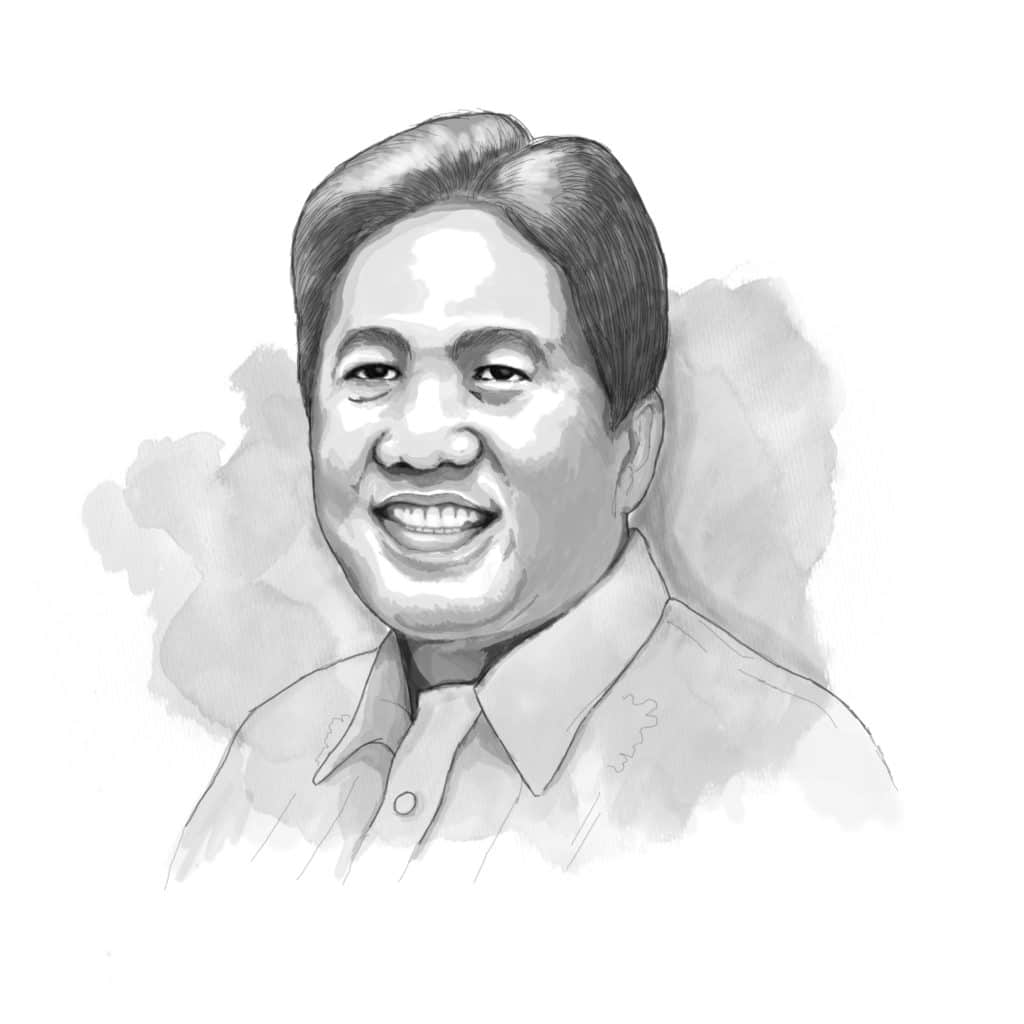
In January 2015, I met Pope Francis and received his blessings when he came to the Philippines. Ten months later, in November 2015, I met him anew when I joined President Benigno S. Aquino III in a personal call at Domus Sanctae Marthae (Casa Santa Marta) in the Vatican where the Holy Father had been residing since his election on March 13, 2013. I write this memoir as my modest effort at honoring his memory.
After arriving on Thursday, Jan. 15, 2015, he visited Malacañang Palace on Friday, Jan. 16 where, as head of the Vatican state, he was received by President Aquino. Serving then as communications secretary, I was tapped to emcee the program at which he delivered a brief address and blessed the audience.
Then on Saturday, Jan. 17, I attended a mass that he celebrated on the grounds of the Tacloban Airport, from where he launched his visit to the epicenter of Typhoon Haiyan (Yolanda), one of the most destructive typhoons in recent memory.
After the mass, he proceeded to the Archbishop’s Palace in Palo, Leyte, where he met and had lunch with the survivors of Typhoon Haiyan and blessed the Pope Francis Center for the Poor that was funded by the Vatican. He also blessed a mass grave for thousands who perished from the typhoon. He was originally scheduled to stay until around 5:30 p.m. but was forced to leave at just past 1 p.m. due to strong winds brought on by Typhoon Mekhala (Amang).
“Mercy and Compassion” was the theme of Pope Francis’ Philippine visit. His pastoral approach was known for his focused attention on social justice and care for the poor. He had consistently called for a more compassionate and merciful approach to addressing global challenges, and this theme reflected his desire to provide spiritual guidance and support to those in need.
As the first Pope from the Society of Jesus, he propagated the Jesuit tradition of spirituality. Also known as Ignatian spirituality after its founder, St. Ignatius of Loyola, it is essentially about finding God in all things in everyday life, and by committing to discernment and personal growth, taking it upon oneself to serve others and work for social justice.
Cura personalis, a Latin phrase meaning “care for the whole person” is a key principle in Jesuit tradition that centers on wholistic individual development covering intellectual, emotional, spiritual, and physical wellbeing.
On every year of his papacy, Pope Francis visited jails to convey his solidarity with prisoners and detainees, who are, indeed, among the most marginalized human beings. At one Maundy Thursday observance, he opted to wash the feet of 12 women – departing from the practice of reenacting this Last Supper ritual with 12 male priests. Last March 8, on the International Day of Women, he demonstrated his respect for women by making key appointments in the Vatican, including Sister Simona Brambilla as the first female prefect of a Vatican department, and Sister Raffaella Petrini as the first female secretary general of Vatican City State. Additionally, Maria Lía Zervino, former president of the World Union of Catholic Women's Organizations, and Sister Simona Brambilla were appointed to the Synodal Council.
Cardinal Timothy Dolan, the Archbishop of New York reflected on the significance of the Pontiff’s death on April 21, 2025, the morning after Easter, regarded as the most important of all Catholic celebrations. Recall that after being hospitalized for 38 days, Pope Francis came home to his Vatican residence last March 23. He gave the traditional Easter Sunday blessing from the same porch on which he emerged after his election as head of the Catholic church more than 12 years ago.
Cardinal Dolan said that this event underlines the significance of both Passover and Easter which, while celebrated at around the same time, have distinct meanings. Passover is a Jewish holiday commemorating the Israelites' liberation from slavery in Egypt. Easter is a Christian holiday commemorating the resurrection of Jesus Christ. Both holidays, however, signify common ground in their themes of liberation and new beginning.
What a fitting way to cap a life devoted to the service of God and humanity. God gave Pope Francis an opportunity to bid goodbye – not while intubated in a hospital bed – but by being vibrantly present at the Vatican among the faithful who drew inspiration and strength from him. The last video clip of Pope Francis, taken on Easter Sunday, April 21, 2025, shows him aboard the Popemobile on St. Peter’s Square amid a cheering crowd.
Seeing this, I recall a similar scene at Luneta on Jan. 18, 2015. After celebrating mass at Quirino Grandstand, he rode the Popemobile in the vicinity of the Rizal monument to the delight of the jubilant crowd – estimated at six million, and reported by the BBC as “the largest papal gathering in history.” Ecstatic chants of “Papa Francisco, we love you!” filled the air.
On the day of his departure from Manila on Jan. 19, 2015, I was gratified to be blessed anew by him with Cabinet members invited to a farewell ceremony at the Apostolic Nunciature, home of the Papal Nuncio, the Vatican ambassador to the Philippines.
Former US President Barack Obama and First Lady Michelle have shared an insightful homage: “Pope Francis was the rare leader who made us want to be better people. In his humility and his gestures at once simple and profound – embracing the sick, ministering to the homeless, washing the feet of young prisoners – he shook us out of our complacency and reminded us that we are all bound by moral obligations to God and one another. Today, Michelle and I mourn with everyone around the world – Catholic and non-Catholic alike – who drew strength and inspiration from the Pope’s example. May we continue to heed his call to ‘never remain on the sidelines of this march of living hope.’”
To meet Pope Francis, clasp his hand, and obtain his blessing – that was truly a grace-filled moment of a lifetime.
Comments may be sent to [email protected]