







Pope Francis: An epitome of compassion, humility, service, unwavering faith


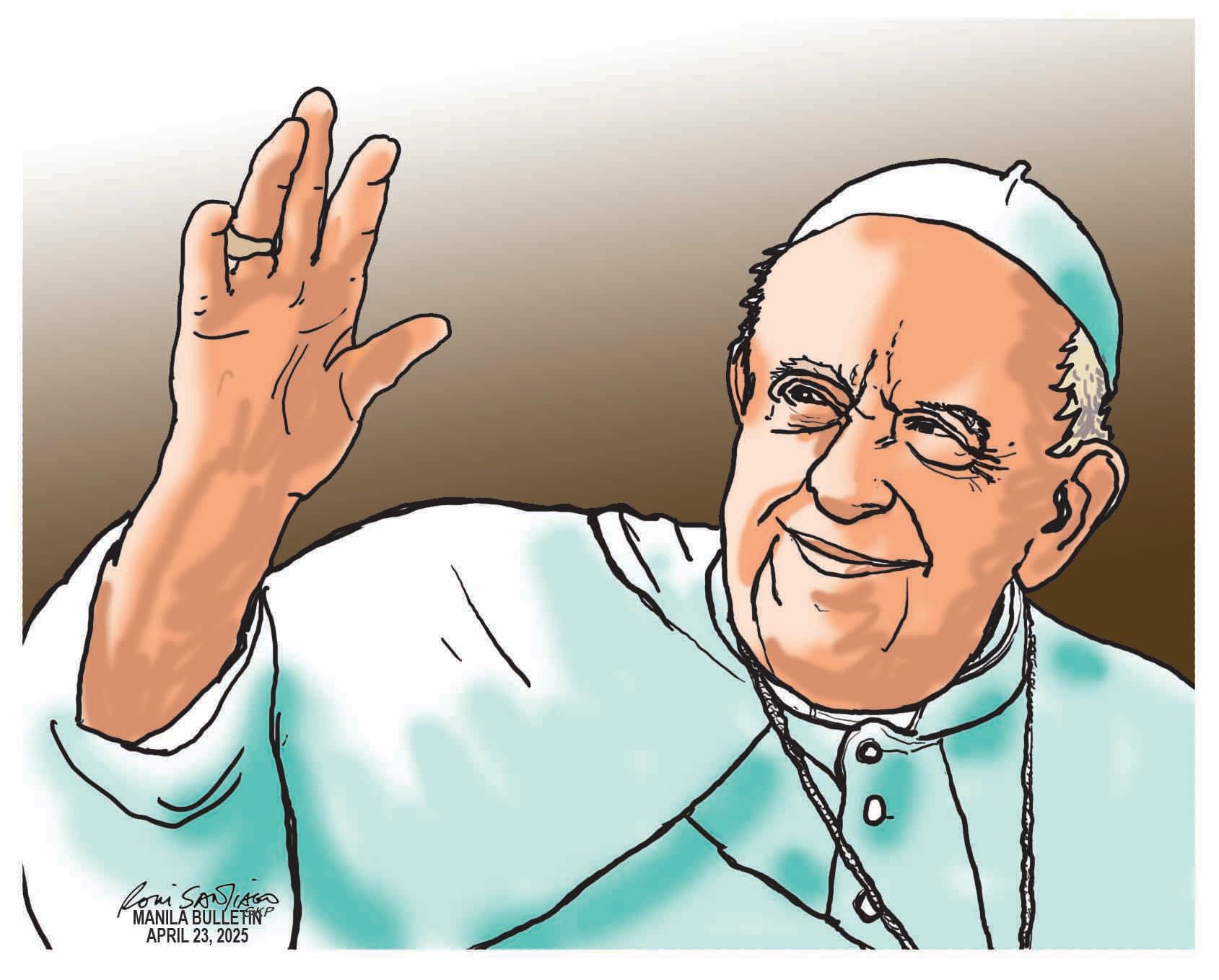
Compassionate, humble, inspiring, peace-loving, and steadfast in faith.
These are but a sample of who Pope Francis was. Born Jorge Mario Bergoglio in Flores, Buenos Aires, Argentina, on Dec. 17, 1936, Pope Francis passed away on April 21, 2025, at the age of 88. As the first Latin American pontiff, he redefined the papacy with a profound commitment to the poor, the marginalized, and the pursuit of peace.
From the moment he assumed the papacy in March 2013 as the 266th pope, Francis emphasized the centrality of mercy in the Christian faith. He reminded us that God desires the salvation of all people, urging the faithful to transcend divisions and embrace a universal call to salvation. His apostolic exhortation, Evangelii Gaudium, challenged the Church to embark on a new chapter of evangelism, focusing on the proclamation of the Gospel in today’s world. He envisioned a Church that is “permanently in a state of mission,” reaching out to those in need and living out the joy of the Gospel.
Beyond his teachings, Pope Francis’s actions spoke volumes. He was a tireless advocate for peace, often visiting conflict zones to offer solace and promote reconciliation. In Gaza, Christians mourn his passing deeply, recalling his nightly phone calls offering comfort during times of war. His final call, made the night before his death, blessed the community and thanked them for their prayers.
Pope Francis also worked diligently to foster unity among Christians. He believed that Christian unity grows in silence before the cross, emphasizing that it is God alone who brings about growth. His ecumenical efforts included joint prayers and dialogues with leaders of other Christian denominations, such as the Anglican Archbishop of Canterbury and the Ecumenical Patriarch of Constantinople. These moments of shared prayer and reflection were not just symbolic; they were steps toward healing centuries-old divisions.
In his encyclical Fratelli Tutti, Pope Francis expanded the call for fraternity beyond Christian communities, advocating for a global culture of solidarity and peace. He also co-signed the Document on Human Fraternity with Sheikh Ahmad Al-Tayyeb, Grand Imam of Al-Azhar, emphasizing the importance of mutual respect and cooperation among all people, regardless of faith. This groundbreaking document has inspired interfaith dialogue and has been recognized internationally, including by the United Nations, which designated Feb. 4 as the International Day of Human Fraternity.
Pope Francis’s enduring legacy is not just in his words. He practiced what he preached. He walked the talk. He lived the Gospel daily, embodying the principles of humility, service, and compassion. His passing leaves a huge void, but his teachings continue to inspire and guide us—it will linger forever. As we remember Pope Francis, let us commit to living out his message: a call to mercy, a pursuit of peace, and a dedication to unity among all God’s children.
Pope Francis’s life was a testament to the transformative power of love and faith. He showed us that true leadership is not all about power but about service, not about division but about unity. As we mourn his loss, we also celebrate his life and the enduring impact he has had on the world. May his example continue to inspire us to build a world rooted in love, justice, and peace.