







Back to 2020 levels: NFA exceeds rice stock target with domestic palay


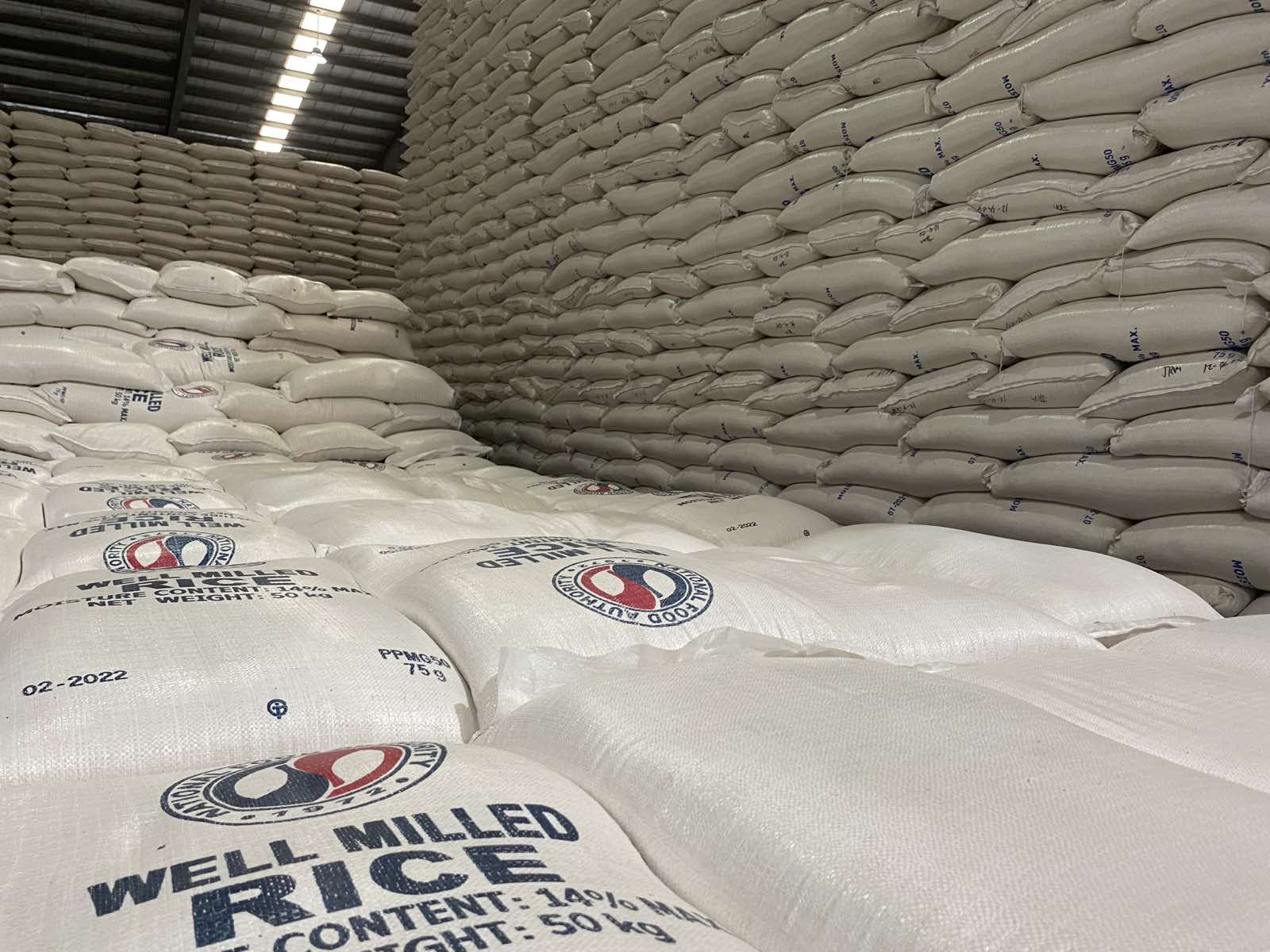
The National Food Administration (NFA) said it has built up a buffer stock of 7.17 million 50-kilo bags of milled rice across its network of storage facilities, the agency’s highest inventory level since 2020.
Data from the Philippine Statistics Authority (PSA) showed that this is around 1.61 million metric tons (MT), as of March 1.
This figure indicates an increase of 18 percent from the 1.37 million MT recorded during the same period last year.
In a statement on Tuesday, April 22, the NFA said its buffer stock—which is enough to feed all Filipinos for nine days—was aided by the increase in its buying price of palay or unmilled rice.
It noted that the buying price averaged ₱27 per kilo last year and is now averaging around ₱24 this year. Essentially, a higher purchasing price means the agency can match or exceed the offer of private traders.
However, despite the stockpile, NFA Administrator Larry Lacson said the agency still has enough funds to procure more palay from local rice farmers.
Lacson explained that the agency can still purchase around 500,000 MT of palay, equivalent to approximately 6.3 million bags of milled rice.
“So far this year, we’ve spent only ₱2.6 billion of the ₱14.6 billion available to us for palay procurement. This includes unspent funds of ₱5.6 billion carried over from the 2024 budget,” he said.
Under the amended Rice Tariffication Law (RTL), the NFA is mandated to maintain a 15-day national rice buffer stock, up from the previous nine-day requirement.
The law states that all rice in the stock must be sourced from local farmers in a bid to support domestic agriculture.
Agriculture Secretary Francisco Tiu Laurel emphasized that the rice reserves enable the government to support vulnerable communities, such as through the ₱29-per-kilo rice sold under the Kadiwa ng Pangulo (KNP) program.
The ₱29 rice is procured from the NFA’s aging stocks, or milled rice that has been stored for at least two months since processing.
“We continue to explore ways to better manage the NFA’s aging rice stocks better, while ensuring that the most disadvantaged Filipinos receive the assistance they need,” said Laurel.
Last month, the NFA announced that it would allocate ₱10 billion for its modernization program, aimed at expanding rice storage, constructing new rice mills, and upgrading drying facilities.
Set to become operational next year, the program aims to boost processing efficiency, increase rice recovery rates, and ultimately eliminate inefficiencies in post-harvest processing.
The Department of Agriculture (DA) previously declared a food security emergency on rice to authorize the NFA to release buffer stocks to tame high prices of the Filipino staple food.
The move was seen as a way to decongest the NFA’s facilities in preparation for harvest season, which will allow the agency to procure from farmers.