






 Philippines
National
China hits US, PH drills as 'detrimental’ to regional stability
Philippines
National
China hits US, PH drills as 'detrimental’ to regional stability
China hits US, PH drills as 'detrimental’ to regional stability


China on Tuesday, April 22, lambasted the Philippines and United States for the start of its military drills in the contested South China Sea, calling the three-week joint exercises as “detrimental” to regional stability and economic growth.
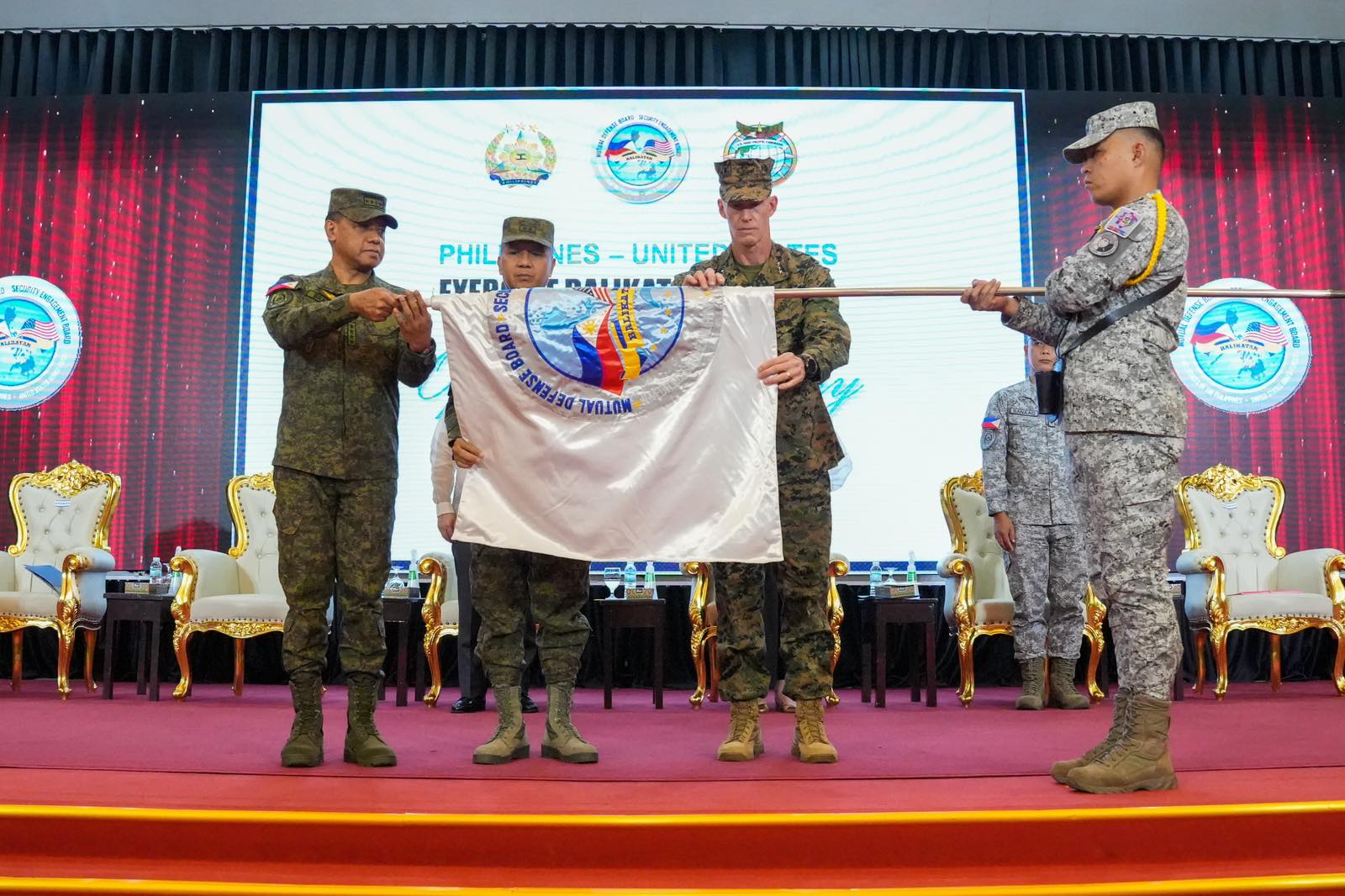
AFP Chief General Romeo Brawner Jr. (left) unfurls the Balikatan Exercise flag during a kick-off ceremony at Camp Aguinaldo in Quezon City on April 21, 2025 with Maj. Gen. Francisco Lorenzo (center), commander of AFP Education, Training and Doctrine Command (AFPETDC) and Philippines Exercise Director, and Lt. Gen. James Glynn (right), commander of US Marine Corps and US Exercise Director. (Photo from the Armed Forces of the Philippines)
Chinese Foreign Ministry spokesperson Guo Jiakun criticized Manila and Washington for the Balikatan (shoulder-to-shoulder) exercises at a time when “countries in this region have been calling for greater solidarity, coordination, and joint efforts to keep the region stable and respond to challenges.”
“Against this backdrop, the Philippines chose to conduct the large-scale military drills with this country outside the region and brought in strategic and tactical weapons to the detriment of regional strategic stability and regional economic prospects, which puts them on the opposite side of regional countries,” he said.
“This act has been detested and opposed by regional countries,” he added, although no other country, except for China, has contested the annual combat drills.
Around 17,000 troops are expected to take part in the annual military exercises between the US and the Philippines. But for the first time, it will include an integrated air and missile defense simulation that will be attended by President Marcos himself.
The NMESIS anti-ship missile system will also be deployed, particularly near a crucial chokepoint in the waters between northern Philippines and self-ruled but mainland China-claimed Taiwan.
This came amid reports that China was entering Taiwan’s waters and Beijing’s increasingly aggressive actions in the critical waterways, including in the Philippines’ exclusive economic zones (EEZs), of South China Sea.
Guo reiterated that the issue in Taiwan “is purely China’s internal affair and is at the core of China’s core interest.”
“China firmly opposes any country using the Taiwan question as an excuse to strengthen military deployment in the region, heighten tensions and confrontation, and disturb regional peace and stability. We urge relevant sides not to make provocation on the Taiwan question. Those who play with fire will perish by it,” he added.
On Monday, April 21, Malacañang eased restrictions on Philippine government officials traveling to Taiwan, now allowing them to travel there for economic, trade, and investment purposes as long as they observe strict protocols and limitations, such as the use of ordinary passports and the non-usage of their official titles.
Memorandum Circular No. 82, signed by Executive Secretary Lucas Bersamin, ended the decades-old Executive Order (EO) No. 313 signed by former president Corazon Aquino in 1987 that prohibits government officials from engaging in official activities in relation to Taiwan in adherence to the One-China Policy.