






 Philippines
National
Marcos: Ensure regulation vs fake news won't infringe freedom of expression
Philippines
National
Marcos: Ensure regulation vs fake news won't infringe freedom of expression
Marcos: Ensure regulation vs fake news won't infringe freedom of expression


President Marcos has recognized the need to have a strong mechanism to combat misinformation and disinformation in the country in light of rapidly evolving digital technologies.
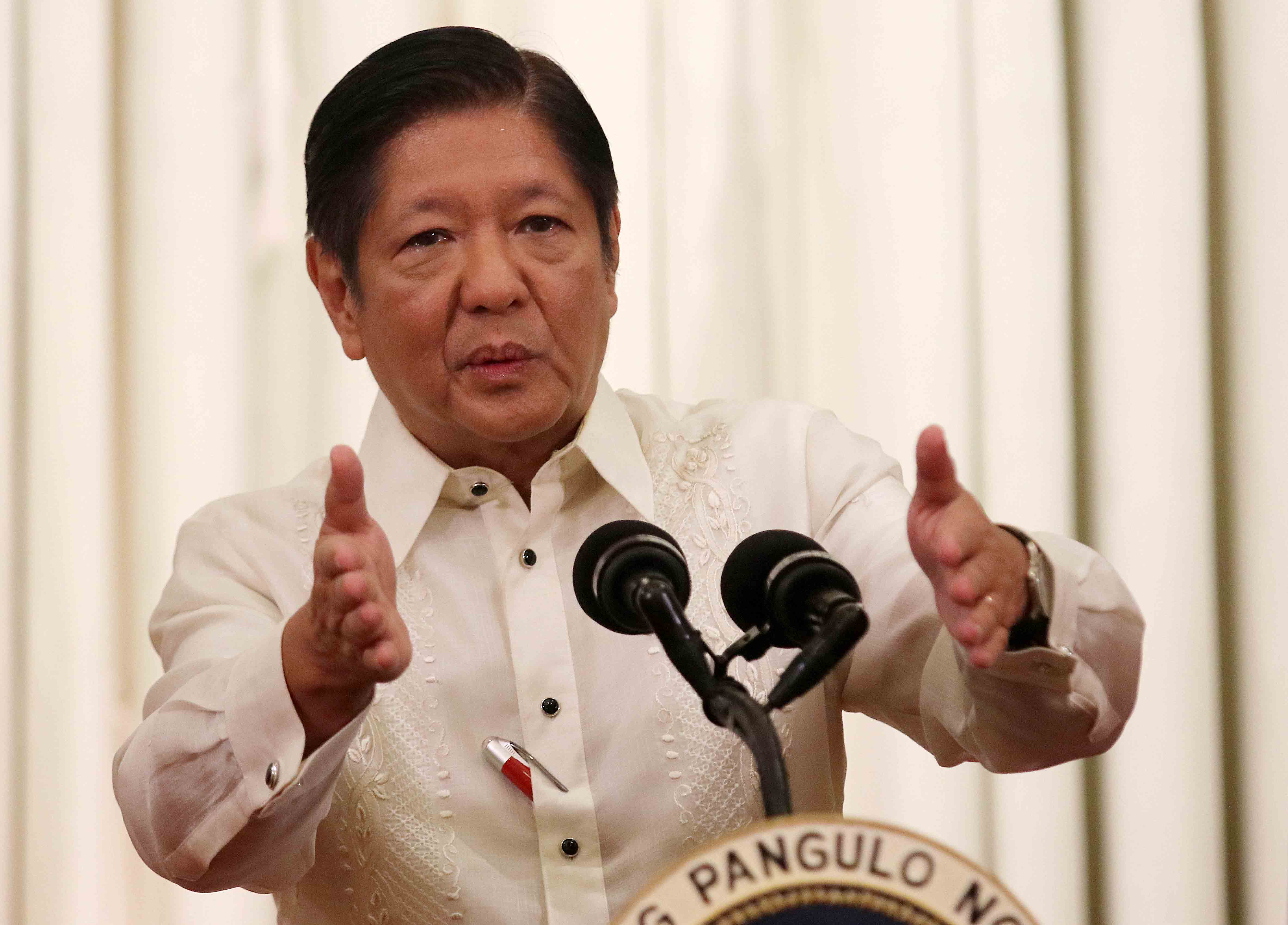
He, however, said that the government's effort to intensify the fight against fake news must not undermine the people's right to freedom of expression.
"Marcos acknowledged that regulating online platforms would be challenging, considering that any proposed regulation will be weighed against the right to freedom of expression," the Presidential Communications Office (PCO) said.
During a sectoral meeting, the President expressed support to the anti-fake news campaign of the Department of Information and Communications Technologies (DICT) and the PCO.
He emphasized that any measure should be clear as to what is being regulated and how the regulation will be undertaken without infringing on this fundamental right.
The President also expressed hope that the government can make meaningful progress in addressing the issue, noting the fight against disinformation is a continuous and evolving challenge.
DICT Secretary Henry Rhoel Aguda echoed the President's concerns, stressing the importance of a firm national position to counter online falsehoods.
Aguda highlighted that the right to free expression carries with it special duties and responsibilities and may be subject to certain restrictions under the International Covenant on Civil and Political Rights.
He, however, expressed optimism that the local media industry will back the administration's initiative, as journalists play a vital role in promoting truth in the digital landscape.
Meanwhile, PCO Secretary Jay Ruiz assured Marcos that the PCO has developed an operational framework to identify websites and online content that disseminate false information.
Ruiz said the PCO committed to continue coordinating with the Cybercrime Investigation and Coordinating Center (CICC) in order to speed up actions against fake news proliferation on various platforms.