







PAMANA: A legacy of peace


PEACE BY PEACE
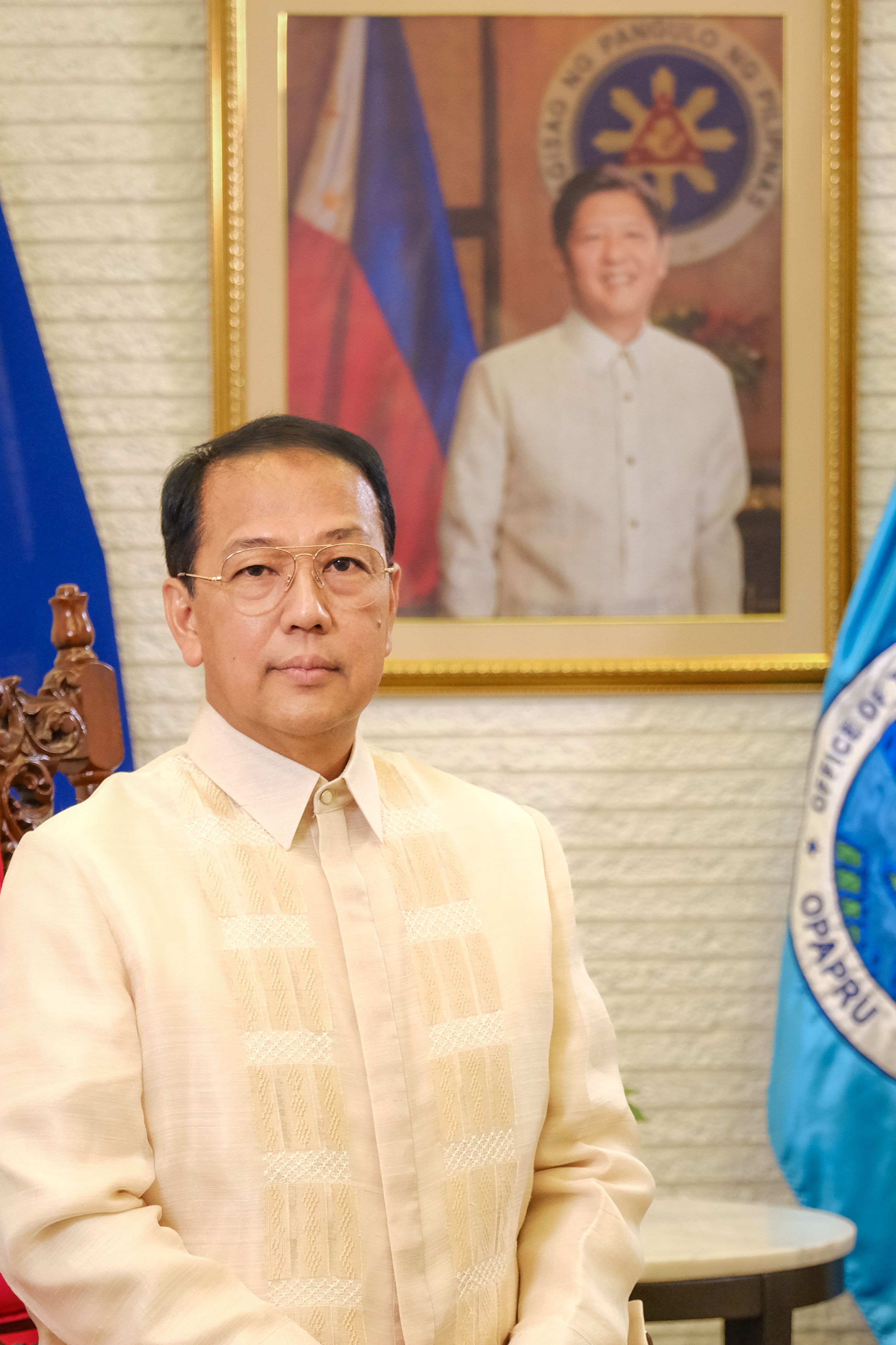
There’s one saying that has been etched in my mind since I became a military officer: “Insurgency ends where the road begins.” This is not merely a concept but a reality I can personally attest to.
During the missions I’ve led in far-flung, hinterland barangays across the country, I’ve often asked myself – “how have these communities remained poor and underdeveloped despite being blessed with vast natural resources and economic potential?”
The answer can be found among the residents themselves who lament that they have little to no access to much-needed infrastructure and government services. As a result, they have been marginalized and left behind in the development process, becoming fertile ground for insurgency and eventually triggering armed conflict.
This is a pressing concern that the national government, through the Office of the Presidential Adviser on Peace, Reconciliation and Unity’s (OPAPRU) PAyapa at MAsaganang PamayaNAn or PAMANA Program, is determined to address.
The PAMANA Program is anchored on the principle that building essential infrastructure and creating livelihood opportunities for the people will lay the groundwork, as we put an end to the decades-long insurgency and foster economic progress. It embodies the very essence of how peace and development must always go hand in hand. As two sides of the same coin, they must, therefore, be carried out simultaneously. Simply put - one cannot be successfully achieved without the other.
Since its launch in 2011, PAMANA has focused on addressing the key drivers of armed conflict that have pushed back the growth and progress of communities: inequality, poverty, and the lack of economic opportunities, as well as insecurity, among others.
Being the national government’s flagship convergence program, the program is grounded on a whole-of-nation, whole-of-government approach wherein all sectors of society must be part of the peace and development process. No one must be left behind.
It has three main pillars: advancing policy reforms to address injustices; strengthening institutions and empowering communities through capacity-building; and delivering peace-promoting socio-economic interventions that meet basic needs and foster growth.
Guided by a Conflict-Sensitive and Peace-Promoting (CSPP) lens, PAMANA tailors every intervention to local contexts, mindful of past grievances and focused on lasting peace. Its design acknowledges trauma, rebuilds trust, and invests in resilience.
Through its three main pillars, the program: advances policy reforms to address injustices; strengthens institutions and empowers communities through capacity-building; and delivers peace-promoting socio-economic interventions that meet basic needs and foster growth.
In partnership with local government units and national line agencies, PAMANA has been constructing roads, bridges, water systems, footbridges, and other infrastructure in Peace and Development focus areas nationwide. It has also been able to push forward social health and economic growth through building up accessibility, connectivity, and a pool of opportunities within beneficiary communities. Other social and capacity development projects include Educational Assistance Program, Sustainable Livelihood, and TESDA training targeting the combatants, their families and direct dependents. These interventions have since served as vital cogs of an engine that is designed to usher genuine peace and sustainable development.
But despite the impact it is creating on individuals and communities, the PAMANA Program has often faced budget constraints. For years, its funding has fluctuated, depending on the amount approved by the legislation.
Thankfully, 2024 marked a major turning point, as the program received an allocation of a little over ₱5 billion. In 2025, Congress earmarked the same amount, which we hope will become a regular trend in the coming years.
The uptick in funding can be largely attributed to the national government’s Program Convergence Budgeting (PCB), which ensures that substantial resources are allocated for agencies that are implementing peacebuilding programs and projects.
The PCB was institutionalized through the Joint Memorandum Circular signed by the Department of Budget and Management (DBM) and the Department of Economy, Planning and Development (DepDev) formerly the National Economic and Development Authority.
Where once the country’s budget for its peacebuilding interventions was fragmented, the PCB aligns it into a unified process. Budgeting is now a well-coordinated and cohesive undertaking where every government program supports and complements the other.
Through the PCB Steering Committee, co-chaired by DepDev Secretary Arsenio Balisacan and DBM Secretary Amenah Pangandaman, each government agency works from the same blueprint, ensuring that every peso is spent where it matters most.
“This is not just a budgeting tool — it’s a peacebuilding tool,” said DBM Secretary Pangandaman. Pangandaman’s view was echoed by DepDev Secretary Arsenio Balisacan who noted: “We are aligning purposes, with peace at the core.”
The PAMANA Program has also become a key component of the Normalization Program for members of the Moro Islamic Liberation Front, Cordillera Bodong Administration-Cordillera People’s Liberation Army and Rebolusyonaryong Partido ng Manggagawa ng Pilipinas-Revolutionary Proletarian Army-Alex Boncayao Brigade, now called KAPATIRAN, as well as the Transformation Program for members of the Moro National Liberation Front and former members of the Communist Party of the Philippines-New People’s Army-National Democratic Front of the Philippines.
Under the PAMANA Program, we are providing much-needed infrastructure facilities that are uplifting the socioeconomic well-being of these former combatants and rebels, their families, and communities.
Through such projects – infrastructure, accessibility, and capacity building – the government is demonstrating its utmost sincerity and determination to transform the lives of these ex-fighters and show that good things come to those who choose to walk the path of peace.
However, we in the OPAPRU know that much work still needs to be done. This is where we will need the continued support of our peace stakeholders who have helped ensure the completion and sustainable management of our infrastructure projects.
This is the legacy that the PAMANA Program and the administration of President Ferdinand R. Marcos Jr. wish to leave behind – a legacy that is defined by hope, resilience, and empowerment.
(Secretary Carlito G. Galvez, Jr., is the presidential adviser on peace, reconciliation and unity.)