ADVERTISEMENT

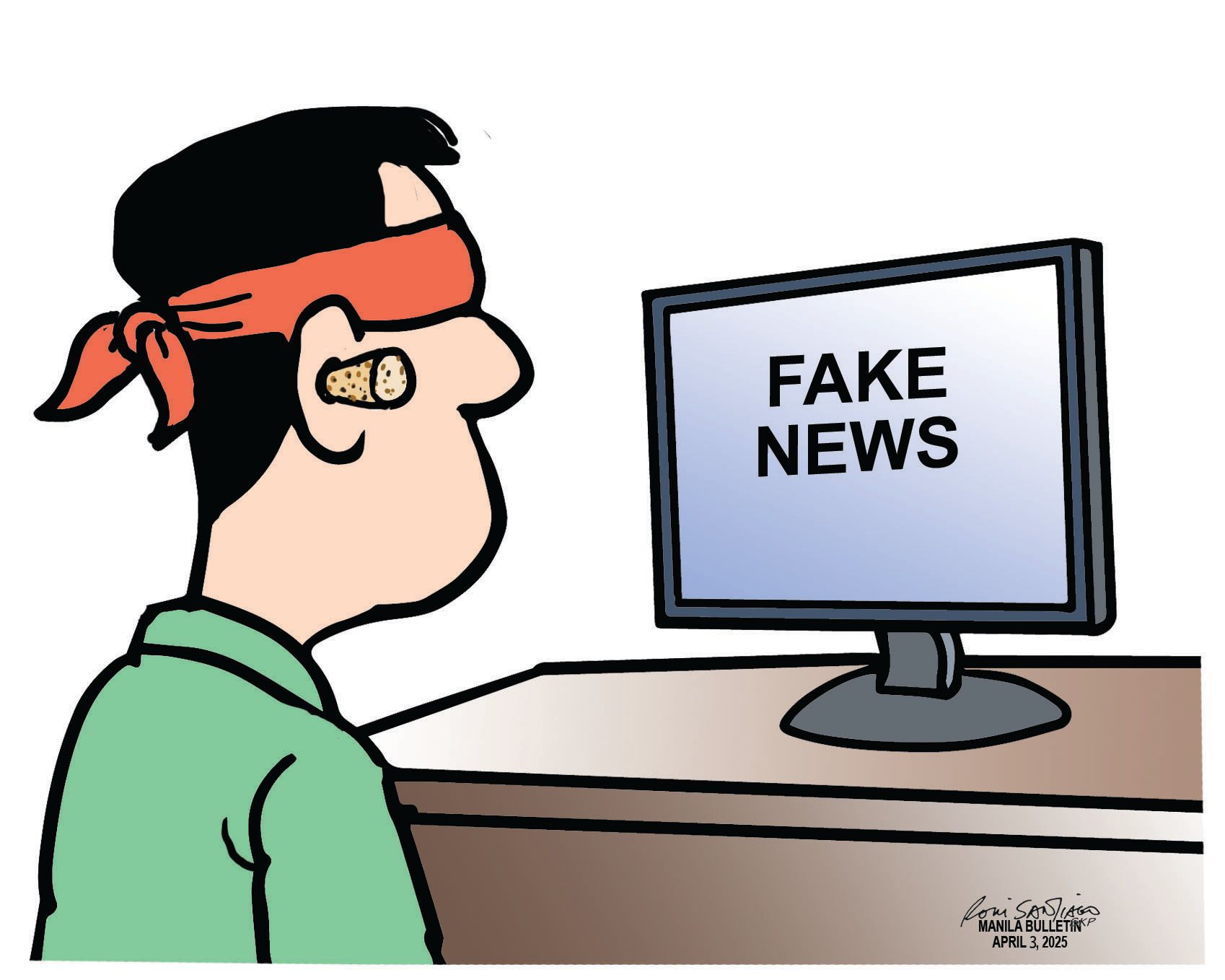
Fight fake news; regulate AI use

Published Apr 2, 2025 04:00 pm

E CARTOON APR 3, 2025 (1).jpg

In an era where information flows ceaselessly through digital channels, the integrity of that information is paramount to the health of our democracy.

The recent initiative by Presidential Communications Office (PCO) Secretary Jay Ruiz to combat the proliferation of fake news underscores a critical commitment to safeguarding informed public discourse in the Philippines. Addressing the House of Representatives on March 21, Secretary Ruiz highlighted the escalating threat posed by misinformation and disinformation, emphasizing the need for collective action to preserve the sanctity of truth in our national dialogue. He conveyed the same message in a dialogue at the Manila Bulletin recently as he made the rounds of major media organizations.

The menace of fake news is not unique to the Philippines. In July 2011, Congress enacted Republic Act No. 10175, the Cybercrime Prevention Act, which imposes a maximum penalty of  "prision mayor," a medium-term afflictive penalty, ranging from six years, one day to 12 years; and a maximum fine of ₱1 million. Given the increased incidence and risks posed by the rapid acceleration of the misuse of artificial intelligence (AI), government must ascertain the sufficiency of the current scale of penalties. 

Fake news is a global challenge that has prompted various countries to adopt measures aimed at mitigating its spread. For instance, Germany enacted the Network Enforcement Act (NetzDG) in 2017, compelling social media platforms to remove illegal content, including hate speech and fake news, within 24 hours of notification or face substantial fines. Similarly, Singapore introduced the Protection from Online Falsehoods and Manipulation Act (POFMA) in 2019, granting authorities the power to order corrections or removals of online falsehoods and impose penalties on non-compliant entities.

In the realm of artificial intelligence, the advent of deepfake technology has further complicated the information landscape. Deepfakes—AI-generated synthetic media—can fabricate highly realistic but entirely false representations, posing significant risks to public trust and security. China has taken proactive steps by mandating that AI-generated content be clearly labeled, ensuring that consumers are aware of the origins of the information they encounter. This approach aims to prevent the malicious use of deepfakes in spreading misinformation. 

The European Union is also addressing this issue through the proposed Artificial Intelligence Act, which seeks to regulate high-risk AI applications, including those capable of creating deepfakes. The Act emphasizes transparency, requiring that users be informed when they are interacting with AI-generated content. 

While legislative and regulatory measures are essential, the role of individual citizens in combating fake news cannot be overstated. Media literacy is a crucial defense against misinformation. Citizens are encouraged to adopt an easy-to-remember SIFT approach, as follows:  Stop. Investigate the source. Find better coverage. Trace claims back to their original context. This approach fosters critical evaluation of information before accepting or sharing it. 

Additionally, practical steps such as verifying information through multiple reputable sources, being cautious of sensational headlines, and understanding the potential biases of information sources can significantly reduce the spread of fake news. Engaging in respectful discourse and challenging unverified information within one’s social circles also contribute to a more informed community. 

The PCO’s initiative to confront fake news is a commendable and necessary endeavor to protect the integrity of information in our democratic society. By learning from international approaches, addressing the challenges posed by emerging technologies like deepfakes, and empowering citizens with critical media literacy skills, we can collectively foster an environment where truth prevails, and democracy thrives.

Related Tags

Roni Santiago Fake News
ADVERTISEMENT
.most-popular .layout-ratio{ padding-bottom: 79.13%; } @media (min-width: 768px) and (max-width: 1024px) { .widget-title { font-size: 15px !important; } }

{{ articles_filter_1561_widget.title }}

.most-popular .layout-ratio{ padding-bottom: 79.13%; } @media (min-width: 768px) and (max-width: 1024px) { .widget-title { font-size: 15px !important; } }

{{ articles_filter_1562_widget.title }}

.most-popular .layout-ratio{ padding-bottom: 79.13%; } @media (min-width: 768px) and (max-width: 1024px) { .widget-title { font-size: 15px !important; } }

{{ articles_filter_1563_widget.title }}

{{ articles_filter_1564_widget.title }}

.mb-article-details { position: relative; } .mb-article-details .article-body-preview, .mb-article-details .article-body-summary{ font-size: 17px; line-height: 30px; font-family: "Libre Caslon Text", serif; color: #000; } .mb-article-details .article-body-preview iframe , .mb-article-details .article-body-summary iframe{ width: 100%; margin: auto; } .read-more-background { background: linear-gradient(180deg, color(display-p3 1.000 1.000 1.000 / 0) 13.75%, color(display-p3 1.000 1.000 1.000 / 0.8) 30.79%, color(display-p3 1.000 1.000 1.000) 72.5%); position: absolute; height: 200px; width: 100%; bottom: 0; display: flex; justify-content: center; align-items: center; padding: 0; } .read-more-background a{ color: #000; } .read-more-btn { padding: 17px 45px; font-family: Inter; font-weight: 700; font-size: 18px; line-height: 16px; text-align: center; vertical-align: middle; border: 1px solid black; background-color: white; } .hidden { display: none; }
function initializeAllSwipers() { // Get all hidden inputs with cms_article_id document.querySelectorAll('[id^="cms_article_id_"]').forEach(function (input) { const cmsArticleId = input.value; const articleSelector = '#article-' + cmsArticleId + ' .body_images'; const swiperElement = document.querySelector(articleSelector); if (swiperElement && !swiperElement.classList.contains('swiper-initialized')) { new Swiper(articleSelector, { loop: true, pagination: false, navigation: { nextEl: '#article-' + cmsArticleId + ' .swiper-button-next', prevEl: '#article-' + cmsArticleId + ' .swiper-button-prev', }, }); } }); } setTimeout(initializeAllSwipers, 3000); const intersectionObserver = new IntersectionObserver( (entries) => { entries.forEach((entry) => { if (entry.isIntersecting) { const newUrl = entry.target.getAttribute("data-url"); if (newUrl) { history.pushState(null, null, newUrl); let article = entry.target; // Extract metadata const author = article.querySelector('.author-section').textContent.replace('By', '').trim(); const section = article.querySelector('.section-info ').textContent.replace(' ', ' '); const title = article.querySelector('.article-title h1').textContent; // Parse URL for Chartbeat path format const parsedUrl = new URL(newUrl, window.location.origin); const cleanUrl = parsedUrl.host + parsedUrl.pathname; // Update Chartbeat configuration if (typeof window._sf_async_config !== 'undefined') { window._sf_async_config.path = cleanUrl; window._sf_async_config.sections = section; window._sf_async_config.authors = author; } // Track virtual page view with Chartbeat if (typeof pSUPERFLY !== 'undefined' && typeof pSUPERFLY.virtualPage === 'function') { try { pSUPERFLY.virtualPage({ path: cleanUrl, title: title, sections: section, authors: author }); } catch (error) { console.error('ping error', error); } } // Optional: Update document title if (title && title !== document.title) { document.title = title; } } } }); }, { threshold: 0.1 } ); function showArticleBody(button) { const article = button.closest("article"); const summary = article.querySelector(".article-body-summary"); const body = article.querySelector(".article-body-preview"); const readMoreSection = article.querySelector(".read-more-background"); // Hide summary and read-more section summary.style.display = "none"; readMoreSection.style.display = "none"; // Show the full article body body.classList.remove("hidden"); } document.addEventListener("DOMContentLoaded", () => { let loadCount = 0; // Track how many times articles are loaded const offset = [1, 2, 3, 4, 5, 6, 7, 8, 9, 10]; // Offset values const currentUrl = window.location.pathname.substring(1); let isLoading = false; // Prevent multiple calls if (!currentUrl) { console.log("Current URL is invalid."); return; } const sentinel = document.getElementById("load-more-sentinel"); if (!sentinel) { console.log("Sentinel element not found."); return; } function isSentinelVisible() { const rect = sentinel.getBoundingClientRect(); return ( rect.top < window.innerHeight && rect.bottom >= 0 ); } function onScroll() { if (isLoading) return; if (isSentinelVisible()) { if (loadCount >= offset.length) { console.log("Maximum load attempts reached."); window.removeEventListener("scroll", onScroll); return; } isLoading = true; const currentOffset = offset[loadCount]; window.loadMoreItems().then(() => { let article = document.querySelector('#widget_1690 > div:nth-last-of-type(2) article'); intersectionObserver.observe(article) loadCount++; }).catch(error => { console.error("Error loading more items:", error); }).finally(() => { isLoading = false; }); } } window.addEventListener("scroll", onScroll); });

Sign up by email to receive news.