

ADVERTISEMENT

China conducts military drills focusing on Taiwan Strait

Published Apr 2, 2025 02:01 pm

TAIPEI, Taiwan (AP) — China conducted military drills around Taiwan for a second day Wednesday, focusing on the Taiwan Strait — a crucial conduit for international trade separating the self-governing island democracy from China.
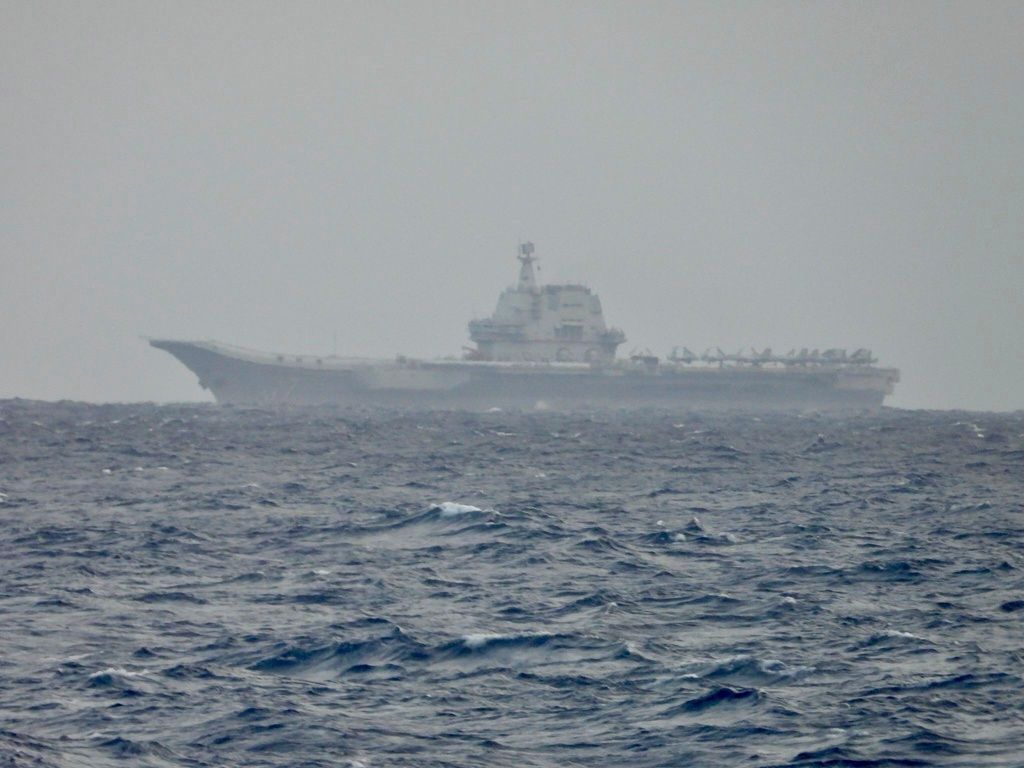
AP25091142892001.jpg

This image released by the Taiwan Ministry of National Defense shows China’s Shandong aircraft carrier sailing near Taiwan on Monday, March 31, 2025. (Taiwan Ministry of National Defense via AP)


The Strait Thunder-2025A drills were held in the middle and southern areas of the strait, a People’s Liberation Army spokesperson said.

Taiwan’s military said that it was closely monitoring the drills, but there was nothing unusual on the island of 23 million people that China claims as its own territory.

The latest exercises “focus on subjects of identification and verification, warning and expulsion, and interception and detention so as to test the troops’ capabilities of area regulation and control, joint blockade and control, and precision strikes on key targets,” Eastern Theater Command spokesperson Shi Yi was quoted as saying on the Chinese Defense Ministry's Weibo social media account.

Shi later announced on the same account that the exercises had ended with the completion of all objectives, but that “troops of the theater command remain on high alert at all times, and will continue to strengthen combat readiness with intensive training, resolutely thwarting any separatist activities seeking ‘Taiwan independence.’”

Taiwan reported that 76 military aircraft and 19 naval or government ships had entered waters and airspace near the island, with 37 of the planes crossing the center line in the 160-kilometer (110-mille) wide Taiwan Strait that forms an unofficial border, but which China refuses to acknowledge.

China's Shandong aircraft carrier group also entered into Taiwan’s air defense identification zone, a self-defined area tracked by the military.

Shi said the Shandong joined in on Wednesday's drills in coordination with naval and air units in the Pacific Ocean east of Taiwan. The exercises focused on seizing air superiority in the area and evaluating forces' ability to integrate operations “inside and outside the island chain,” Shi said, in a reference to the arc of islands closest to China including the Philippines, Taiwan, Okinawa and southern Japan.

Beijing sends warplanes and naval vessels toward the island on a daily basis, and it has stepped up the scope and scale of these exercises in recent years. Taiwanese officials have recently warned that China could launch a sneak attack under the guise of military exercises.

Chinese coast guard ships are are also operating around Taiwanese-held island groups just off the East China coast, where they are being shadowed by their Taiwanese counterparts at a rate of two or three to one Chinese ship, Taiwanese coast guard Deputy Director-General Hsieh Ching-Chin told reporters.

“Regarding this military drill, I think that China is adopting a threat and intimidation approach. They unilaterally altered the peace and stability," Hsieh said. "This not only violates international law, but also threatens the safety of ships cruising on the sea.”

The Taiwan Strait is in international waters, but China monitors it heavily and objects strongly to the presence of U.S. and other foreign naval vessels in the area.

Any conflict could draw in the U.S., which maintains a series of alliances in the region, provides Taiwan with high-tech arms and is legally bound to respond to threats to the island.

“Once again, China’s aggressive military activities and rhetoric toward Taiwan only serve to exacerbate tensions and put the region’s security and the world’s prosperity at risk,” U.S. State Department spokesperson Tammy Bruce said.

“In the face of China’s intimidation tactics and destabilizing behavior, the United States’ enduring commitment to our allies and partners, including Taiwan, continues,” Bruce said in a statement.

Taiwan has set up a central response group to monitor the latest exercises, according to Taiwanese Defense Minister Wellington Koo.

China’s Taiwan Affairs Office said that the exercises were directed at Lai Ching-te, Taiwan’s strongly pro-independence president. Polling shows the overwhelming majority of the island's residents reject the possibility of Chinese rule and back their current state of Taiwan independence.

Taiwan and China split amid civil war 76 years ago, but tensions have risen since 2016, when China cut off almost all contacts with Taipei.

Related Tags

WORLDNEWS
ADVERTISEMENT
.most-popular .layout-ratio{ padding-bottom: 79.13%; } @media (min-width: 768px) and (max-width: 1024px) { .widget-title { font-size: 15px !important; } }

{{ articles_filter_1561_widget.title }}

.most-popular .layout-ratio{ padding-bottom: 79.13%; } @media (min-width: 768px) and (max-width: 1024px) { .widget-title { font-size: 15px !important; } }

{{ articles_filter_1562_widget.title }}

.most-popular .layout-ratio{ padding-bottom: 79.13%; } @media (min-width: 768px) and (max-width: 1024px) { .widget-title { font-size: 15px !important; } }

{{ articles_filter_1563_widget.title }}

{{ articles_filter_1564_widget.title }}

.mb-article-details { position: relative; } .mb-article-details .article-body-preview, .mb-article-details .article-body-summary{ font-size: 17px; line-height: 30px; font-family: "Libre Caslon Text", serif; color: #000; } .mb-article-details .article-body-preview iframe , .mb-article-details .article-body-summary iframe{ width: 100%; margin: auto; } .read-more-background { background: linear-gradient(180deg, color(display-p3 1.000 1.000 1.000 / 0) 13.75%, color(display-p3 1.000 1.000 1.000 / 0.8) 30.79%, color(display-p3 1.000 1.000 1.000) 72.5%); position: absolute; height: 200px; width: 100%; bottom: 0; display: flex; justify-content: center; align-items: center; padding: 0; } .read-more-background a{ color: #000; } .read-more-btn { padding: 17px 45px; font-family: Inter; font-weight: 700; font-size: 18px; line-height: 16px; text-align: center; vertical-align: middle; border: 1px solid black; background-color: white; } .hidden { display: none; }
function initializeAllSwipers() { // Get all hidden inputs with cms_article_id document.querySelectorAll('[id^="cms_article_id_"]').forEach(function (input) { const cmsArticleId = input.value; const articleSelector = '#article-' + cmsArticleId + ' .body_images'; const swiperElement = document.querySelector(articleSelector); if (swiperElement && !swiperElement.classList.contains('swiper-initialized')) { new Swiper(articleSelector, { loop: true, pagination: false, navigation: { nextEl: '#article-' + cmsArticleId + ' .swiper-button-next', prevEl: '#article-' + cmsArticleId + ' .swiper-button-prev', }, }); } }); } setTimeout(initializeAllSwipers, 3000); const intersectionObserver = new IntersectionObserver( (entries) => { entries.forEach((entry) => { if (entry.isIntersecting) { const newUrl = entry.target.getAttribute("data-url"); if (newUrl) { history.pushState(null, null, newUrl); let article = entry.target; // Extract metadata const author = article.querySelector('.author-section').textContent.replace('By', '').trim(); const section = article.querySelector('.section-info ').textContent.replace(' ', ' '); const title = article.querySelector('.article-title h1').textContent; // Parse URL for Chartbeat path format const parsedUrl = new URL(newUrl, window.location.origin); const cleanUrl = parsedUrl.host + parsedUrl.pathname; // Update Chartbeat configuration if (typeof window._sf_async_config !== 'undefined') { window._sf_async_config.path = cleanUrl; window._sf_async_config.sections = section; window._sf_async_config.authors = author; } // Track virtual page view with Chartbeat if (typeof pSUPERFLY !== 'undefined' && typeof pSUPERFLY.virtualPage === 'function') { try { pSUPERFLY.virtualPage({ path: cleanUrl, title: title, sections: section, authors: author }); } catch (error) { console.error('ping error', error); } } // Optional: Update document title if (title && title !== document.title) { document.title = title; } } } }); }, { threshold: 0.1 } ); function showArticleBody(button) { const article = button.closest("article"); const summary = article.querySelector(".article-body-summary"); const body = article.querySelector(".article-body-preview"); const readMoreSection = article.querySelector(".read-more-background"); // Hide summary and read-more section summary.style.display = "none"; readMoreSection.style.display = "none"; // Show the full article body body.classList.remove("hidden"); } document.addEventListener("DOMContentLoaded", () => { let loadCount = 0; // Track how many times articles are loaded const offset = [1, 2, 3, 4, 5, 6, 7, 8, 9, 10]; // Offset values const currentUrl = window.location.pathname.substring(1); let isLoading = false; // Prevent multiple calls if (!currentUrl) { console.log("Current URL is invalid."); return; } const sentinel = document.getElementById("load-more-sentinel"); if (!sentinel) { console.log("Sentinel element not found."); return; } function isSentinelVisible() { const rect = sentinel.getBoundingClientRect(); return ( rect.top < window.innerHeight && rect.bottom >= 0 ); } function onScroll() { if (isLoading) return; if (isSentinelVisible()) { if (loadCount >= offset.length) { console.log("Maximum load attempts reached."); window.removeEventListener("scroll", onScroll); return; } isLoading = true; const currentOffset = offset[loadCount]; window.loadMoreItems().then(() => { let article = document.querySelector('#widget_1690 > div:nth-last-of-type(2) article'); intersectionObserver.observe(article) loadCount++; }).catch(error => { console.error("Error loading more items:", error); }).finally(() => { isLoading = false; }); } } window.addEventListener("scroll", onScroll); });

Sign up by email to receive news.