







Toto Malvar: Planting trees, and giving new life to forests


It’s become fashionable to say one has planted a tree. A few can boast to have nurtured a forest. Recently, I met a man who can rightly say he planted a mountain of trees –and gave new life to forests.
In 1999, this man's initiative was credited to have planted 700,000 trees in the Upper Marikina River Basin by a Department of Environment and Natural Resources (DENR) audit report. Although there is no official figure on how much that number has risen since then, it is likely to have surpassed one million trees covering an area of more than 1,000 hectares.
This man is Alberto M. Malvar, who is known as “Toto” or “Lolo Toto” to residents in Barangay Calawis, Antipolo, and to family and former classmates.
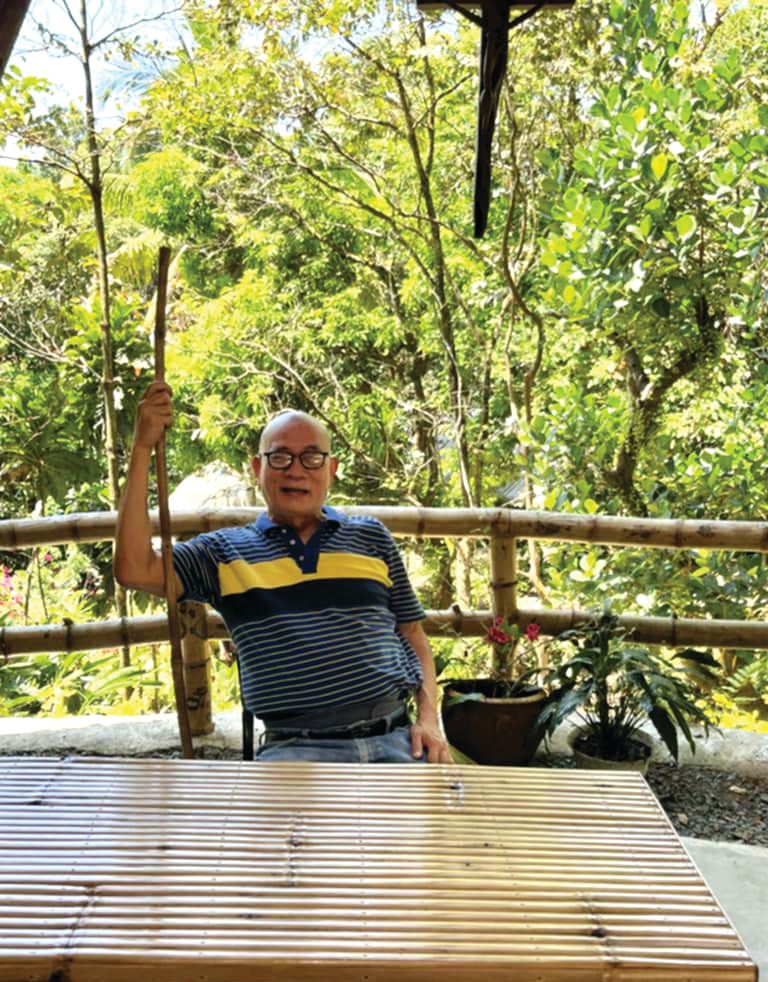
Toto’s connection with nature is extraordinary; it celebrates the meaning of Easter, of new beginnings and new life.
At Mt. Purro Nature Reserve (MPNR) where I interviewed him for this story, I saw how a man like him could plant a million trees and now work on planting the seeds to nurture nature in the hearts of the next generation.
Toto has a smile that stays in his eyes, a soft voice like the sound of swaying trees in the wind, and a pace that defies his 77 years in the planet, walking through the rough forest terrain in the MPNR every day – to visit his trees and to water each tree he had planted to commemorate a classmate who had passed away.

Toto has followed an unusual vocation for 35 years now. “I have a calling; God has called me to plant trees,” he said sitting in the bamboo chapel built on a hill in MPNR. “And my mother had advised me to plant trees to prevent floods that cause death and destruction.”
His inspiration also comes from his grandfather, General Miguel Malvar, a Philippine national hero, also considered as the “father of reforestation” in the Philippines. Today, a 90-cm in diameter, 25-meter high tree stands in Barrio San Miguel in Sto. Tomas, Batangas as the Malvar Tree.
The Bamboo Chapel
The Bamboo Chapel where we listened to the story of this extraordinary man with a deep love for nature is a showcase of local talent and indigenous materials. The bamboo material was harvested from a 24-hectare plantation in the reserve. It was creatively fashioned to “bring the forest in” and demonstrates the resilience of the bamboo wounded together and swaying in unison to keep the structures’ balance against the wind and sun.


Trails from the chapel lead to the bamboo cottages that house guests, mostly groups of students, families, or company employees who come for team building activities, or simply to appreciate nature. (The place can accommodate at least 150 overnight guests and 500 day trippers.)
In the beginning
It was in the late 1980s when Toto first came to Barangay Calawis in Antipolo and found a two-hectare property where he started planting trees. He had just come from Capas, Tarlac, where he had been part of the Ingat Gubat Foundation, and from reforestation work over 5,000 hectares at the border of Tarlac and Zambales provinces. That lot, at the Upper Marikina Watershed in the Sierra Madre mountains, is where MPNR started.
The property was a barren forest. For years, Toto said there was no spring water. The spring dried up when the trees fell victim to illegal logging, kaingin, and charcoal making. He just kept on planting and praying –and a miracle happened. The spring came alive together with the maturity of the planted trees.
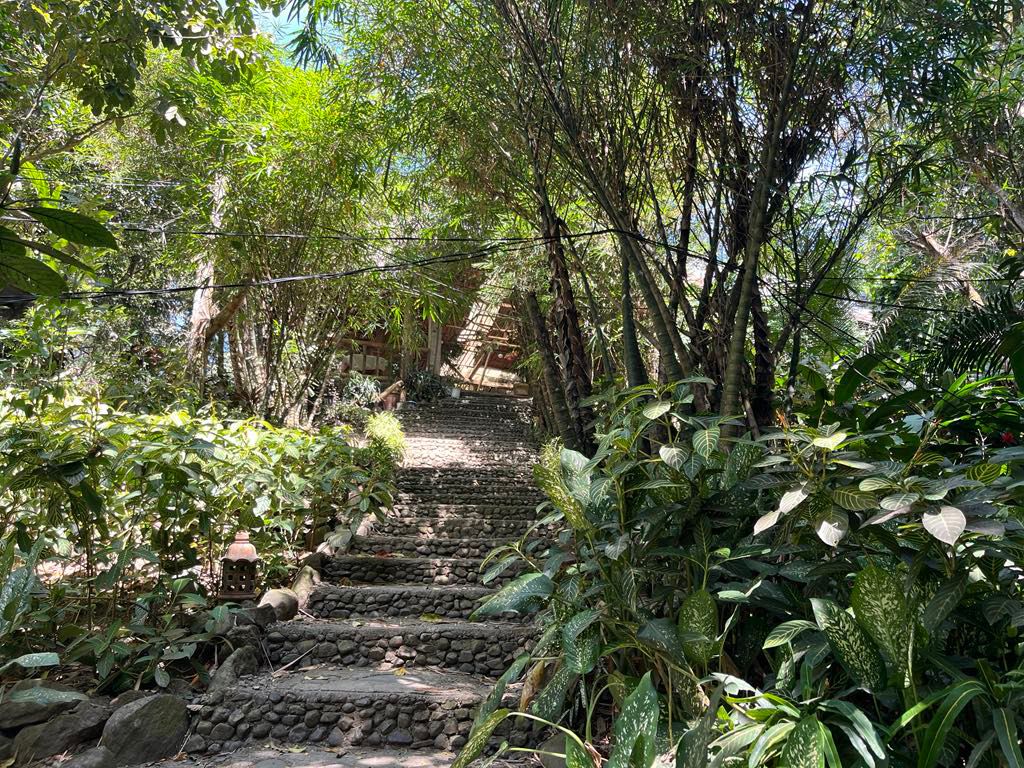
Toto committed to his calling to plant trees there, living with the Dumagats for 35 years now. Ten years after he lived in the mountains when electricity and water came, his wife, “Baby” San Gabriel Malvar, and their seven children joined him and helped him set up the nature reserve. They have warm memories of living with nature, loving it and the people who lived there, among them the Indigenous People of the Dumagat tribe who Toto included in his reforestation project at Mt. Purro.
Funding his passion
Many times, he was faced by financial difficulties in funding his reforestation program, digging into family resources, even selling a business venture and land. Yet, he kept on.
“The key to the project’s success was the realization that I must prioritize the welfare of the people who are part of the forest.” Early in the project, he observed that people in the forest had to have livelihood or they will have short-term plans for the trees they planted.
With the Dumagat family, Toto led the creation of MPNR, an ecological park. (Toto and his family were adopted as members of the Dumagat in November 2017, with Toto as an elder.)

MPNR Foundation is born
The MPNR Foundation was set up in 2018 and they continued their work in the Upper Marikina Watershed which serves as a vital water source for Metro Manila and is crucial in preventing flooding in the metropolis during typhoons.
During the pandemic, the resilience of the community was tested. Working together, Toto said its Puso Kitchen Feeding Program sustained 2,200 households for more than four months.
The foundation has expanded its services. It now has a health clinic initiated by his son, Doc TJ, a graduate of Ateneo School of Medicine and Public Health, who serves as a community doctor. The clinic has a partnership with Ateneo and the Antipolo LGU to assign two senior interns every month to provide free clinics from Monday to Friday.
It also has housing initiatives, water sourcing system, grade school to college scholarships, savings program, and weekly prayer meetings.
Life led by faith
Today, Toto walks around the hilly nature reserve with a hiking pole. He breathes deeply the air with the scent of grass and leaves. He is happy.
A life led by faith had brought him to this point of his life. Toto was recently awarded the Luxin-Domino Award by Ateneo de Manila University for dedicating much of his life to work with the poor.
He had worked weekends doing volunteer work for the poor communities of Tondo, joined an immersion program with farmers, and later heeded the call to become a Christian businessman.
His legacy
Toto’s legacy will live on for as long as that mountain is green. And other mountains can be green too, for what he has done in Mt. Purro can be replicated in other forest areas in the country.