

ADVERTISEMENT

Iran seeks Russia's support for its nuclear talks with US

Published Apr 18, 2025 01:28 pm

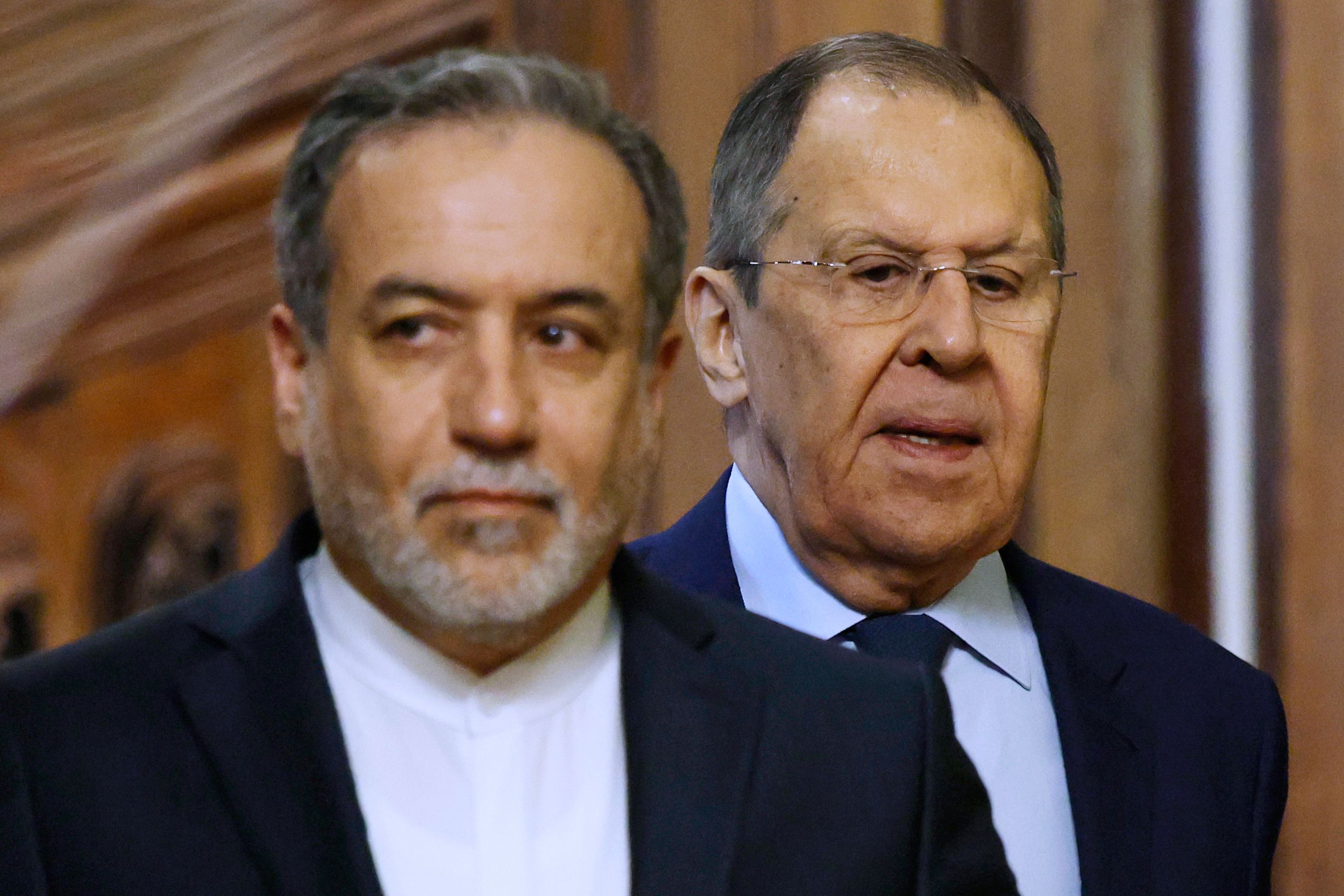
TEHRAN, Iran (AP) — Iran on Friday sought support from Russia over a possible deal with Washington over Tehran’s rapidly advancing nuclear program, ahead of a second round of talks this weekend in Rome.
AP25108414206845.jpg
Iranian Foreign Minister Abbas Araghchi, foreground and Russian Foreign Minister Sergey Lavrov attend a news conference following their meeting in Moscow, Russia, Friday, April 18, 2025. (Tatyana Makeyeva/Pool Photo via AP)

Iran's Foreign Minister Abbas Araghchi said he briefed his Russian counterpart, Sergey Lavrov, on the first round of talks in Oman last week and praised Russia's role in Iran's 2015 nuclear deal with world powers that led to lifting of sanctions in return for Tehran's cap on its nuclear activities.

“We are hopeful, and we expect Russia to continue its supportive role in any new agreement,” Araghchi said in a joint news conference with Lavrov in Moscow.

The 2015 nuclear deal collapsed with Trump’s unilateral withdrawal while Iran abandoned all limits on its nuclear program, and enriches uranium to up to 60% purity — near weapons-grade levels of 90%.

Lavrov said Russia was ready to mediate and assist in the nuclear talks.

“We are ready to help, mediate and play any role that, from Iran’s point of view, will be useful and that will be acceptable to the United States,” Lavrov said. “We proceed from the fact that the only option for an agreement, as the (Iranian) minister just said, is an agreement exclusively on nuclear issues.”

Lavrov said Araghchi met with Russian President Vladimir Putin on Thursday in talks that "emphasized the unprecedented dynamics of (the) political dialogue” between Moscow and Tehran. He did not give details, beyond saying Putin was “very pleased” with the talks.

Araghchi said he gave Putin a message from Supreme Leader Ayatollah Ali Khamenei, who has a final say on all state matters in Iran. He did not elaborate.

In Paris, U.S. Secretary of State Marco Rubio expressed hope that talks with Iran are ″fruitful, and that they’re that they can lead to something. We would all prefer a peaceful resolution and a lasting one.″

Rubio met with British, French and German officials in Paris and pressed them to maintain sanctions against Iran instead of allowing them to run out.

″We should all anticipate, based on the public comments yesterday, that they’re about to get a report from the IAEA that says not just is Iran out of compliance, but Iran is dangerously close to a weapon, closer than they’ve ever been," Rubio said.

He added: "And then they (the Europeans) are going to have to make a decision about whether they want to reimpose these sanctions. And if Iran is out of compliance, they have to reimpose the sanctions.″

Related Tags

World news
ADVERTISEMENT
.most-popular .layout-ratio{ padding-bottom: 79.13%; } @media (min-width: 768px) and (max-width: 1024px) { .widget-title { font-size: 15px !important; } }

{{ articles_filter_1561_widget.title }}

.most-popular .layout-ratio{ padding-bottom: 79.13%; } @media (min-width: 768px) and (max-width: 1024px) { .widget-title { font-size: 15px !important; } }

{{ articles_filter_1562_widget.title }}

.most-popular .layout-ratio{ padding-bottom: 79.13%; } @media (min-width: 768px) and (max-width: 1024px) { .widget-title { font-size: 15px !important; } }

{{ articles_filter_1563_widget.title }}

{{ articles_filter_1564_widget.title }}

.mb-article-details { position: relative; } .mb-article-details .article-body-preview, .mb-article-details .article-body-summary{ font-size: 17px; line-height: 30px; font-family: "Libre Caslon Text", serif; color: #000; } .mb-article-details .article-body-preview iframe , .mb-article-details .article-body-summary iframe{ width: 100%; margin: auto; } .read-more-background { background: linear-gradient(180deg, color(display-p3 1.000 1.000 1.000 / 0) 13.75%, color(display-p3 1.000 1.000 1.000 / 0.8) 30.79%, color(display-p3 1.000 1.000 1.000) 72.5%); position: absolute; height: 200px; width: 100%; bottom: 0; display: flex; justify-content: center; align-items: center; padding: 0; } .read-more-background a{ color: #000; } .read-more-btn { padding: 17px 45px; font-family: Inter; font-weight: 700; font-size: 18px; line-height: 16px; text-align: center; vertical-align: middle; border: 1px solid black; background-color: white; } .hidden { display: none; }
function initializeAllSwipers() { // Get all hidden inputs with cms_article_id document.querySelectorAll('[id^="cms_article_id_"]').forEach(function (input) { const cmsArticleId = input.value; const articleSelector = '#article-' + cmsArticleId + ' .body_images'; const swiperElement = document.querySelector(articleSelector); if (swiperElement && !swiperElement.classList.contains('swiper-initialized')) { new Swiper(articleSelector, { loop: true, pagination: false, navigation: { nextEl: '#article-' + cmsArticleId + ' .swiper-button-next', prevEl: '#article-' + cmsArticleId + ' .swiper-button-prev', }, }); } }); } setTimeout(initializeAllSwipers, 3000); const intersectionObserver = new IntersectionObserver( (entries) => { entries.forEach((entry) => { if (entry.isIntersecting) { const newUrl = entry.target.getAttribute("data-url"); if (newUrl) { history.pushState(null, null, newUrl); let article = entry.target; // Extract metadata const author = article.querySelector('.author-section').textContent.replace('By', '').trim(); const section = article.querySelector('.section-info ').textContent.replace(' ', ' '); const title = article.querySelector('.article-title h1').textContent; // Parse URL for Chartbeat path format const parsedUrl = new URL(newUrl, window.location.origin); const cleanUrl = parsedUrl.host + parsedUrl.pathname; // Update Chartbeat configuration if (typeof window._sf_async_config !== 'undefined') { window._sf_async_config.path = cleanUrl; window._sf_async_config.sections = section; window._sf_async_config.authors = author; } // Track virtual page view with Chartbeat if (typeof pSUPERFLY !== 'undefined' && typeof pSUPERFLY.virtualPage === 'function') { try { pSUPERFLY.virtualPage({ path: cleanUrl, title: title, sections: section, authors: author }); } catch (error) { console.error('ping error', error); } } // Optional: Update document title if (title && title !== document.title) { document.title = title; } } } }); }, { threshold: 0.1 } ); function showArticleBody(button) { const article = button.closest("article"); const summary = article.querySelector(".article-body-summary"); const body = article.querySelector(".article-body-preview"); const readMoreSection = article.querySelector(".read-more-background"); // Hide summary and read-more section summary.style.display = "none"; readMoreSection.style.display = "none"; // Show the full article body body.classList.remove("hidden"); } document.addEventListener("DOMContentLoaded", () => { let loadCount = 0; // Track how many times articles are loaded const offset = [1, 2, 3, 4, 5, 6, 7, 8, 9, 10]; // Offset values const currentUrl = window.location.pathname.substring(1); let isLoading = false; // Prevent multiple calls if (!currentUrl) { console.log("Current URL is invalid."); return; } const sentinel = document.getElementById("load-more-sentinel"); if (!sentinel) { console.log("Sentinel element not found."); return; } function isSentinelVisible() { const rect = sentinel.getBoundingClientRect(); return ( rect.top < window.innerHeight && rect.bottom >= 0 ); } function onScroll() { if (isLoading) return; if (isSentinelVisible()) { if (loadCount >= offset.length) { console.log("Maximum load attempts reached."); window.removeEventListener("scroll", onScroll); return; } isLoading = true; const currentOffset = offset[loadCount]; window.loadMoreItems().then(() => { let article = document.querySelector('#widget_1690 > div:nth-last-of-type(2) article'); intersectionObserver.observe(article) loadCount++; }).catch(error => { console.error("Error loading more items:", error); }).finally(() => { isLoading = false; }); } } window.addEventListener("scroll", onScroll); });

Sign up by email to receive news.