ADVERTISEMENT

Dog reunites with Israeli family after disappearing for 18 months in Gaza

Published Apr 17, 2025 01:09 am
AP25106530064233.jpg
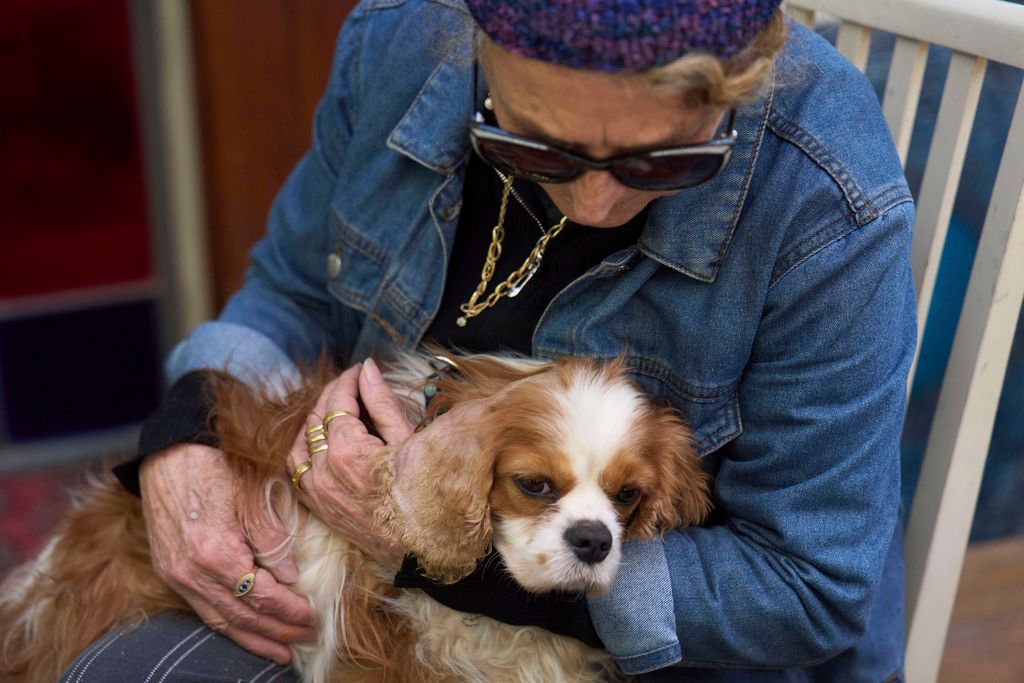
Rachel Dancyg holds her dog, Billie, on Wednesday, April 16, 2025. Israeli soldiers found Billie in the Gaza Strip, 18 months after she disappeared during Hamas' attack on Dancyg's Kibbutz of Nir Oz, in Binyamina, Israel. (AP Photo/Ariel Schalit)

BINYAMINA, Israel (AP) — Rachel Dancyg never thought she would see her dog again after it disappeared in the Hamas attack that sparked the ongoing war with Israel.

Her ex-husband and brother were abducted from Kibbutz Nir Oz in southern Israel and killed. She thought her beloved pet had suffered the same fate. So when a soldier called the family on Tuesday night, telling them that Billie had been found alive in Gaza, it was hard to believe.

“It's a miracle,” Dancyg told The Associated Press on Wednesday, hours after being reunited with her now 3 1/2-year old Cavalier King Charles spaniel. “It doesn’t make sense ... People didn’t survive. How did she?"

The reunion brought a rare touch of joy in Israel after 18 months of devastating war.

The Oct. 7, 2023, Hamas attack killed some 1,200 people and resulted in more than 250 others being kidnapped. Nearly 60 hostages remain in Gaza, more than half of whom are believed to be dead.

An Israeli offensive launched after the attack has killed more than 51,000 Palestinians, more than half of them women and children, according to local health authorities, and reduced large parts of Gaza to rubble. U.S.-led efforts to broker a ceasefire and bring home remaining hostages appear to be at a standstill.

Nir Oz was one of the hardest hit communities, with nearly a quarter of the approximately 400 residents killed or captured in the 2023 attack. For Israelis, it stands out as the embodiment of their country’s vulnerability that day. Soldiers took hours to respond. Some families have said they saw Hamas militants killing or kidnapping animals.

It's unclear how Billie ended up in Gaza. When Hamas entered Dancyg's home, she hid in the safe room with her family for eight hours, holding the door shut. But she fled so quickly there was no time to find the dog. For months, the community looked everywhere for Billie, but there was no trace of her.

The family later moved to northern Israel.

Then, on Tuesday night, Dancyg’s daughter received a phone call from a soldier who had just returned from Gaza. He said he had their dog.

“I couldn’t believe it. I asked for a photo. I was really confused,” said her daughter, Lee Maor.

The soldier said he found Billie in Gaza's southern city of Rafah — about 9 miles (15 kilometers) from the Kibbutz — days earlier, and she immediately gravitated toward his troops, not leaving their side. It might have been because Billie heard them speaking Hebrew, he told them.

Speaking to Israeli television, reserve soldier Aviad Shapira said he found Billie among the rubble and called out to her. “I said ‘shalom’ and she jumped on me,” he said.

He had a feeling that she didn't belong in Gaza and that there was a story behind her, Shapira said. He brought the dog to a veterinarian and found the family’s contact information on a chip inside the animal.

Stroking Billie on her lap, Dancyg says it will take time to see how the odyssey has affected her. Billie appears happy to be home, but she seems disoriented and has lost weight, Dancyg said.

While Israeli media happily reported Billie's return, the Nir Oz community reminded people not to forget what the family went through. In a Facebook post, the kibbutz called the reunion a "little light in a lot of sorrow.”

The body of Dancyg's ex-husband, Alex, 76, was recovered by the army and returned in August. The body of her brother Itzhak Elgarat, 68, was returned earlier this year as part of a ceasefire.

For Dancyg, Billie's return gives her some sense of closure. Yet she said it is bittersweet knowing there are hostages still in Gaza.

“I can’t get out of this trauma as long as they are there," she said.

Related Tags

WORLDNEWS
ADVERTISEMENT
.most-popular .layout-ratio{ padding-bottom: 79.13%; } @media (min-width: 768px) and (max-width: 1024px) { .widget-title { font-size: 15px !important; } }

{{ articles_filter_1561_widget.title }}

.most-popular .layout-ratio{ padding-bottom: 79.13%; } @media (min-width: 768px) and (max-width: 1024px) { .widget-title { font-size: 15px !important; } }

{{ articles_filter_1562_widget.title }}

.most-popular .layout-ratio{ padding-bottom: 79.13%; } @media (min-width: 768px) and (max-width: 1024px) { .widget-title { font-size: 15px !important; } }

{{ articles_filter_1563_widget.title }}

{{ articles_filter_1564_widget.title }}

.mb-article-details { position: relative; } .mb-article-details .article-body-preview, .mb-article-details .article-body-summary{ font-size: 17px; line-height: 30px; font-family: "Libre Caslon Text", serif; color: #000; } .mb-article-details .article-body-preview iframe , .mb-article-details .article-body-summary iframe{ width: 100%; margin: auto; } .read-more-background { background: linear-gradient(180deg, color(display-p3 1.000 1.000 1.000 / 0) 13.75%, color(display-p3 1.000 1.000 1.000 / 0.8) 30.79%, color(display-p3 1.000 1.000 1.000) 72.5%); position: absolute; height: 200px; width: 100%; bottom: 0; display: flex; justify-content: center; align-items: center; padding: 0; } .read-more-background a{ color: #000; } .read-more-btn { padding: 17px 45px; font-family: Inter; font-weight: 700; font-size: 18px; line-height: 16px; text-align: center; vertical-align: middle; border: 1px solid black; background-color: white; } .hidden { display: none; }
function initializeAllSwipers() { // Get all hidden inputs with cms_article_id document.querySelectorAll('[id^="cms_article_id_"]').forEach(function (input) { const cmsArticleId = input.value; const articleSelector = '#article-' + cmsArticleId + ' .body_images'; const swiperElement = document.querySelector(articleSelector); if (swiperElement && !swiperElement.classList.contains('swiper-initialized')) { new Swiper(articleSelector, { loop: true, pagination: false, navigation: { nextEl: '#article-' + cmsArticleId + ' .swiper-button-next', prevEl: '#article-' + cmsArticleId + ' .swiper-button-prev', }, }); } }); } setTimeout(initializeAllSwipers, 3000); const intersectionObserver = new IntersectionObserver( (entries) => { entries.forEach((entry) => { if (entry.isIntersecting) { const newUrl = entry.target.getAttribute("data-url"); if (newUrl) { history.pushState(null, null, newUrl); let article = entry.target; // Extract metadata const author = article.querySelector('.author-section').textContent.replace('By', '').trim(); const section = article.querySelector('.section-info ').textContent.replace(' ', ' '); const title = article.querySelector('.article-title h1').textContent; // Parse URL for Chartbeat path format const parsedUrl = new URL(newUrl, window.location.origin); const cleanUrl = parsedUrl.host + parsedUrl.pathname; // Update Chartbeat configuration if (typeof window._sf_async_config !== 'undefined') { window._sf_async_config.path = cleanUrl; window._sf_async_config.sections = section; window._sf_async_config.authors = author; } // Track virtual page view with Chartbeat if (typeof pSUPERFLY !== 'undefined' && typeof pSUPERFLY.virtualPage === 'function') { try { pSUPERFLY.virtualPage({ path: cleanUrl, title: title, sections: section, authors: author }); } catch (error) { console.error('ping error', error); } } // Optional: Update document title if (title && title !== document.title) { document.title = title; } } } }); }, { threshold: 0.1 } ); function showArticleBody(button) { const article = button.closest("article"); const summary = article.querySelector(".article-body-summary"); const body = article.querySelector(".article-body-preview"); const readMoreSection = article.querySelector(".read-more-background"); // Hide summary and read-more section summary.style.display = "none"; readMoreSection.style.display = "none"; // Show the full article body body.classList.remove("hidden"); } document.addEventListener("DOMContentLoaded", () => { let loadCount = 0; // Track how many times articles are loaded const offset = [1, 2, 3, 4, 5, 6, 7, 8, 9, 10]; // Offset values const currentUrl = window.location.pathname.substring(1); let isLoading = false; // Prevent multiple calls if (!currentUrl) { console.log("Current URL is invalid."); return; } const sentinel = document.getElementById("load-more-sentinel"); if (!sentinel) { console.log("Sentinel element not found."); return; } function isSentinelVisible() { const rect = sentinel.getBoundingClientRect(); return ( rect.top < window.innerHeight && rect.bottom >= 0 ); } function onScroll() { if (isLoading) return; if (isSentinelVisible()) { if (loadCount >= offset.length) { console.log("Maximum load attempts reached."); window.removeEventListener("scroll", onScroll); return; } isLoading = true; const currentOffset = offset[loadCount]; window.loadMoreItems().then(() => { let article = document.querySelector('#widget_1690 > div:nth-last-of-type(2) article'); intersectionObserver.observe(article) loadCount++; }).catch(error => { console.error("Error loading more items:", error); }).finally(() => { isLoading = false; }); } } window.addEventListener("scroll", onScroll); });

Sign up by email to receive news.