







China, ASEAN must stand united amid tariff war—envoy


Amid the ongoing tariff conflict between the United States and China, Chinese Ambassador to the Philippines Huang Xilian urged the Association of Southeast Asian Nations (ASEAN) to be united in addressing “common challenges” and safeguarding its interests and the global economic order.
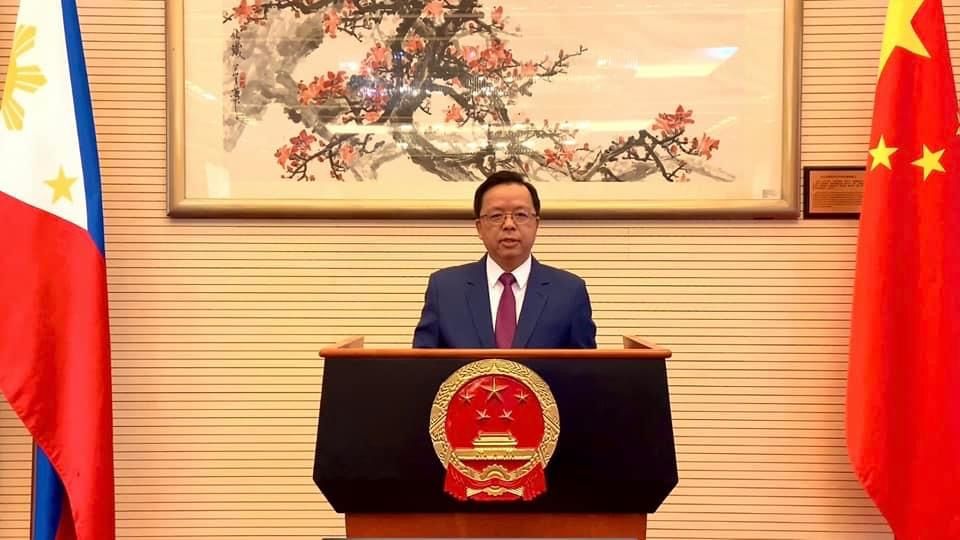 Chinese Ambassador to the Philippines Huang Xilian (Photo from Amb. Huang via Facebook)
In a media briefing on Wednesday, April 16, the ambassador underscored the importance of a strong and robust trade relations between China and ASEAN.
“We have big stake in a free and fair international trading system… So, it serves a common interest of China and ASEAN to safeguard free trade to safeguard a stable and fair international economic order,” he said.
“So, in light of the common challenges we are facing, we believe it is important for ASEAN countries to be united in responding to such challenge. And it is also important for China-ASEAN to work together,” he added.
ASEAN is China’s largest trading partner and China is also the largest trading partner of all ASEAN member-states. They are also members of the ASEAN Secretariat (ASEC).
The Philippines, along with nine other countries, are members of the ASEAN.
Free trade pact 3.0
Huang also announced the substantial conclusion of the talks for the China-ASEAN Free Trade Agreement 3.0, an upgrade of the earlier 2.0 version.
“That’s why we are very happy that the negotiation of version 3.0 of the China-ASEAN Free Trade Agreement has been concluded. It is an upgradation from what we had, the version 2.0,” he said.
The new free trade pact will further promote the trade between China and ASEAN member-states.
The ambassador expressed hopes that the 3.0 versions will be signed officially “in the near future in order to highlight the common aspiration of China and ASEAN countries in safeguarding free trade and safeguarding a fair and free international economic order.”
The conclusion of the negotiations for the new FTA and China’s call for ASEAN to unite come amid the ongoing tariff war between the US and China.
US President Donald Trump has imposed the heaviest tariffs on Chinese imports at 145 percent, while China has responded with its own 125 percent levies on US imports.