ADVERTISEMENT

Reimagining the 'palaspas' through traditional puni

Punique Handicrafts continues to champion Malolos' age-old craft during the Lenten season

Published Apr 16, 2025 07:58 am
viber_image_2025-04-16_09-45-41-340.png

Puni is a traditional Filipino art of weaving coconut fronds or buri leaves by folding, plaiting, or braiding. Puni, meaning “to decorate or beautify,” has long been used in crafting palaspas (decorated palm fronds for Lent), as well as practical items like food containers (puso in Cebu) and playful objects like sepaktakraw balls, swords, fish, and birds.

While puni weaving can be found in various parts of the country, Malolos, Bulacan has remained one of its strongest bastions—where the art is actively taught and passed down through generations.

Among those who championed its preservation were Gigi Garcia and the late Rheeza Hernandez of the Malolos Puni Art Group. Together, they co-established Puni De Malolos to promote this once-fading tradition. In 2017, Gigi and her daughter-in-law Jonnah Garcia founded Punique Handicrafts to take that vision further.

As a social enterprise, Punique Handicrafts is committed not only to preserving the art of puni but also to providing sustainable livelihoods by supporting and empowering women artisans.
Copy of IMG_20250328_114836_450.jpg
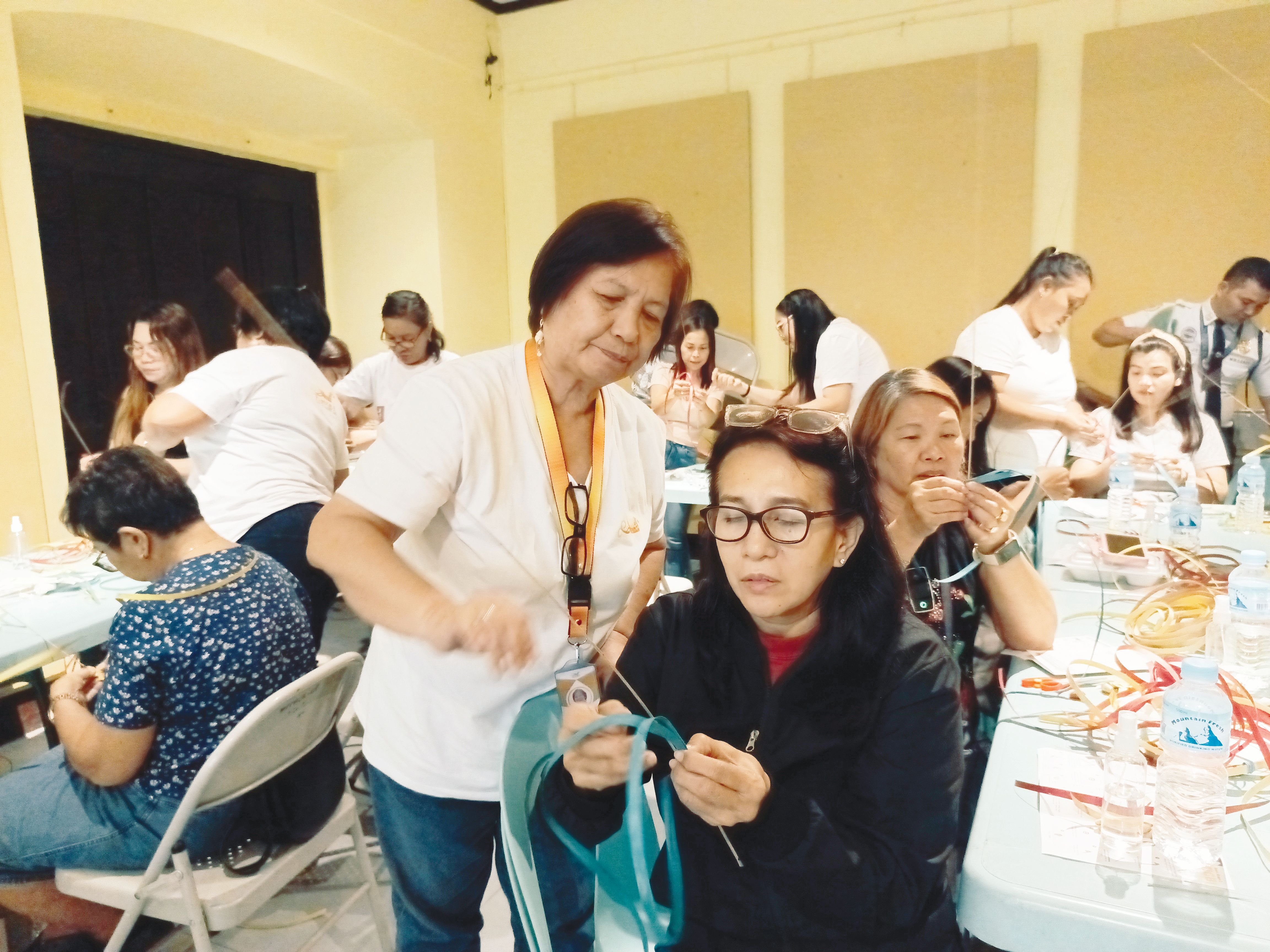
WEAVING WOMEN To keep the puni from vanishing, Punique Handicrafts hosts a series of workshops to share the tradition

“In Malolos, puni weaving has been a long-standing tradition, passed down from generation to generation,” Jonnah said. “The city’s strong cultural and historical identity, along with its commitment to craftsmanship, makes it a natural home for this art form.”

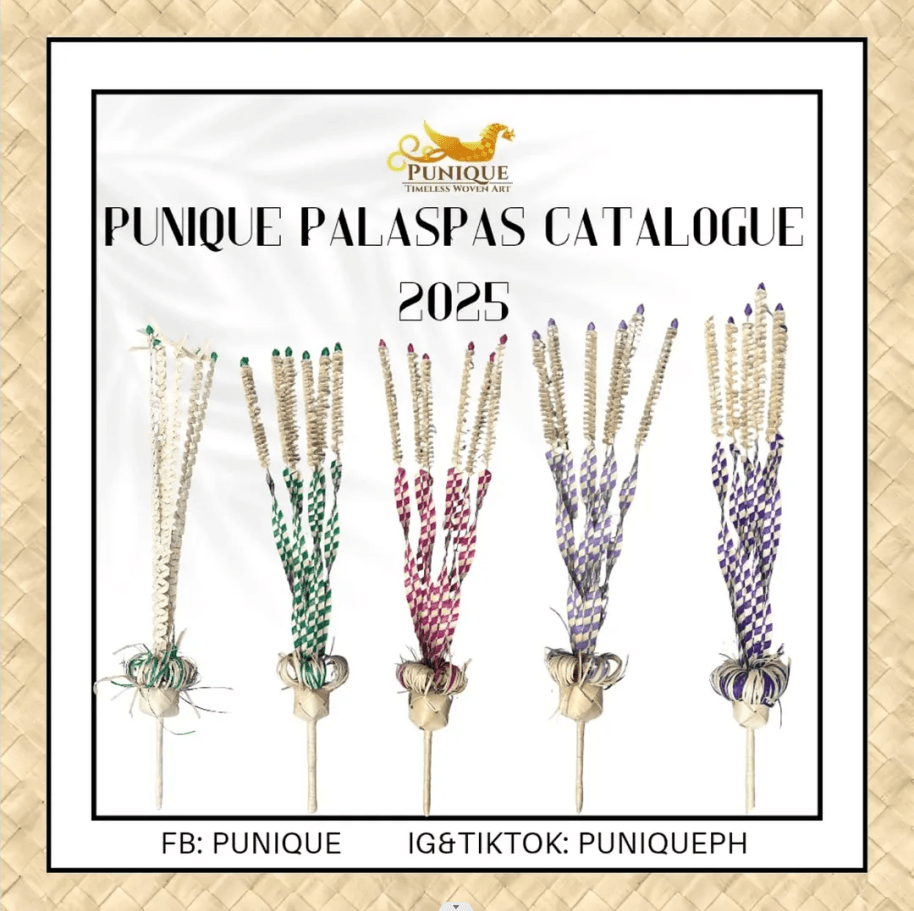
Today, Punique Handicrafts offers a variety of products showcasing different puni techniques. Its catalog ranges from bridal bouquets and fashion accessories to holiday décor. For the season, it unveils a fresh take on the palaspas with its 2025 collection.
viber_image_2025-04-16_10-09-01-767.png

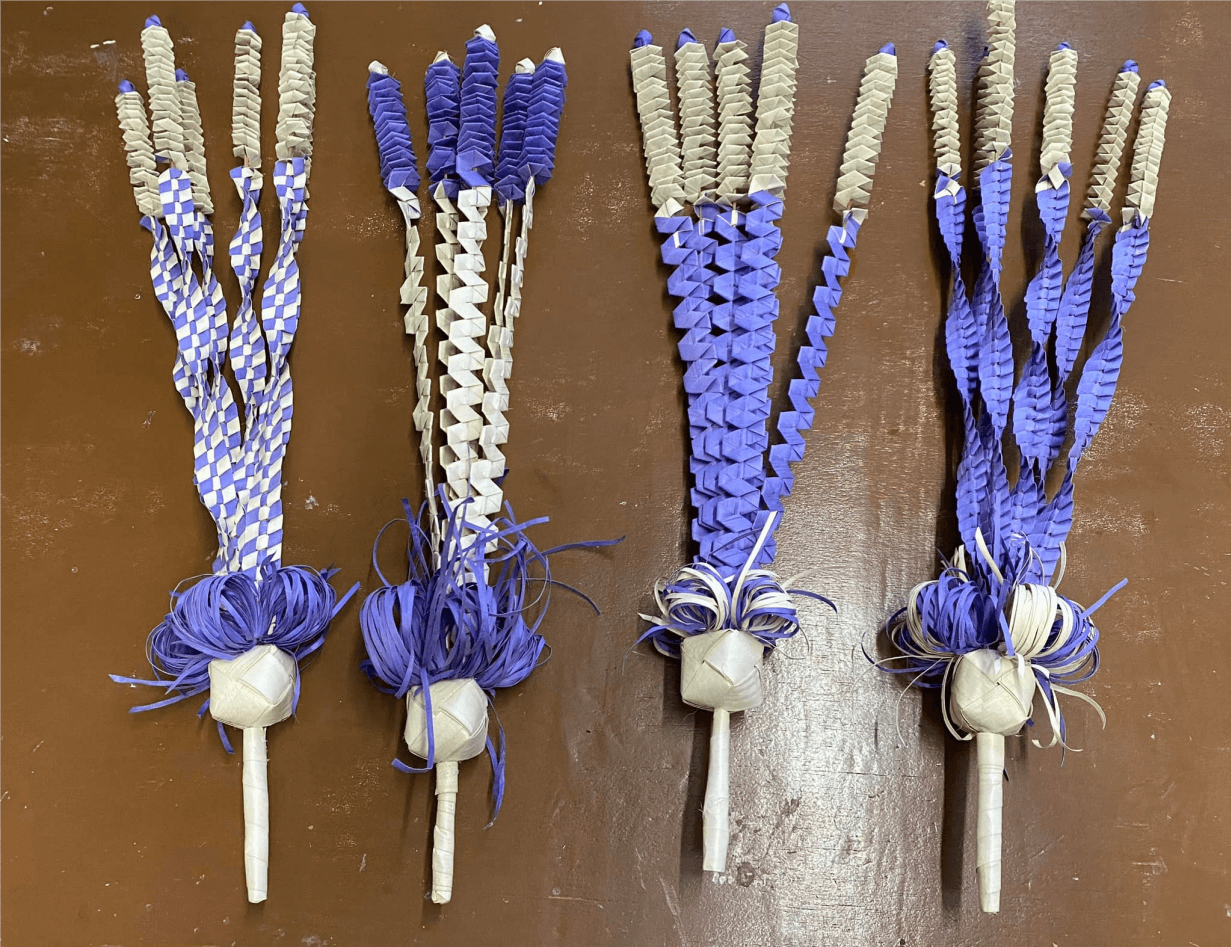
The new palaspas designs feature a combination of classic weaving patterns such as sinawa (snake-like), higad-higaran (caterpillar), along with the ikot (ascending weave) and tigbi (diamond-shaped) bead elements. Completing the palaspas is the traditional bola (ball) design, which adorns the handle.

“We chose these different weaving techniques to add texture, movement, and elegance to each palaspas piece,” Jonnah related to the Manila Bulletin.

These palaspas are Filipino through and through—from the materials to the hands that mold and weave them. The Malolos-based shop primarily uses buri or young coconut leaves sourced from trusted local suppliers in Quezon and nearby provinces. These are selected for their flexibility, freshness, and suitability for weaving.

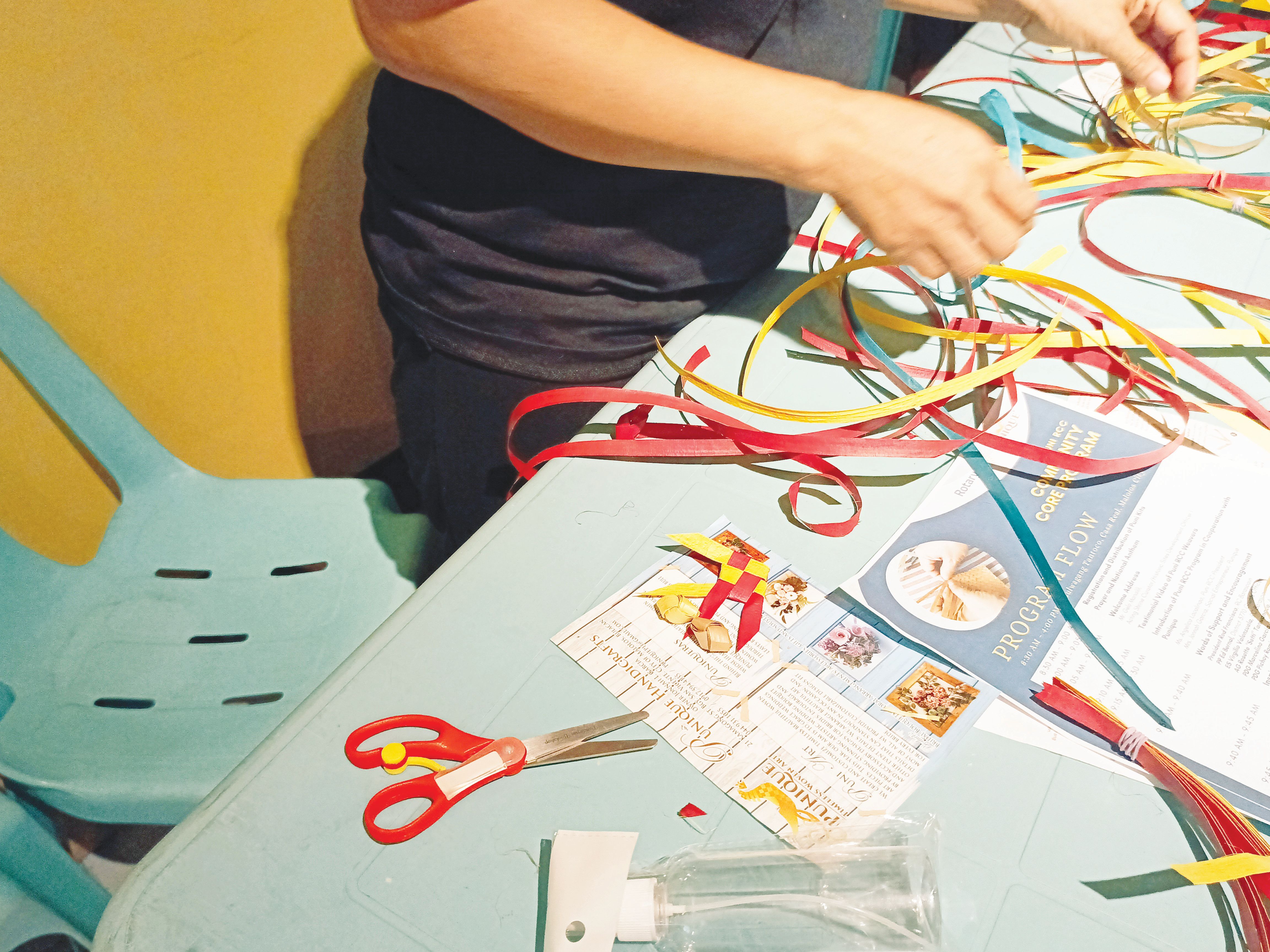
“Once we receive the dried buri leaves from our suppliers, we cut them into strips using our 'linasan' cutter,” Jonnah muses. “Our Quezon suppliers use dyes to offer various color options, and we also commission the Philippine Textile Research Institute (PTRI) under the Department of Science and Technology (DOST) to create special color combinations.”
Copy of IMG_20250328_113341_499.jpg

The real heart of the operation, however, lies with the Malolos women weavers, affectionately called “Puniqueras.” These artisans receive ongoing training and design guidance to sharpen their skills while staying true to tradition. They work closely with the store’s master artisan and senior designer to transform woven components into contemporary works of art.

“Each piece highlights the creativity and skill of our artisans and reflects our dedication to keeping Filipino craftsmanship alive,” Jonnah said. “Moving forward, we are exploring more fashion and lifestyle items to expand the modern utility of our beloved craft. We’re excited to share our art with the rest of the world!”

Punique Handicrafts is located at 21 Kamagong St. Brgy. San Vicente, Malolos City, Bulacan. 

Related Tags

John Legaspi Spotlight Features
ADVERTISEMENT
.most-popular .layout-ratio{ padding-bottom: 79.13%; } @media (min-width: 768px) and (max-width: 1024px) { .widget-title { font-size: 15px !important; } }

{{ articles_filter_1561_widget.title }}

.most-popular .layout-ratio{ padding-bottom: 79.13%; } @media (min-width: 768px) and (max-width: 1024px) { .widget-title { font-size: 15px !important; } }

{{ articles_filter_1562_widget.title }}

.most-popular .layout-ratio{ padding-bottom: 79.13%; } @media (min-width: 768px) and (max-width: 1024px) { .widget-title { font-size: 15px !important; } }

{{ articles_filter_1563_widget.title }}

{{ articles_filter_1564_widget.title }}

.mb-article-details { position: relative; } .mb-article-details .article-body-preview, .mb-article-details .article-body-summary{ font-size: 17px; line-height: 30px; font-family: "Libre Caslon Text", serif; color: #000; } .mb-article-details .article-body-preview iframe , .mb-article-details .article-body-summary iframe{ width: 100%; margin: auto; } .read-more-background { background: linear-gradient(180deg, color(display-p3 1.000 1.000 1.000 / 0) 13.75%, color(display-p3 1.000 1.000 1.000 / 0.8) 30.79%, color(display-p3 1.000 1.000 1.000) 72.5%); position: absolute; height: 200px; width: 100%; bottom: 0; display: flex; justify-content: center; align-items: center; padding: 0; } .read-more-background a{ color: #000; } .read-more-btn { padding: 17px 45px; font-family: Inter; font-weight: 700; font-size: 18px; line-height: 16px; text-align: center; vertical-align: middle; border: 1px solid black; background-color: white; } .hidden { display: none; }
function initializeAllSwipers() { // Get all hidden inputs with cms_article_id document.querySelectorAll('[id^="cms_article_id_"]').forEach(function (input) { const cmsArticleId = input.value; const articleSelector = '#article-' + cmsArticleId + ' .body_images'; const swiperElement = document.querySelector(articleSelector); if (swiperElement && !swiperElement.classList.contains('swiper-initialized')) { new Swiper(articleSelector, { loop: true, pagination: false, navigation: { nextEl: '#article-' + cmsArticleId + ' .swiper-button-next', prevEl: '#article-' + cmsArticleId + ' .swiper-button-prev', }, }); } }); } setTimeout(initializeAllSwipers, 3000); const intersectionObserver = new IntersectionObserver( (entries) => { entries.forEach((entry) => { if (entry.isIntersecting) { const newUrl = entry.target.getAttribute("data-url"); if (newUrl) { history.pushState(null, null, newUrl); let article = entry.target; // Extract metadata const author = article.querySelector('.author-section').textContent.replace('By', '').trim(); const section = article.querySelector('.section-info ').textContent.replace(' ', ' '); const title = article.querySelector('.article-title h1').textContent; // Parse URL for Chartbeat path format const parsedUrl = new URL(newUrl, window.location.origin); const cleanUrl = parsedUrl.host + parsedUrl.pathname; // Update Chartbeat configuration if (typeof window._sf_async_config !== 'undefined') { window._sf_async_config.path = cleanUrl; window._sf_async_config.sections = section; window._sf_async_config.authors = author; } // Track virtual page view with Chartbeat if (typeof pSUPERFLY !== 'undefined' && typeof pSUPERFLY.virtualPage === 'function') { try { pSUPERFLY.virtualPage({ path: cleanUrl, title: title, sections: section, authors: author }); } catch (error) { console.error('ping error', error); } } // Optional: Update document title if (title && title !== document.title) { document.title = title; } } } }); }, { threshold: 0.1 } ); function showArticleBody(button) { const article = button.closest("article"); const summary = article.querySelector(".article-body-summary"); const body = article.querySelector(".article-body-preview"); const readMoreSection = article.querySelector(".read-more-background"); // Hide summary and read-more section summary.style.display = "none"; readMoreSection.style.display = "none"; // Show the full article body body.classList.remove("hidden"); } document.addEventListener("DOMContentLoaded", () => { let loadCount = 0; // Track how many times articles are loaded const offset = [1, 2, 3, 4, 5, 6, 7, 8, 9, 10]; // Offset values const currentUrl = window.location.pathname.substring(1); let isLoading = false; // Prevent multiple calls if (!currentUrl) { console.log("Current URL is invalid."); return; } const sentinel = document.getElementById("load-more-sentinel"); if (!sentinel) { console.log("Sentinel element not found."); return; } function isSentinelVisible() { const rect = sentinel.getBoundingClientRect(); return ( rect.top < window.innerHeight && rect.bottom >= 0 ); } function onScroll() { if (isLoading) return; if (isSentinelVisible()) { if (loadCount >= offset.length) { console.log("Maximum load attempts reached."); window.removeEventListener("scroll", onScroll); return; } isLoading = true; const currentOffset = offset[loadCount]; window.loadMoreItems().then(() => { let article = document.querySelector('#widget_1690 > div:nth-last-of-type(2) article'); intersectionObserver.observe(article) loadCount++; }).catch(error => { console.error("Error loading more items:", error); }).finally(() => { isLoading = false; }); } } window.addEventListener("scroll", onScroll); });

Sign up by email to receive news.