






 Philippines
National
Sending a message: PH, US forces practice countering seaborne invasion in Cagayan
Philippines
National
Sending a message: PH, US forces practice countering seaborne invasion in Cagayan
Sending a message: PH, US forces practice countering seaborne invasion in Cagayan


At A Glance
- The Armed Forces of the Philippines (AFP) and the United States Armed Forces conducted a counter-landing and live-fire exercise in Cagayan on May 3 as part of the Balikatan Exercises, aimed at deterring seaborne invasions.
- This exercise, staged in Aparri—a locale facing Taiwan across the South China Sea—occurred against the backdrop of China's military pressures concerning Taiwan, which Beijing considers a breakaway province.
- The drill showcased the rapid identification and countering of a fabricated amphibious threat along the northern coastline, exemplifying the seamless interoperability and combined strength of Philippine and US forces.
- Philippine forces utilized Sabrah battle tanks, Light Armored Vehicles, ATMOS 155mm self-propelled howitzers, and 105mm howitzers, while US forces contributed air and ground support through AH-64 Apache helicopters, F-16 aircraft, and a P-8A Poseidon for maritime surveillance.
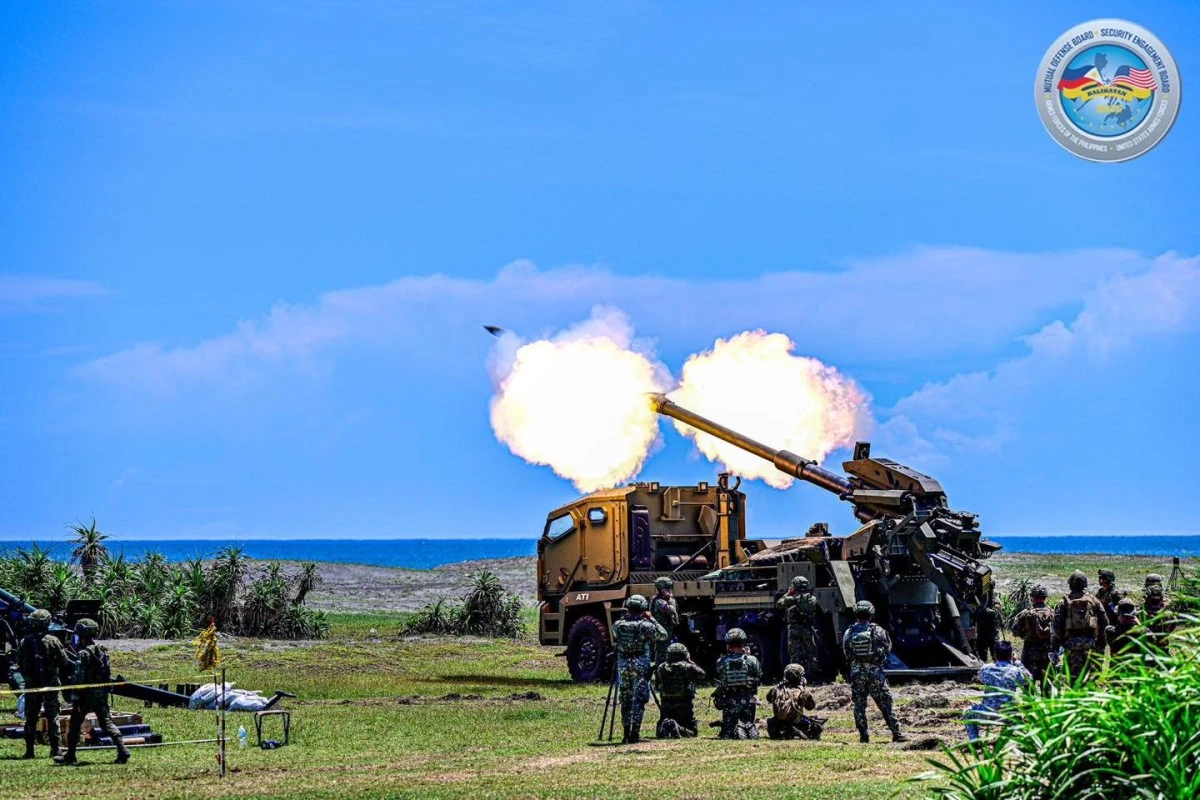
The Armed Forces of the Philippines (AFP) and United States Armed Forces carried out a counter-landing and live-fire exercise in Cagayan on Saturday, May 3, showcasing its coordinated firepower and rapid response capabilities aimed at deterring a seaborne invasion.
The simulation, which was part of the ongoing Balikatan Exercises, took place in the town of Aparri, facing Taiwan across the South China Sea. It occurred amid ongoing military pressure from China regarding a potential invasion of Taiwan for “reunification”, as Beijing views the self-governed island as a breakaway province.
Through the exercise, the AFP said that it is sending a message to actors in the Indo-Pacific that would attempt to disrupt peace and order in the region: “The north is armed, ready, and unyielding.”
“This live-fire drill demonstrated the precision and combat readiness of allied forces and reinforced their shared resolve to protect strategic coastal areas and uphold maritime security in the Indo-Pacific region,” said Lt. Col. John Paul Salgado, chief of Balikatan combined joint information bureau.
According to the AFP, the drill highlighted the detection of an amphibious task group which represented a threat force attempting to land along the northern coastline.
In rapid response, joint forces from the AFP and US military executed a coordinated counter-landing operation to prevent the threat force from establishing a foothold in the area, demonstrating “combined strength and seamless interoperability.”
The Philippine Army (PA) and the Philippine Marine Corps (PMC) then mobilized Sabrah battle tanks, Light Armored Vehicles (LAVs), ATMOS 155mm self-propelled howitzers, and additional firepower from 105mm howitzers to obliterate the threat.
Advanced targeting systems such as the Smart Shooter and infantry maneuver elements further amplified the defensive response.
Meanwhile, US forces delivered air and ground support using AH-64 Apache attack helicopters, F-16 aircraft, and a P-8A Poseidon aircraft conducting maritime surveillance and reconnaissance.
They also provided real-time targeting through cutting-edge cuing and sensing systems, with direct small arms support.
Participants included US Marine Corps, US Army, artillery units, and safety teams from the US’ side; and PA, PMC, Special Operations Command, Marine reservists, and Philippine Air Force (PAF) from the AFP.
Last month, AFP Chief Gen. Romeo Brawner Jr. directed troops in the northern Luzon to prepare in case of a Taiwan invasion by China.
As part of the new Comprehensive Archipelagic Defense Concept (CADC), the DND is boosting the military's presence in the northern part of the country, including Cagayan and Batanes, which angered China.
In the case of Batanes, it is separated from Taiwan by the Bashi Channel, an international sea lane.
The Luzon Strait, which includes the Balintang and Bashi Channels in northern Luzon, is an important factor in maneuvering forces for strategic advantage, and a chokepoint for naval and air traffic.
China had accused the Philippines of “stirring up trouble” in the South China Sea due to its enhanced military presence near Taiwan, but the DND and AFP had stated that its measures were meant as deterrence for possible threats.