

ADVERTISEMENT

More talks needed for 'effective, substantive’ South China Sea code—DFA chief

Published Apr 14, 2025 07:26 am

As the timeframe set for the conclusion of the China-Association of Southeast Asian Nations (ASEAN) Code of Conduct draws nearer, Department of Foreign Affairs (DFA) Secretary Enrique Manalo revealed on Monday, April 14, that there will be more rounds of negotiations in the coming months.
ASEAN_China_COC.jpeg
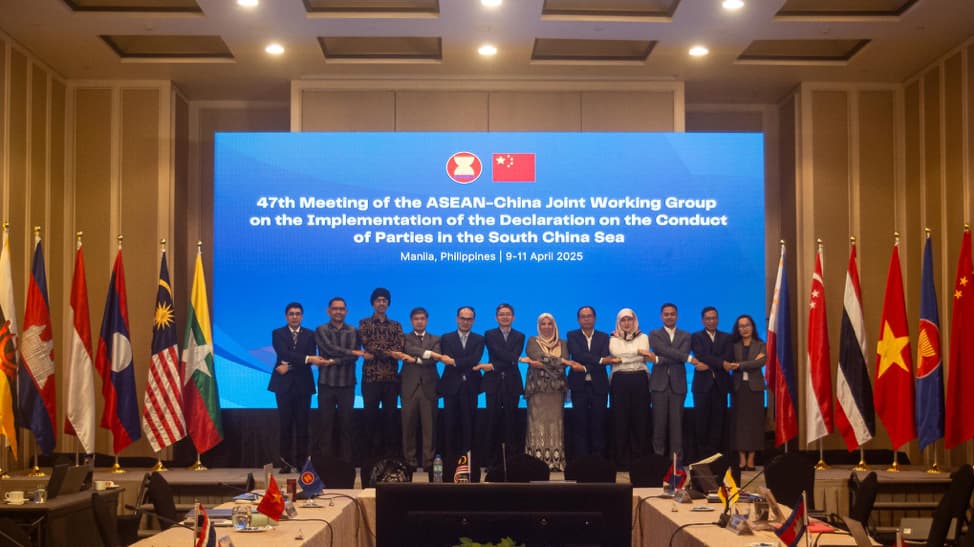
Philippines hosts the latest round of negotiations on the ASEAN-China Code of Conduct in the South China Sea. (Photo courtesy of DFA)

Without the latest draft of the COC, however, the DFA chief said he could not speculate on what the Philippines will be working with in terms of making the COC legally binding.

“Well, let me say first, before you get to that particular issue, you have to know what we’re going to be adopting so we have to see first how, let’s say, how the latest draft of the Code of Conduct looks like before we address that issue,” he told reporters on the sidelines of a media luncheon in Pasay City.

“I think that’s one of the issues that will be discussed last because we have to ensure, our position is we should have at least on paper an effective and substantive Code and then we have to decide then how we’ll implement that,” he said, noting that there will be more meetings this year and in 2026.

In 2023, the Foreign Ministers of ASEAN and China adopted the Guidelines on Accelerating the Early Conclusion of the Code of Conduct and agreed to work towards the conclusion of the COC in the next three years, or in 2026.

The latest round of negotiations between ASEAN and China was held in Manila from April 9 to 11.

The Joint Working Group on the Implementation of the Declaration on the Conduct of Parties in the South China Sea (JWG-DOC), co-chaired by Malaysia and China, led the negotiations.

During the talks, the Philippines raised its concerns anew over China’s latest aggressive actions in the resource-rich South China Sea.

“Well, of course, that’s all related, certainly issues like that. In fact, one of the reasons why we need to have a Code,” Manalo answered when asked if the meeting was a platform to address the issues surrounding Manila and Beijing.

However, the DFA chief shared that the working group had just started discussions on the relationship between the 2002 Declaration on the Code of Conduct in the South China Sea (DOC) and the possible COC.

“As a said, they really didn’t go that deeply in that issue yet but they spoke more of the issue on the relationship of the DOC and the COC,” he added.

The DOC is a non-binding agreement aimed at promoting a peaceful resolution to the disputes in the region.

“Well, I don’t want to jump ahead. We’ll have to discuss that (if the COC is enough to resolve the disputes) when we get there. As I said, this is well, when we met earlier, these are going to be negotiations, so you have to take into account all the views of all the countries on these issues,” he stressed.

Related Tags

Code of Conduct Enrique Manalo South China Sea Association of Southeast Asian Nations
ADVERTISEMENT
.most-popular .layout-ratio{ padding-bottom: 79.13%; } @media (min-width: 768px) and (max-width: 1024px) { .widget-title { font-size: 15px !important; } }

{{ articles_filter_1561_widget.title }}

.most-popular .layout-ratio{ padding-bottom: 79.13%; } @media (min-width: 768px) and (max-width: 1024px) { .widget-title { font-size: 15px !important; } }

{{ articles_filter_1562_widget.title }}

.most-popular .layout-ratio{ padding-bottom: 79.13%; } @media (min-width: 768px) and (max-width: 1024px) { .widget-title { font-size: 15px !important; } }

{{ articles_filter_1563_widget.title }}

{{ articles_filter_1564_widget.title }}

.mb-article-details { position: relative; } .mb-article-details .article-body-preview, .mb-article-details .article-body-summary{ font-size: 17px; line-height: 30px; font-family: "Libre Caslon Text", serif; color: #000; } .mb-article-details .article-body-preview iframe , .mb-article-details .article-body-summary iframe{ width: 100%; margin: auto; } .read-more-background { background: linear-gradient(180deg, color(display-p3 1.000 1.000 1.000 / 0) 13.75%, color(display-p3 1.000 1.000 1.000 / 0.8) 30.79%, color(display-p3 1.000 1.000 1.000) 72.5%); position: absolute; height: 200px; width: 100%; bottom: 0; display: flex; justify-content: center; align-items: center; padding: 0; } .read-more-background a{ color: #000; } .read-more-btn { padding: 17px 45px; font-family: Inter; font-weight: 700; font-size: 18px; line-height: 16px; text-align: center; vertical-align: middle; border: 1px solid black; background-color: white; } .hidden { display: none; }
function initializeAllSwipers() { // Get all hidden inputs with cms_article_id document.querySelectorAll('[id^="cms_article_id_"]').forEach(function (input) { const cmsArticleId = input.value; const articleSelector = '#article-' + cmsArticleId + ' .body_images'; const swiperElement = document.querySelector(articleSelector); if (swiperElement && !swiperElement.classList.contains('swiper-initialized')) { new Swiper(articleSelector, { loop: true, pagination: false, navigation: { nextEl: '#article-' + cmsArticleId + ' .swiper-button-next', prevEl: '#article-' + cmsArticleId + ' .swiper-button-prev', }, }); } }); } setTimeout(initializeAllSwipers, 3000); const intersectionObserver = new IntersectionObserver( (entries) => { entries.forEach((entry) => { if (entry.isIntersecting) { const newUrl = entry.target.getAttribute("data-url"); if (newUrl) { history.pushState(null, null, newUrl); let article = entry.target; // Extract metadata const author = article.querySelector('.author-section').textContent.replace('By', '').trim(); const section = article.querySelector('.section-info ').textContent.replace(' ', ' '); const title = article.querySelector('.article-title h1').textContent; // Parse URL for Chartbeat path format const parsedUrl = new URL(newUrl, window.location.origin); const cleanUrl = parsedUrl.host + parsedUrl.pathname; // Update Chartbeat configuration if (typeof window._sf_async_config !== 'undefined') { window._sf_async_config.path = cleanUrl; window._sf_async_config.sections = section; window._sf_async_config.authors = author; } // Track virtual page view with Chartbeat if (typeof pSUPERFLY !== 'undefined' && typeof pSUPERFLY.virtualPage === 'function') { try { pSUPERFLY.virtualPage({ path: cleanUrl, title: title, sections: section, authors: author }); } catch (error) { console.error('ping error', error); } } // Optional: Update document title if (title && title !== document.title) { document.title = title; } } } }); }, { threshold: 0.1 } ); function showArticleBody(button) { const article = button.closest("article"); const summary = article.querySelector(".article-body-summary"); const body = article.querySelector(".article-body-preview"); const readMoreSection = article.querySelector(".read-more-background"); // Hide summary and read-more section summary.style.display = "none"; readMoreSection.style.display = "none"; // Show the full article body body.classList.remove("hidden"); } document.addEventListener("DOMContentLoaded", () => { let loadCount = 0; // Track how many times articles are loaded const offset = [1, 2, 3, 4, 5, 6, 7, 8, 9, 10]; // Offset values const currentUrl = window.location.pathname.substring(1); let isLoading = false; // Prevent multiple calls if (!currentUrl) { console.log("Current URL is invalid."); return; } const sentinel = document.getElementById("load-more-sentinel"); if (!sentinel) { console.log("Sentinel element not found."); return; } function isSentinelVisible() { const rect = sentinel.getBoundingClientRect(); return ( rect.top < window.innerHeight && rect.bottom >= 0 ); } function onScroll() { if (isLoading) return; if (isSentinelVisible()) { if (loadCount >= offset.length) { console.log("Maximum load attempts reached."); window.removeEventListener("scroll", onScroll); return; } isLoading = true; const currentOffset = offset[loadCount]; window.loadMoreItems().then(() => { let article = document.querySelector('#widget_1690 > div:nth-last-of-type(2) article'); intersectionObserver.observe(article) loadCount++; }).catch(error => { console.error("Error loading more items:", error); }).finally(() => { isLoading = false; }); } } window.addEventListener("scroll", onScroll); });

Sign up by email to receive news.