






 World
Southeast Asia water festivals begin, but earthquake recovery blunts Myanmar's celebrations
World
Southeast Asia water festivals begin, but earthquake recovery blunts Myanmar's celebrations
Southeast Asia water festivals begin, but earthquake recovery blunts Myanmar's celebrations


BANGKOK (AP) — Several Southeast Asian countries kicked off their annual water festival holiday on Sunday, but in the wake of a devastating earthquake last month, Myanmar is missing out on the fun.
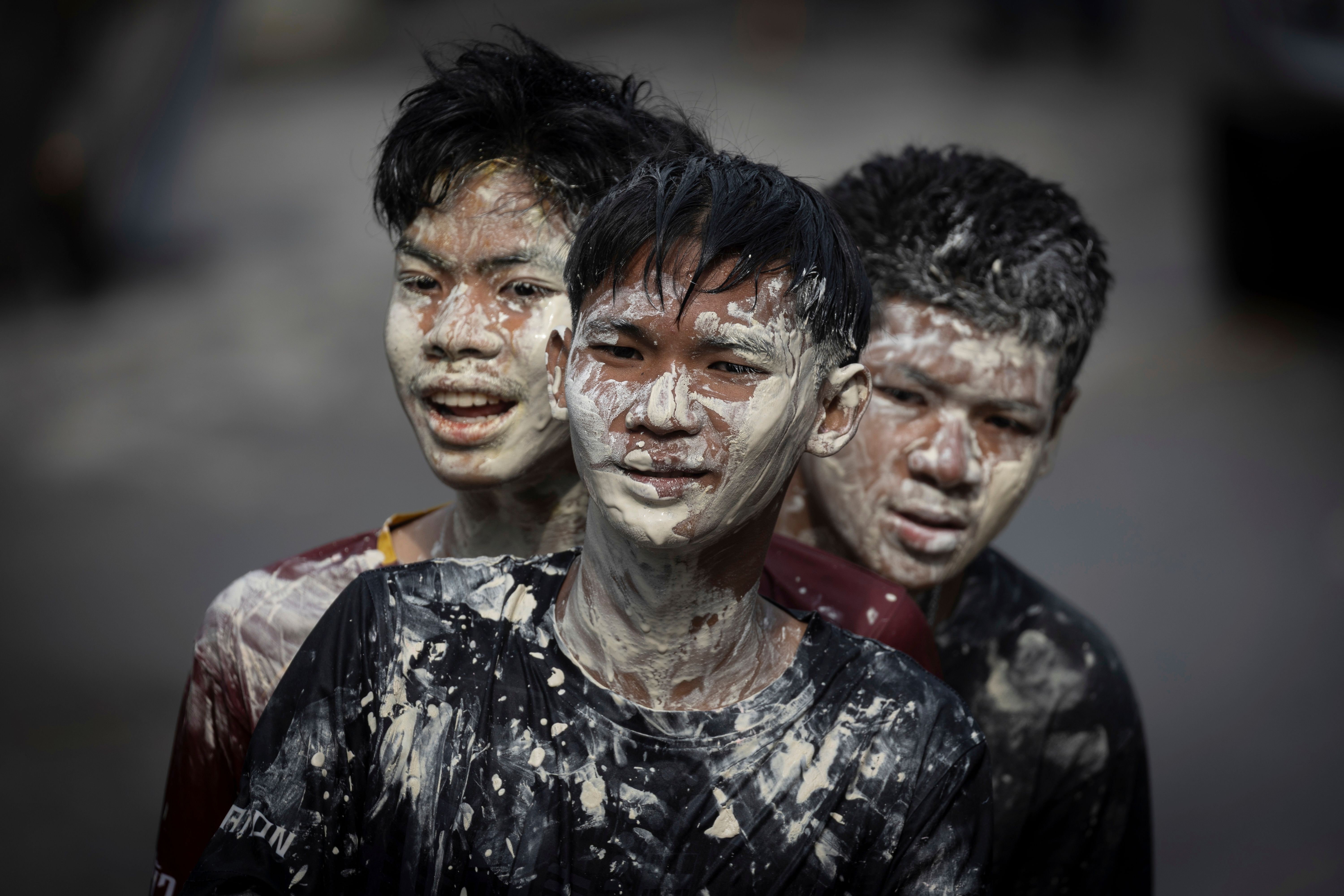 Thai people with faces stained with paint take part in the Songkran water festival to celebrate the Thai New Year in Prachinburi Province, Thailand, Sunday, April 13, 2025. (AP Photo/Wason Wanichakorn)
The holiday is an occasion for merrymaking during what is usually the hottest time of the year. In Thailand, Laos, Cambodia and Myanmar, millions normally take part in a mix of raucous play with uninhibited splashing of water on friends and strangers alike, and sober ceremonies to show respect to one’s elders.
Temperatures this time of year can creep above 40 degrees Celsius (104 Fahrenheit). Many who have moved to cities for work return to their native villages and towns to reunite with their families. The celebration is normally spread over several days, culminating on the actual New Year’s Day.
In Myanmar, the holiday is called Thingyan. But this year, the country is struggling to recover from the 7.7 magnitude earthquake on March 28 that devastated its central heartland, killing more than 3,600 people and leveling structures from new condos to ancient pagodas.
Central Myanmar was shaken again on Sunday by a 5.5 magnitude earthquake in one of the biggest aftershocks since the March 28 temblor.
Even before last month's quake, Myanmar was reeling from a repressive military that seized power in 2021 and is carrying out a brutal war on the pro-democracy forces trying to unseat it. In 2020, the pandemic also quashed celebrations.
Still, the holiday offered a brief respite from the grim struggles of daily life in one of the region's poorer countries, and this is the first year Myanmar could celebrate Thingyan's inclusion on the UNESCO Representative List of Intangible Cultural Heritage of Humanity, an honor attained last December.
A few days after the quake, the military government announced that this year’s festival would be observed peacefully in pursuit of traditional culture and would not include joyous singing and dancing, due to a nationwide grieving period.
People are free to celebrate privately and quietly, and items related to the festival, including water guns, are being sold in malls and stores. However, there is no government-organized entertainment. In Yangon, the country’s largest city, major festival pavilions and decorations that were already being built in front of the City Hall were dismantled.
People’s Square, a major celebration spot in Yangon, will not host the festival this year, but a traditional charity feast will be held without music and dance, the state-run Global New Light of Myanmar newspaper reported on Thursday.
In Yangon, the downtown area near City Hall was quiet, in sharp contrast to many past occasions.
The only visible signs of the holiday were the sights of children playing with water in the streets of residential neighborhoods, and mostly elderly people going to Buddhist monasteries and pagodas for traditional prayers.
In the capital, Naypyitaw, state-media reported Saturday that a quiet celebration of the holiday’s recognition by UNESCO would include events such as applying Thanaka, a yellowish-white paste made from ground tree bark as a traditional natural cosmetic, gently washing the heads and cutting the nails of elderly people as a gesture of respect, and donating food.
Neighboring Thailand, where the holiday is called Songkran, was expected to celebrate with revelry as usual. It sees a mass exodus of the workforce in the capital, Bangkok, return to their upcountry home towns, often extending what is officially a three-day holiday into an entire working week.
Foreign tourists join locals in almost orgiastic water fights, especially in Bangkok’s Khao San Road backpackers district. Water pistols are merely small arms. It is not unusual to see huge buckets of water dumped on any convenient target. Moving vehicles serve as both platforms and targets for attacks.
The holiday is historically pegged to a seasonal movement of the sun, critical to largely agrarian societies. The water hijinks originated in olden days as a ceremony to welcome rainy season. A traditional ritual still practiced by many involves cleansing images of the Buddha and washing the hands and feet of elders.
There is a darker side to the goings-on, as well. Thailand already has one of the world’s highest rates of traffic fatalities, which spikes during Songkran with so many on the move and often inebriated.
Cambodia, where the holiday is called Choul Chnam Thmey, and Laos, where it is Pi Mai Lao, have similar celebrations, generally smaller in scale and less raucous than those in Thailand.