

ADVERTISEMENT

DepEd 2025 summer programs to address learning gaps nationwide

Published Apr 10, 2025 02:36 pm

Aimed at addressing the learning gaps exacerbated by recent disruptions in the education system, the Department of Education (DepEd) on Thursday, April 10, announced the launch of its expanded Summer Programs for 2025.
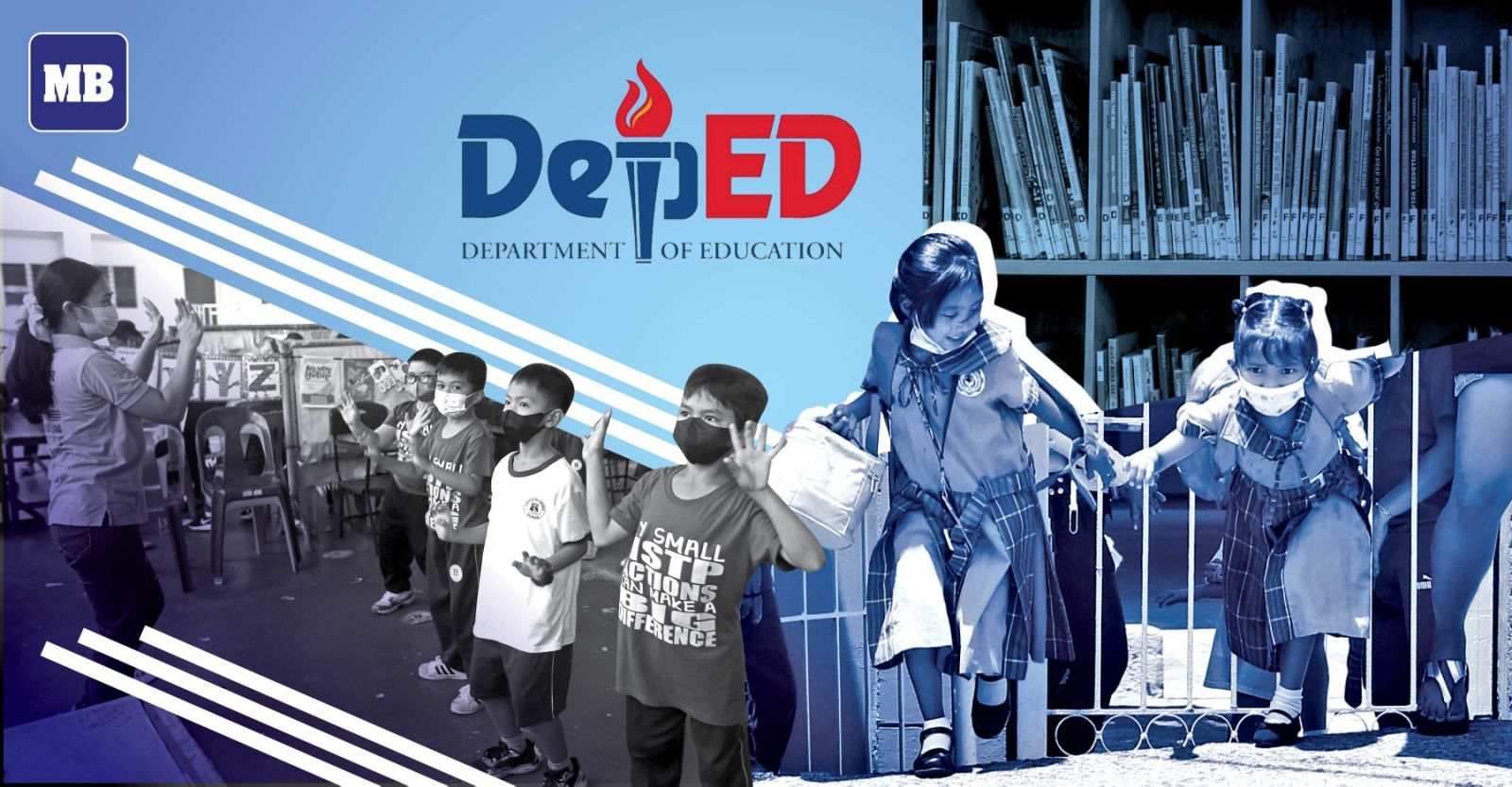
02 students MB Visual Content Group.jpg
(DepEd / MB Visual Content Group)

“We are dedicated to creating opportunities for all students to thrive,” said DepEd Secretary Sonny Angara in a statement.

With a focus on enhancing literacy, numeracy, and critical thinking skills, DepEd said the initiative seeks to provide students with additional learning opportunities during the summer break.

“Our summer programs are designed to provide the necessary support and resources to help learners overcome challenges and achieve their full potential,” he added.

DepEd has officially launched its Summer Programs for 2025, which integrate a whole-of-community approach to strengthen foundational and grade-level competencies among learners across key stages in public schools nationwide.

Summer programs

DepEd explained that the Summer Programs will focus on addressing gaps in reading and mathematics by offering a mix of interactive tutorials and targeted interventions.

The reading component will concentrate on phonics, fluency, vocabulary, and comprehension, while the mathematics component will emphasize number sense, basic operations, and problem-solving, DepEd stressed.

For Key Stage 1, DepEd will pilot the Bawat Bata Makababasa Program, a 20-day tutorial initiative designed to raise the reading proficiency of early-grade learners.

“Beyond reading instruction, the program integrates nutrition and vision screening to support holistic learning,” DepEd said. “It also focuses on enhancing teacher effectiveness, assessment strategies, and learners’ access to reading materials,” it added.

The pilot phase will target Grades 1 to 3 learners in Region 9, DepEd said.

Meanwhile, DepEd noted that the Literacy Remediation Program will support Grade 3 learners identified as Low Emerging in the CRLA End-of-School-Year 2024-2025 results.

“It will be implemented in all regions except Region 9, the affected divisions in Regions 6 and 7, and the 10 schools included in the 2025 Learning Camp,” DepEd said.

For Key Stages 2 to 4, DepEd is implementing the Summer Academic Remedial Program for Grades 4 to 12 learners who failed one or two subjects during the school year.

“For early-grade learners who failed subjects, they will instead be directed to the reading-focused programs, depending on what is available in their division,” DepEd said.

Additionally, DepEd said the regional offices will continue implementing their respective Regional Remediation Programs to offer reading and math support for learners in Grades 4 to 12.

“These programs aim to ensure that learners can progress to the next grade level with the necessary competencies,” DepEd said.

DepEd said it will also conduct the 2025 Learning Camp, a four-week intervention piloted in 10 select schools across the MATATAG Pilot Regions: Regions I, II, VII, XII, the National Capital Region, the Cordillera Administrative Region, and CARAGA.

“The camp builds on insights from the National Learning Camp and aims to enhance teacher capacity,” DepEd said.

Learners and teachers

DepEd said the learners identified as needing targeted support are required to attend the specific Summer Programs.

To support educators, DepEd said it will provide incentives for teachers involved in the summer sessions, including vacation service credits and professional recognition for their contributions.

The authorized grant of vacation service credit for teachers attending Summer Programs is exclusive of the 30-day maximum service credits, DepEd said.

"We recognize that our teachers are at the heart of learning recovery,” Angara said. “These incentives are a way to value their dedication and expertise, particularly during the summer break,” he added.

DepEd said the data generated from the Summer Programs will be used to improve the implementation of the Academic Recovery and Accessible Learning Program.

“This integration will allow for better identification of persistent learning gaps, enabling the department to refine its intervention strategies for foundational skills and academic recovery,” DepEd said.

Related Tags

Summer Programs DepEd Secretary Sonny Angara DEPED learning recovery learning gaps
ADVERTISEMENT
.most-popular .layout-ratio{ padding-bottom: 79.13%; } @media (min-width: 768px) and (max-width: 1024px) { .widget-title { font-size: 15px !important; } }

{{ articles_filter_1561_widget.title }}

.most-popular .layout-ratio{ padding-bottom: 79.13%; } @media (min-width: 768px) and (max-width: 1024px) { .widget-title { font-size: 15px !important; } }

{{ articles_filter_1562_widget.title }}

.most-popular .layout-ratio{ padding-bottom: 79.13%; } @media (min-width: 768px) and (max-width: 1024px) { .widget-title { font-size: 15px !important; } }

{{ articles_filter_1563_widget.title }}

{{ articles_filter_1564_widget.title }}

.mb-article-details { position: relative; } .mb-article-details .article-body-preview, .mb-article-details .article-body-summary{ font-size: 17px; line-height: 30px; font-family: "Libre Caslon Text", serif; color: #000; } .mb-article-details .article-body-preview iframe , .mb-article-details .article-body-summary iframe{ width: 100%; margin: auto; } .read-more-background { background: linear-gradient(180deg, color(display-p3 1.000 1.000 1.000 / 0) 13.75%, color(display-p3 1.000 1.000 1.000 / 0.8) 30.79%, color(display-p3 1.000 1.000 1.000) 72.5%); position: absolute; height: 200px; width: 100%; bottom: 0; display: flex; justify-content: center; align-items: center; padding: 0; } .read-more-background a{ color: #000; } .read-more-btn { padding: 17px 45px; font-family: Inter; font-weight: 700; font-size: 18px; line-height: 16px; text-align: center; vertical-align: middle; border: 1px solid black; background-color: white; } .hidden { display: none; }
function initializeAllSwipers() { // Get all hidden inputs with cms_article_id document.querySelectorAll('[id^="cms_article_id_"]').forEach(function (input) { const cmsArticleId = input.value; const articleSelector = '#article-' + cmsArticleId + ' .body_images'; const swiperElement = document.querySelector(articleSelector); if (swiperElement && !swiperElement.classList.contains('swiper-initialized')) { new Swiper(articleSelector, { loop: true, pagination: false, navigation: { nextEl: '#article-' + cmsArticleId + ' .swiper-button-next', prevEl: '#article-' + cmsArticleId + ' .swiper-button-prev', }, }); } }); } setTimeout(initializeAllSwipers, 3000); const intersectionObserver = new IntersectionObserver( (entries) => { entries.forEach((entry) => { if (entry.isIntersecting) { const newUrl = entry.target.getAttribute("data-url"); if (newUrl) { history.pushState(null, null, newUrl); let article = entry.target; // Extract metadata const author = article.querySelector('.author-section').textContent.replace('By', '').trim(); const section = article.querySelector('.section-info ').textContent.replace(' ', ' '); const title = article.querySelector('.article-title h1').textContent; // Parse URL for Chartbeat path format const parsedUrl = new URL(newUrl, window.location.origin); const cleanUrl = parsedUrl.host + parsedUrl.pathname; // Update Chartbeat configuration if (typeof window._sf_async_config !== 'undefined') { window._sf_async_config.path = cleanUrl; window._sf_async_config.sections = section; window._sf_async_config.authors = author; } // Track virtual page view with Chartbeat if (typeof pSUPERFLY !== 'undefined' && typeof pSUPERFLY.virtualPage === 'function') { try { pSUPERFLY.virtualPage({ path: cleanUrl, title: title, sections: section, authors: author }); } catch (error) { console.error('ping error', error); } } // Optional: Update document title if (title && title !== document.title) { document.title = title; } } } }); }, { threshold: 0.1 } ); function showArticleBody(button) { const article = button.closest("article"); const summary = article.querySelector(".article-body-summary"); const body = article.querySelector(".article-body-preview"); const readMoreSection = article.querySelector(".read-more-background"); // Hide summary and read-more section summary.style.display = "none"; readMoreSection.style.display = "none"; // Show the full article body body.classList.remove("hidden"); } document.addEventListener("DOMContentLoaded", () => { let loadCount = 0; // Track how many times articles are loaded const offset = [1, 2, 3, 4, 5, 6, 7, 8, 9, 10]; // Offset values const currentUrl = window.location.pathname.substring(1); let isLoading = false; // Prevent multiple calls if (!currentUrl) { console.log("Current URL is invalid."); return; } const sentinel = document.getElementById("load-more-sentinel"); if (!sentinel) { console.log("Sentinel element not found."); return; } function isSentinelVisible() { const rect = sentinel.getBoundingClientRect(); return ( rect.top < window.innerHeight && rect.bottom >= 0 ); } function onScroll() { if (isLoading) return; if (isSentinelVisible()) { if (loadCount >= offset.length) { console.log("Maximum load attempts reached."); window.removeEventListener("scroll", onScroll); return; } isLoading = true; const currentOffset = offset[loadCount]; window.loadMoreItems().then(() => { let article = document.querySelector('#widget_1690 > div:nth-last-of-type(2) article'); intersectionObserver.observe(article) loadCount++; }).catch(error => { console.error("Error loading more items:", error); }).finally(() => { isLoading = false; }); } } window.addEventListener("scroll", onScroll); });

Sign up by email to receive news.