






 Philippines
Metro Manila
Filipino-Chinese community commemorates 80th anniversary of victory over the Japanese during World War II
Philippines
Metro Manila
Filipino-Chinese community commemorates 80th anniversary of victory over the Japanese during World War II
Filipino-Chinese community commemorates 80th anniversary of victory over the Japanese during World War II


The Filipino-Chinese community commemorated the 80th anniversary of the victory over the Japanese during World War two, in which the Chinese joined forces with American and Filipino soldiers to fight the Japanese occupation.
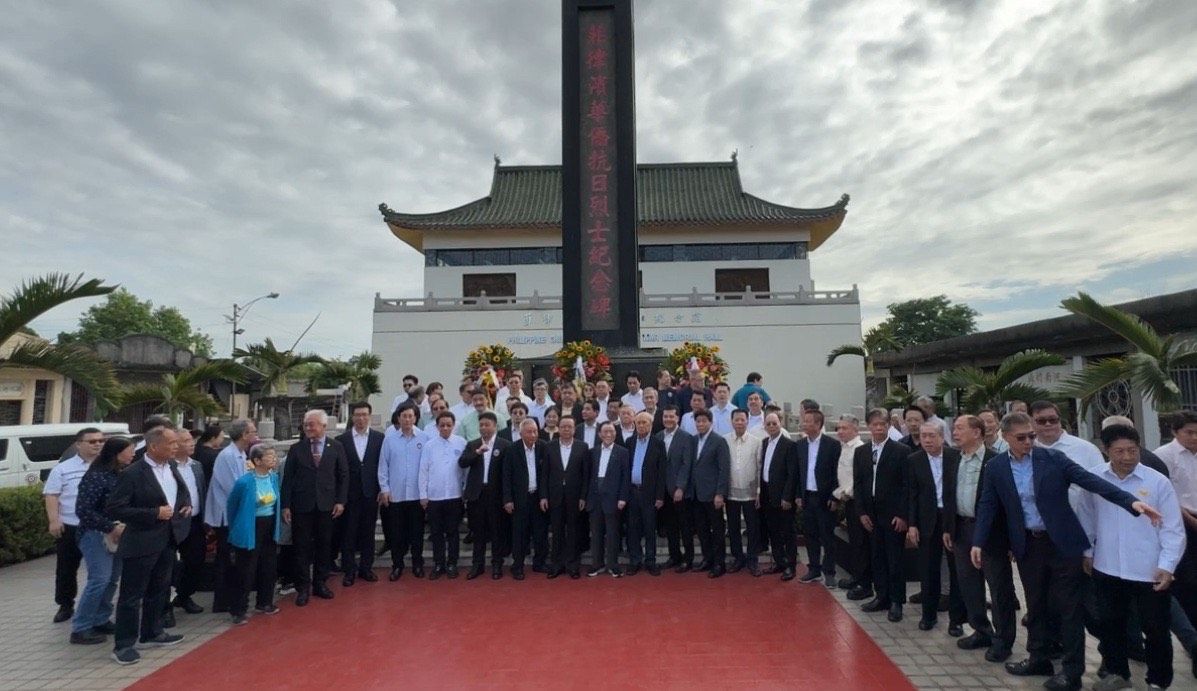
Chinese Ambassador Huang Xillian led the program held at the Chinese Cemetery by offering flowers to the fallen Chinese warriors.
In an ambush interview, Ambassador Xillian said, that he hopes that there will not be a repeat of the war and urged the people to learn from history, which has shown the good relationship between the Philippines and China.
Since then, the two countries have had thousands of good relations, since China has not seized any territory, but only brought goods to the Philippines, the Chinese are said to be Peace loving. Currently, there is a heated issue between the Philippines and China regarding the West Philippine Sea.
This is only an isolated case between the two countries. We should not be creating any issue or issue that only increases tension, and he pointed out that the Armed Forces of the Philippines (AFP) should not be misleading the people on this issue.
While the program was over and they were just taking pictures, one of the officials of the Chinese Organization suddenly fell down and was quickly rushed to the hospital, and fortunately, the medical team or ambulance was on hand.
Tomb Sweeping Day at the Manila Chinese Cemetery
Honoring Ancestral Heritage and Remembering Anti-Japanese War Heroes.
As Tomb Sweeping Day or Qingming Festival approaches, the Manila Chinese Cemetery becomes a focal point of commemoration and reflection for the Filipino-Chinese community Established in 1878, the cemetery is the second oldest in Manila.
Spanning 52 hectares, it serves not only as a final resting place but also as a significant cultural and historical landmark, reflecting the long-standing presence and contributions of the Chinese community in the Philippines.
A Sanctuary of Heritage and History
The Manila Chinese Cemetery was originally established during the Spanish colonial period as a burial ground for Chinese individuals who were denied interment in Catholic cemeteries.
At that time, Chinese immigrants, who were predominantly non-Catholic, were barred from being buried in Catholic cemeteries like La Loma.
To address this, Kapitan Lim Ong and Gobernadorcillo Don Mariano Femando Yu-Chingco, prominent Chinese community leaders, founded the cemetery to provide dignified burial grounds for their fellow Chinese.
Over the decades, the cemetery has evolved into a sprawling necropolis that mirrors the changing times and fortunes of the Chinese-Filipino community.
Grand mausoleums, intricately designed ancestral halls, and elegant monuments punctuate the landscape, showcasing the unique blend of Chinese architectural aesthetics and Filipino cultural influences.
The cemetery's elaborate tombs houses not just mausoleums but also temples, memorial halls, and cultural monuments, making it a significant cultural and historical asset within Metro Manila.
Qingming Festival: Honoring Ancestral Roots
The Qingming Festival, also known as Tomb Sweeping Day, is one of the most important traditional Chinese holidays, celebrated every year on either April 4th, 5th, or 6th. It is a time when families visit ancestral graves to clean the tombstones, make offerings of food and incense, and pay respects to their forebears. This practice of honoring ancestors is deeply rooted in Confucian principles of filial piety, which emphasize respect and remembrance of one's lineage.
The Manila Chinese Cemetery, Qingming holds profound cultural significance. Families gather at the cemetery to carry out time-honored rituals, from burning incense and paper money to offering food.
These customs reflect a deep sense of reverence and a commitment to preserving traditions handed down through generations.
A Symbol of Community and Remembrance
Beyond being a family gathering, the Qingming Festival at the Manila Chinese Cemetery serves as an occasion to commemorate historical events and honor collective memories.
Notably, the cemetery is home to important Anti-Japanese War memorials, including the Liat See Tong Martyrs' Hall, Chinese Consul General Dr. Clarence Kuangson Young Memorial, and the Philippine Chinese Anti-Japanese War Memorial Complex, among others, which stands as a tribute to Filipino-Chinese and Chinese patriots who sacrificed their lives during World War II.
Every year during Qingming, representatives from the Chinese Embassy, the Philippine-Chinese Charitable Association Inc. (PCCAI), and various Chinese associations participate in a solemn flower offering ceremony at these memorials. This tradition, which has been observed for decades, honors the bravery and sacrifice of those who fought against Japanese forces during the war.
The continued observance of this tradition not only pays homage to the martyrs but also strengthens the bond between the Chinese community and the broader Filipino society. It serves as a reminder of the shared struggles and triumphs that have shaped the Filipino-Chinese experience throughout history.
Strengthening Filipino-Chinese Relations Through Tradition
The annual flower offering ceremony at the Anti-Japanese War Memorials is more than a symbolic gesture it serves as a bridge between cultures, reinforcing the bond between China and the Philippines.
The presence of the Chinese Embassy and various Chinese associations at these ceremonies demonstrates a shared commitment to remembering the past while fostering goodwill and understanding.
This tradition, rooted in respect and remembrance, highlights how cultural practices can serve as instruments of diplomacy and unity. As the Manila Chinese Cemetery remains a central venue for these commemorative events, it continues to play a pivotal role in promoting harmony between Filipino and Chinese communities offering food.
These customs reflect a deep sense of reverence and a commitment to preserving traditions handed down through generations.
A Symbol of Community and Remembrance
Beyond being a family gathering, the Qingming Festival at the Manila Chinese Cemetery serves as an occasion to commemorate historical events and honor collective memories. Notably, the cemetery is home to important Anti-Japanese War memorials, including the Liat See Tong Martyrs' Hall, Chinese Consul General Dr. Clarence Kuangson Young Memorial, and the Philippine Chinese Anti-Japanese War Memorial Complex, among others, which stands as a tribute to Filipino-Chinese and Chinese patriots who sacrificed their lives during World War II.
Every year during Qingming, representatives from the Chinese Embassy, the Philippine-Chinese Charitable Association Inc. (PCCAI), and various Chinese associations participate in a solemn flower offering ceremony at these memorials.