ADVERTISEMENT

DSWD tightens monitoring on groups holding public solicitation permits

Published Mar 9, 2025 03:43 am
IMG_4905.png
Department of Social Welfare and Development

The Department of Social Welfare and Development (DSWD) has announced stricter monitoring for social welfare and development agencies (SWDAs) granted public solicitation permits, following new guidelines.

In a news forum on March 8, DSWD-Standards Bureau Director Megan Therese Manahan explained that public solicitation permits are issued to non-stock and non-profit organizations to safeguard the public from fraudulent solicitation and to ensure transparency in fundraising efforts.

SWDAs include private organizations, non-governmental organizations, and civil society groups that provide vital services to vulnerable communities across the country.

“Kapag po may mga public solicitation po, dapat kumuha po ng permit sa amin. So, kapag po kumuha ng permit sa amin, mayroon din dapat syang distribution plan, sino yung intended beneficiaries mo, ano yung region na tutulungan mo, and then after two months, kapag nag-expire na yung permit mo, kailangan mong mag-submit ng mga reportorial requirements sa amin,” Manahan said.

(When there are public solicitations, you must obtain a permit from us. So, when you obtain a permit from us, you must also have a distribution plan, who are your intended beneficiaries, what is the region you will help, and then after two months, when your permit expires, you must submit reportorial requirements to us.)

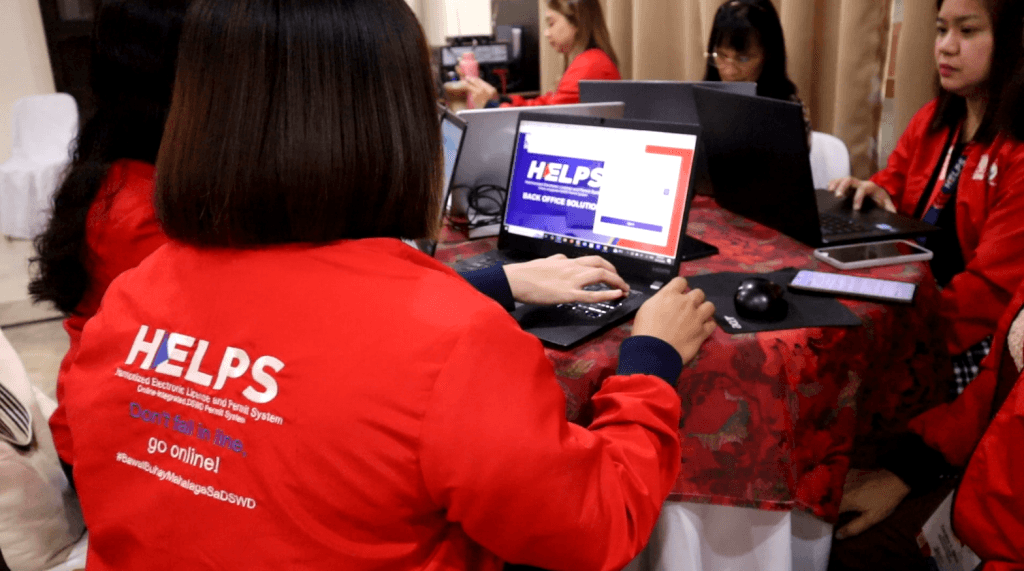
With the launch of the new online portal, the Harmonized Electronic License and Permit System (HELPS), the approval process for public solicitation permits has become more efficient, allowing for faster approval times—three working days for temporary permits and seven days for regular permits, Manahan said.

In addition, DSWD has tasked its field offices to monitor the compliance of SWDAs with the conditions of their permits.

“Very strong kami in requiring reports kasi if hindi sila nag-comply, hindi ka na pwedeng mag-renew, pwede ka rin ma-blacklist sa amin. So it’s very critical for us to see kung saan napupunta ‘yung mga na-solicit na pera,” Manahan said.

(We are very strong in requiring reports because if they don't comply, you can't renew, you can also be blacklisted by us. So it's very critical for us to see where the solicited money goes.)

Under Presidential Decree No. 1564, also known as the Solicitation Permit Law, the DSWD holds exclusive authority over regulating donation solicitations for charitable or public welfare purposes.

The law requires individuals and organizations to obtain a DSWD permit before collecting donations to prevent fraud and protect public trust in charitable efforts.

Related Tags

solicitation permit DSWD
ADVERTISEMENT
.most-popular .layout-ratio{ padding-bottom: 79.13%; } @media (min-width: 768px) and (max-width: 1024px) { .widget-title { font-size: 15px !important; } }

{{ articles_filter_1561_widget.title }}

.most-popular .layout-ratio{ padding-bottom: 79.13%; } @media (min-width: 768px) and (max-width: 1024px) { .widget-title { font-size: 15px !important; } }

{{ articles_filter_1562_widget.title }}

.most-popular .layout-ratio{ padding-bottom: 79.13%; } @media (min-width: 768px) and (max-width: 1024px) { .widget-title { font-size: 15px !important; } }

{{ articles_filter_1563_widget.title }}

{{ articles_filter_1564_widget.title }}

.mb-article-details { position: relative; } .mb-article-details .article-body-preview, .mb-article-details .article-body-summary{ font-size: 17px; line-height: 30px; font-family: "Libre Caslon Text", serif; color: #000; } .mb-article-details .article-body-preview iframe , .mb-article-details .article-body-summary iframe{ width: 100%; margin: auto; } .read-more-background { background: linear-gradient(180deg, color(display-p3 1.000 1.000 1.000 / 0) 13.75%, color(display-p3 1.000 1.000 1.000 / 0.8) 30.79%, color(display-p3 1.000 1.000 1.000) 72.5%); position: absolute; height: 200px; width: 100%; bottom: 0; display: flex; justify-content: center; align-items: center; padding: 0; } .read-more-background a{ color: #000; } .read-more-btn { padding: 17px 45px; font-family: Inter; font-weight: 700; font-size: 18px; line-height: 16px; text-align: center; vertical-align: middle; border: 1px solid black; background-color: white; } .hidden { display: none; }
function initializeAllSwipers() { // Get all hidden inputs with cms_article_id document.querySelectorAll('[id^="cms_article_id_"]').forEach(function (input) { const cmsArticleId = input.value; const articleSelector = '#article-' + cmsArticleId + ' .body_images'; const swiperElement = document.querySelector(articleSelector); if (swiperElement && !swiperElement.classList.contains('swiper-initialized')) { new Swiper(articleSelector, { loop: true, pagination: false, navigation: { nextEl: '#article-' + cmsArticleId + ' .swiper-button-next', prevEl: '#article-' + cmsArticleId + ' .swiper-button-prev', }, }); } }); } setTimeout(initializeAllSwipers, 3000); const intersectionObserver = new IntersectionObserver( (entries) => { entries.forEach((entry) => { if (entry.isIntersecting) { const newUrl = entry.target.getAttribute("data-url"); if (newUrl) { history.pushState(null, null, newUrl); let article = entry.target; // Extract metadata const author = article.querySelector('.author-section').textContent.replace('By', '').trim(); const section = article.querySelector('.section-info ').textContent.replace(' ', ' '); const title = article.querySelector('.article-title h1').textContent; // Parse URL for Chartbeat path format const parsedUrl = new URL(newUrl, window.location.origin); const cleanUrl = parsedUrl.host + parsedUrl.pathname; // Update Chartbeat configuration if (typeof window._sf_async_config !== 'undefined') { window._sf_async_config.path = cleanUrl; window._sf_async_config.sections = section; window._sf_async_config.authors = author; } // Track virtual page view with Chartbeat if (typeof pSUPERFLY !== 'undefined' && typeof pSUPERFLY.virtualPage === 'function') { try { pSUPERFLY.virtualPage({ path: cleanUrl, title: title, sections: section, authors: author }); } catch (error) { console.error('ping error', error); } } // Optional: Update document title if (title && title !== document.title) { document.title = title; } } } }); }, { threshold: 0.1 } ); function showArticleBody(button) { const article = button.closest("article"); const summary = article.querySelector(".article-body-summary"); const body = article.querySelector(".article-body-preview"); const readMoreSection = article.querySelector(".read-more-background"); // Hide summary and read-more section summary.style.display = "none"; readMoreSection.style.display = "none"; // Show the full article body body.classList.remove("hidden"); } document.addEventListener("DOMContentLoaded", () => { let loadCount = 0; // Track how many times articles are loaded const offset = [1, 2, 3, 4, 5, 6, 7, 8, 9, 10]; // Offset values const currentUrl = window.location.pathname.substring(1); let isLoading = false; // Prevent multiple calls if (!currentUrl) { console.log("Current URL is invalid."); return; } const sentinel = document.getElementById("load-more-sentinel"); if (!sentinel) { console.log("Sentinel element not found."); return; } function isSentinelVisible() { const rect = sentinel.getBoundingClientRect(); return ( rect.top < window.innerHeight && rect.bottom >= 0 ); } function onScroll() { if (isLoading) return; if (isSentinelVisible()) { if (loadCount >= offset.length) { console.log("Maximum load attempts reached."); window.removeEventListener("scroll", onScroll); return; } isLoading = true; const currentOffset = offset[loadCount]; window.loadMoreItems().then(() => { let article = document.querySelector('#widget_1690 > div:nth-last-of-type(2) article'); intersectionObserver.observe(article) loadCount++; }).catch(error => { console.error("Error loading more items:", error); }).finally(() => { isLoading = false; }); } } window.addEventListener("scroll", onScroll); });

Sign up by email to receive news.