







Pangilinan pitches solutions to address oversupply of tomatoes


Former senator Kiko Pangilinan underscored the need for “immediate interventions” and “systematic reforms” to address the oversupply of tomatoes in the country that leads to food wastage amid food security challenges.
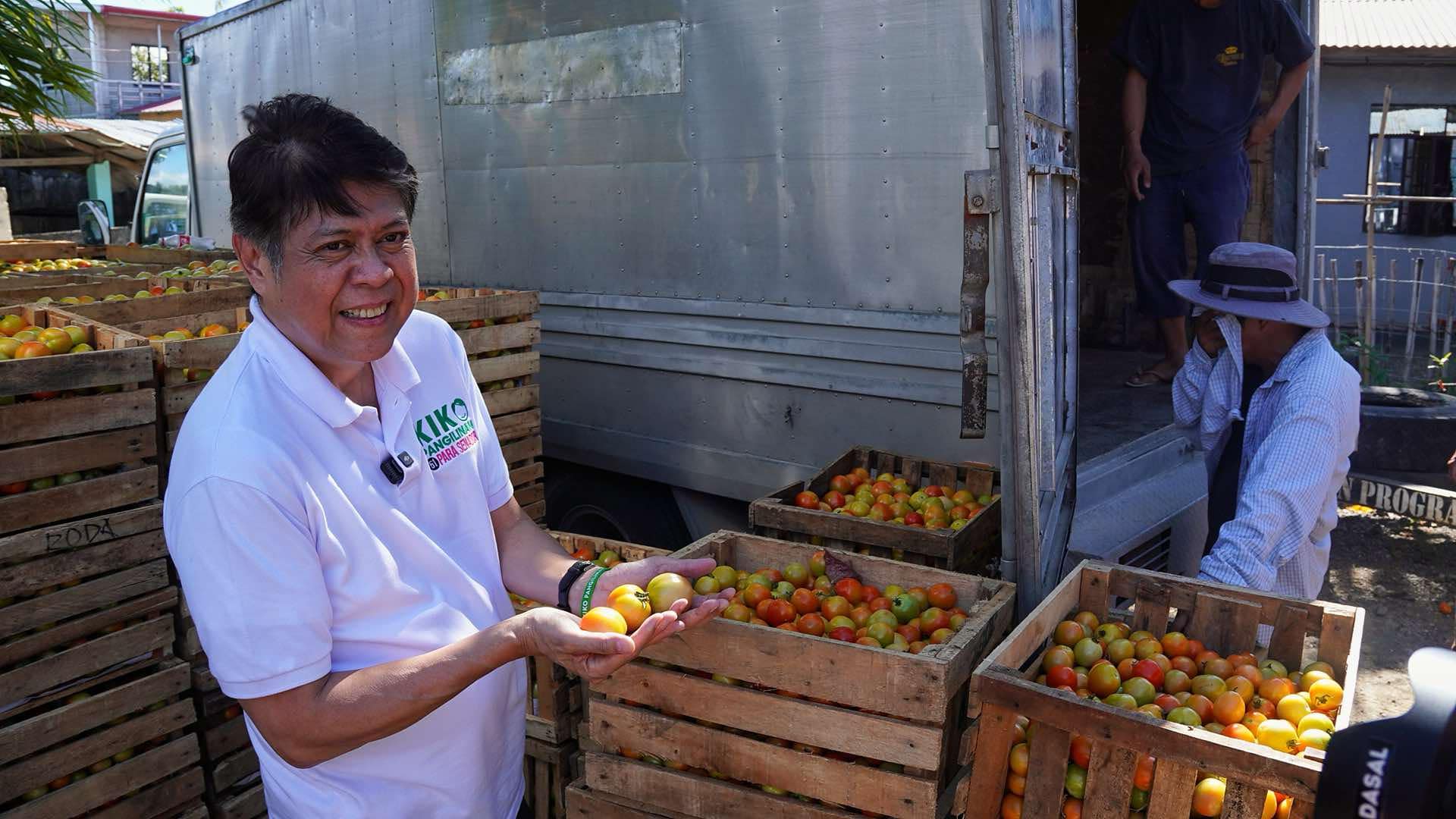 Senatorial candidate Kiko Pangilinan leads efforts to rescue about 12 tons of tomatoes in Rizal, Nueva Ecija, on March 7, 2025 amid oversupply woes. (Team Kiko Pangilinan)
Currently in the campaign trail for his senatorial aspirations for the upcoming midterm polls in May, Pangilinan led the “Operation Sagip-Kamatis” or the “rescue” of some 12 tons of tomatoes in Rizal, Nueva Ecija with partners from the public and private sector.
He lamented the wastage of hard-earned crops as farmers reported that the farmgate prices of tomatoes now are only at P4 to P5 per kilo, while many Filipinos continue to struggle with high food prices.
“Ginutom na ang magsasaka, ginutom pa ang mamimili. Tapos may nasasayang pang pagkain? Hindi ito tama. Hindi natin kailangang mamili sa pagitan ng murang pagkain at sapat na kita ng magsasaka. Pwedeng pareho (The farmers are already hungry. The consumers are also hungry. Then food is being wasted? This is not right. We do not need to choose between affordable food and enough income for the farmers. We can do both),” he said.
"Ang isang kilo ng kamatis, mas mura pa sa isang pirasong kendi. Paano ang puhunan at pawis ng ating mga magsasaka? Huwag na tayong magtaka kung bakit ang mga mismong nagtatanim, nakakaranas ng gutom (One kilo of kamatis is cheaper than a piece of candy. What will happen to the capital and hardwork of our farmers? Let’s not be surprised why even the farmers are hungry),” he added.
The former senator proposed three initiatives to protect the crops and address food insecurity and high food prices in the country.
First, Pangilinan said that there must be “emergency procurement programs” to buy excess tomatoes at fair prices to stabilize farmers’ income and prevent food wastage.
Second, he is pushing for a market expansion to link farmers directly with institutional buyers, such as schools, hospitals, and food chains.
And last, Pangilinan underscored the need for cold storage and processing facilities in tomato-producing regions to extend the shelf life of the crops and develop other products, such as tomato sauce and paste.
The former senator and food security secretary under the late former president Benigno “Noynoy” Aquino III led efforts to reduce rice prices by up to P3 per kilo during his term. He also lowered rice inflation from 15 percent to 0.8 percent, contributing to the lowest national inflation rate in two decades.
Running on the advocacy of food security, Pangilinan trails in the Magic 12 of pre-election survey but will push for the policies to address food challenges if elected.
As author of the Sagip Saka Act, he continues to champion policies that will allow national and local governments to directly purchase produce from farmers without public bidding—cutting out exploitative middlemen and ensuring higher farmgate prices.