







US holding direct talks with Hamas – White House


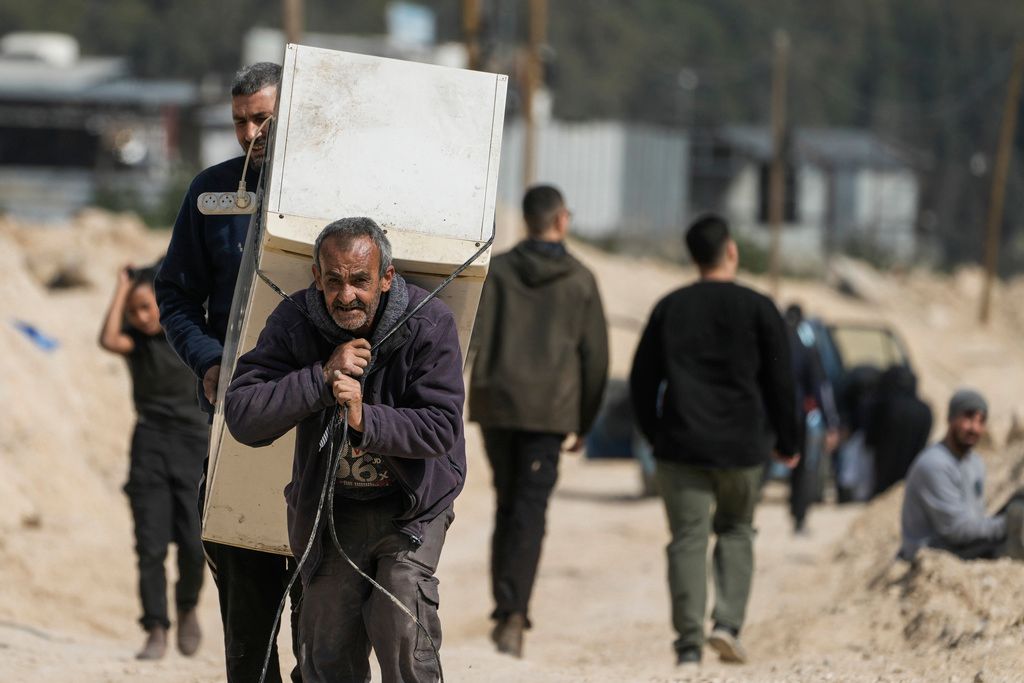
Residents of the West Bank urban refugee camp of Nur Shams evacuate their homes and carry their belongings as the Israeli military continues its operation in the area on Wednesday, March 5, 2025. (AP Photo/Majdi Mohammed)
U.S. officials have had “ongoing talks and discussions” with Hamas officials, White House press Secretary Karoline Leavitt confirmed Wednesday, as the ceasefire in Gaza between Israel and Hamas hangs in the balance.
It’s the first known direct engagement between the U.S. and Hamas since the State Department designated the group a foreign terrorist organization in 1997.
Leavitt declined Wednesday to detail the talks, which come as the Israel-Hamas ceasefire remains in the balance.
“Look, dialogue and talking to people around the world to do what’s in the best interest of the American people is something that the president ... believes is a good-faith effort to do what’s right for the American people,” she said.
Adam Boehler, President Donald Trump’s nominee to be special envoy for hostage affairs, led the direct talks with Hamas. He was a lead negotiator on the Abraham Accords team during Trump’s first term.
The talks, which took place last month, focused mainly on the release of American hostages, and a potential end of the war without Hamas in power in Gaza, according to a Hamas official who was not authorized to comment publicly and spoke on the condition of anonymity.
Israeli Prime Minister Benjamin Netanyahu’s office offered a terse acknowledgement of the U.S.-Hamas talks, saying, “Israel has expressed to the United States its position regarding direct talks with Hamas.”
Israel has halted the entry of food, fuel, medicine and other supplies into the Gaza Strip, as it aims to pressure Hamas into accepting an alternative arrangement for the ceasefire and the release of Israeli hostages, six weeks into the truce.
After more than 16 months of war, Gaza’s population is entirely dependent on trucked-in food and other aid. Most are displaced from their homes, and many need shelter. Rights groups have called Israel's cutting off aid a “starvation policy.”
Economic partnership
Treasury Secretary Scott Bessent and Israeli Finance Minister Bezalel Smotrich met in Washington Wednesday to discuss the ongoing economic partnership between the United States and Israel.
Smotrich, a key partner in Prime Minister Benjamin Netanyahu’s governing coalition, supports the reoccupation of Gaza, the rebuilding of Jewish settlements that were removed in 2005, and what he describes as the voluntary migration of large numbers of Palestinians out of the territory. It marks the first in-person talks between Smotrich, a fervent settler advocate at the helm of Israel’s settlement planning apparatus, and a Trump administration official.
According to a Treasury read-out of the meeting, the pair discussed “the importance of deepening economic cooperation, fostering innovation, and strengthening financial and trade ties” between the U.S. and Israel.
Gaza aid cutoff
After the closed-door meeting of the U.N. Security Council, the five European members called on Israel to immediately allow food and other supplies into Gaza.
Israel’s U.N. Ambassador Danny Danon said in a statement before the council meeting that Hamas and Palestinians in Gaza are not “in distress” because thousands of aid trucks entered Gaza during the first phase of the ceasefire.
“Those who are starving are our hostages,” he said.
The five European countries – France, Greece, Britain, Slovenia and Denmark – urged Israel and Hamas to find a way forward to the second phase of the ceasefire deal and welcomed regional efforts to agree on a plan.