ADVERTISEMENT

LTFRB: Road safety training for drivers will soon be mandatory for PUV franchise renewal

Published Mar 5, 2025 12:56 am

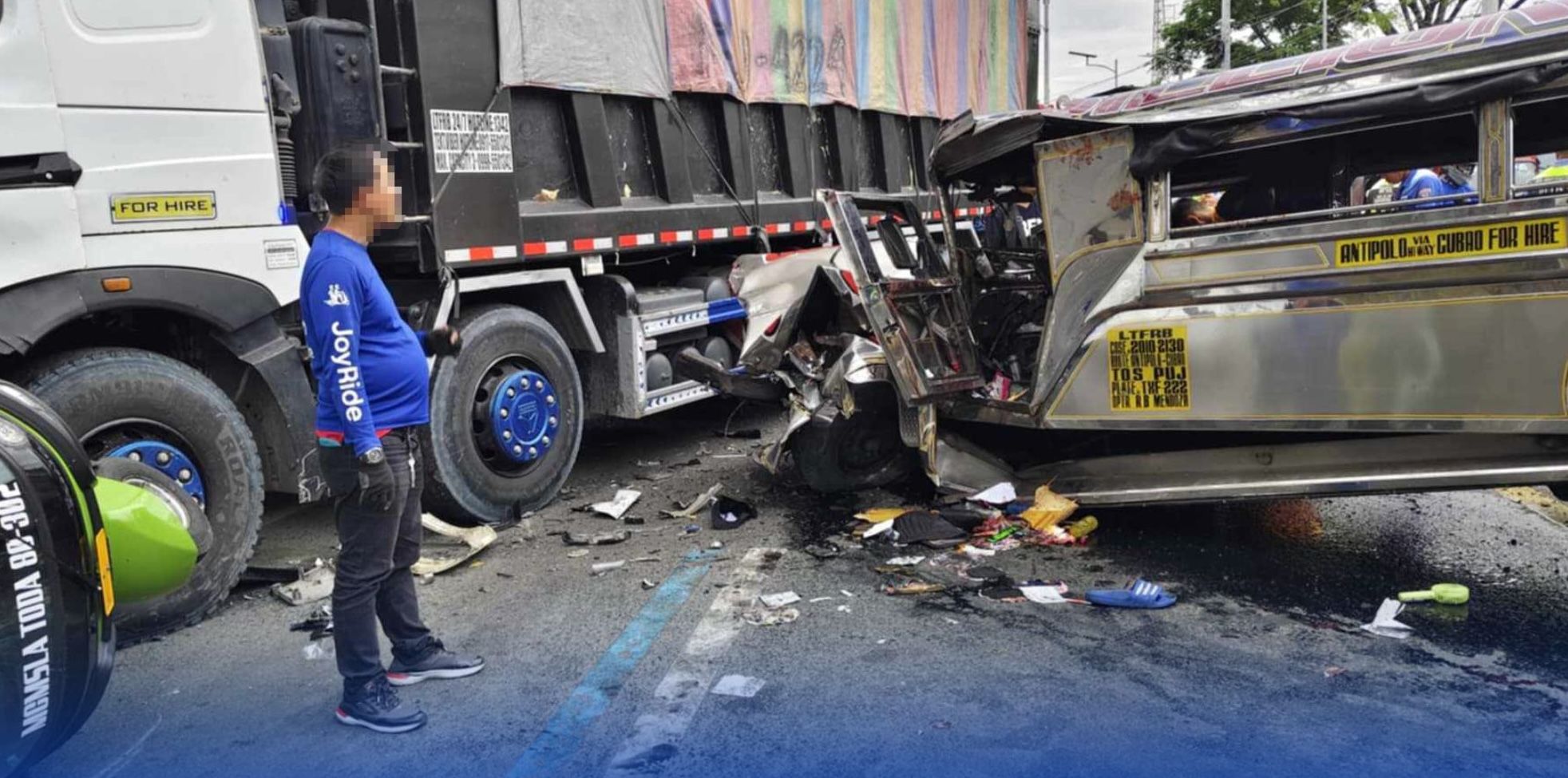
road accident.jpeg

The Land Transportation Franchising and Regulatory Board  (LTFRB) will be implementing a mandatory training on road safety as part of the major requirements in renewing the franchise of public utility vehicles (PUVs). 

LTFRB chairperson Teofilo Guadiz III said the road safety training will be comprehensive and in response to the disturbing figures of road accidents across the country—an average of 157 daily in Metro Manila in 2022 based on the report of the Metropolitan Manila Development Authority (MMDA) which also reported a total of44,493 road crashes from January 2023 to July 2023. 

He said the mandatory training is stipulated in the LTFRB memorandum circular 2024-040 which was aimed at reducing the number of road accidents involving PUVs and ensures drivers are aware of and comply with traffic rules and regulations.

The memorandum requires the LTFRB to develop and institutionalize the Driver's and Conductor's Academy Program (DCAP) which includes the accreditation of driving schools that will conduct the training and the mandatory road safety education of drivers and conductors of PUVs.

“All PUV drivers and conductors of existing franchise holders, with valid and existing CPC and/or Provisional Authority (PA) and Special Permits (SP), are required to complete the required course designed by the LTFRB,” said Guadiz, citing the provision of the memorandum.

He said the enrollment fee for participants in the program is pegged at P2,000 and must be completed within a minimum of two days but not to exceed eight days. 

"The first 12 hours of the training will be composed of three components, first may lecture on road safety, the number two they  have to undergo a psychological exam or if fit ka to drive or how the driver will react in situations while driving or if the driver has anger issues, and number three would be teaching them basic first aid and life support during accidents," said Guadiz.

He said the pilot implementation of the training program will be confined first to Metro Manila and will be limited only to bus and to truck drivers and conductors.

“After three months, this will be expanded to other metropolitan areas in the Philippines. Then for its second year, we will include UV and jeepneys and the last phase will be motorcycle taxis and TNVS,” said Guadiz.

“The LTFRB will also establish monitoring systems that will ensure the compliance of all PUV operators to hire and register only PUV drivers who passed the required continuing road safety training,” he added.

Guadiz said a certificate of course completion will be issued to the driver and conductor which shall be electronically transmitted by the accredited driving school to the LTFRB upon completion. 

Learning modules, he added, shall be provided by the LTFRB to the driving school upon accreditation.

"Road safety in public transport is one of the basic policies that governs rendition of public service to Filipino commuters. However, recorded data shows significant statistics on road incidents resulting in injuries and deaths to road users, among others," said Guadiz.

Related Tags

PUVS LTFRB Road safety
ADVERTISEMENT
.most-popular .layout-ratio{ padding-bottom: 79.13%; } @media (min-width: 768px) and (max-width: 1024px) { .widget-title { font-size: 15px !important; } }

{{ articles_filter_1561_widget.title }}

.most-popular .layout-ratio{ padding-bottom: 79.13%; } @media (min-width: 768px) and (max-width: 1024px) { .widget-title { font-size: 15px !important; } }

{{ articles_filter_1562_widget.title }}

.most-popular .layout-ratio{ padding-bottom: 79.13%; } @media (min-width: 768px) and (max-width: 1024px) { .widget-title { font-size: 15px !important; } }

{{ articles_filter_1563_widget.title }}

{{ articles_filter_1564_widget.title }}

.mb-article-details { position: relative; } .mb-article-details .article-body-preview, .mb-article-details .article-body-summary{ font-size: 17px; line-height: 30px; font-family: "Libre Caslon Text", serif; color: #000; } .mb-article-details .article-body-preview iframe , .mb-article-details .article-body-summary iframe{ width: 100%; margin: auto; } .read-more-background { background: linear-gradient(180deg, color(display-p3 1.000 1.000 1.000 / 0) 13.75%, color(display-p3 1.000 1.000 1.000 / 0.8) 30.79%, color(display-p3 1.000 1.000 1.000) 72.5%); position: absolute; height: 200px; width: 100%; bottom: 0; display: flex; justify-content: center; align-items: center; padding: 0; } .read-more-background a{ color: #000; } .read-more-btn { padding: 17px 45px; font-family: Inter; font-weight: 700; font-size: 18px; line-height: 16px; text-align: center; vertical-align: middle; border: 1px solid black; background-color: white; } .hidden { display: none; }
function initializeAllSwipers() { // Get all hidden inputs with cms_article_id document.querySelectorAll('[id^="cms_article_id_"]').forEach(function (input) { const cmsArticleId = input.value; const articleSelector = '#article-' + cmsArticleId + ' .body_images'; const swiperElement = document.querySelector(articleSelector); if (swiperElement && !swiperElement.classList.contains('swiper-initialized')) { new Swiper(articleSelector, { loop: true, pagination: false, navigation: { nextEl: '#article-' + cmsArticleId + ' .swiper-button-next', prevEl: '#article-' + cmsArticleId + ' .swiper-button-prev', }, }); } }); } setTimeout(initializeAllSwipers, 3000); const intersectionObserver = new IntersectionObserver( (entries) => { entries.forEach((entry) => { if (entry.isIntersecting) { const newUrl = entry.target.getAttribute("data-url"); if (newUrl) { history.pushState(null, null, newUrl); let article = entry.target; // Extract metadata const author = article.querySelector('.author-section').textContent.replace('By', '').trim(); const section = article.querySelector('.section-info ').textContent.replace(' ', ' '); const title = article.querySelector('.article-title h1').textContent; // Parse URL for Chartbeat path format const parsedUrl = new URL(newUrl, window.location.origin); const cleanUrl = parsedUrl.host + parsedUrl.pathname; // Update Chartbeat configuration if (typeof window._sf_async_config !== 'undefined') { window._sf_async_config.path = cleanUrl; window._sf_async_config.sections = section; window._sf_async_config.authors = author; } // Track virtual page view with Chartbeat if (typeof pSUPERFLY !== 'undefined' && typeof pSUPERFLY.virtualPage === 'function') { try { pSUPERFLY.virtualPage({ path: cleanUrl, title: title, sections: section, authors: author }); } catch (error) { console.error('ping error', error); } } // Optional: Update document title if (title && title !== document.title) { document.title = title; } } } }); }, { threshold: 0.1 } ); function showArticleBody(button) { const article = button.closest("article"); const summary = article.querySelector(".article-body-summary"); const body = article.querySelector(".article-body-preview"); const readMoreSection = article.querySelector(".read-more-background"); // Hide summary and read-more section summary.style.display = "none"; readMoreSection.style.display = "none"; // Show the full article body body.classList.remove("hidden"); } document.addEventListener("DOMContentLoaded", () => { let loadCount = 0; // Track how many times articles are loaded const offset = [1, 2, 3, 4, 5, 6, 7, 8, 9, 10]; // Offset values const currentUrl = window.location.pathname.substring(1); let isLoading = false; // Prevent multiple calls if (!currentUrl) { console.log("Current URL is invalid."); return; } const sentinel = document.getElementById("load-more-sentinel"); if (!sentinel) { console.log("Sentinel element not found."); return; } function isSentinelVisible() { const rect = sentinel.getBoundingClientRect(); return ( rect.top < window.innerHeight && rect.bottom >= 0 ); } function onScroll() { if (isLoading) return; if (isSentinelVisible()) { if (loadCount >= offset.length) { console.log("Maximum load attempts reached."); window.removeEventListener("scroll", onScroll); return; } isLoading = true; const currentOffset = offset[loadCount]; window.loadMoreItems().then(() => { let article = document.querySelector('#widget_1690 > div:nth-last-of-type(2) article'); intersectionObserver.observe(article) loadCount++; }).catch(error => { console.error("Error loading more items:", error); }).finally(() => { isLoading = false; }); } } window.addEventListener("scroll", onScroll); });

Sign up by email to receive news.