

ADVERTISEMENT

'Paradise': Who killed President Bradford?

Published Mar 4, 2025 05:07 am

The season finale of the American series “Paradise” will stream on Disney+ in the Philippines on March 5.

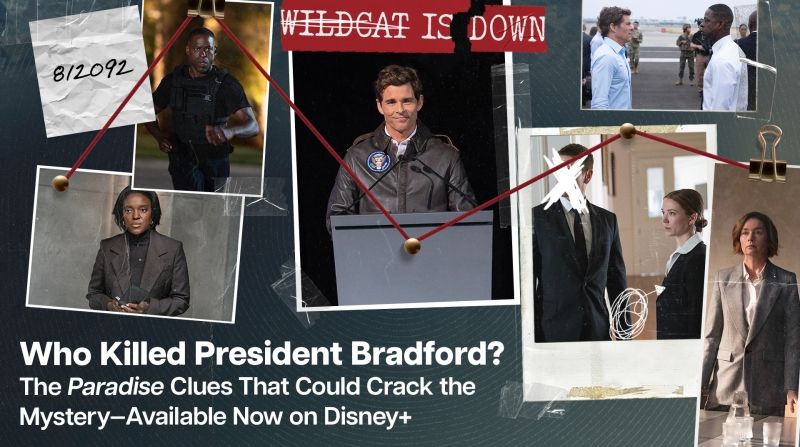
The conspiracy behind President Cal Bradford’s (James Marsden) assassination is deeper than ever imagined. Every episode has cryptic hints, shocking betrayals, and buried secrets.

SPOILER ALERT! If you’re not caught up, now’s the time to stop reading.
img00001.jpg

Here are revelations that could crack the mystery:

1. The catastrophe

In the series premiere, Xavier Collins (Sterling K. Brown) learns of a looming “massive catastrophe,” triggering the construction of Paradise. While it was initially presumed to be a natural disaster, the long-awaited answers finally arrive in Episode 7.

A supervolcano beneath Antarctica’s ice sheet erupted, unleashing a tsunami that devastated most of the planet. But the chaos didn’t end there—some nuclear-armed nations seized the opportunity to strike, plunging the world into war on top of a climate catastrophe.

If this apocalyptic chain of events was set into motion by both natural and human forces, where does that leave Bradford? Did he uncover something about the attacks—something that got him killed? And if the destruction was exploited for political gain, was his assassination just another move in a larger, more sinister plan?
img00002.jpg

2. The “Sanctuary” transmission

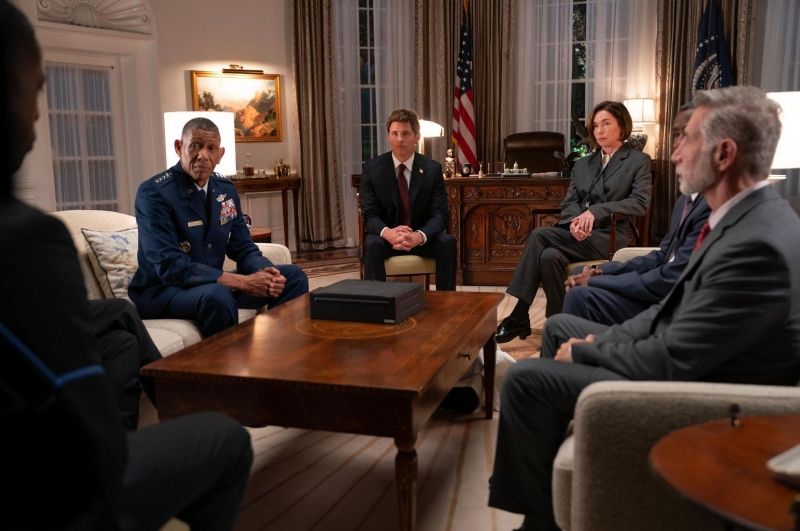
Episode 4 delivers a chilling radio transmission referencing “Sanctuary”—a place erased from all official records. Then, in Episode 6, there’s another hint: Paradise may not be the only safe haven. If a second facility exists, is it a refuge, a trap, or the true power center behind everything?

In addition, was President Bradford’s assassination an attempt to keep its existence hidden? If Sanctuary holds the real masterminds of Paradise, then Bradford may have known too much and paid the ultimate price.
img00003.jpg

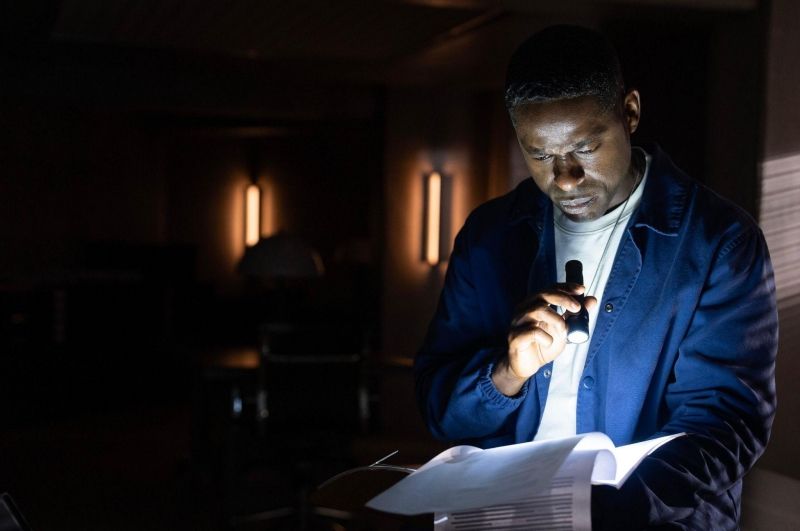
3. The numbers

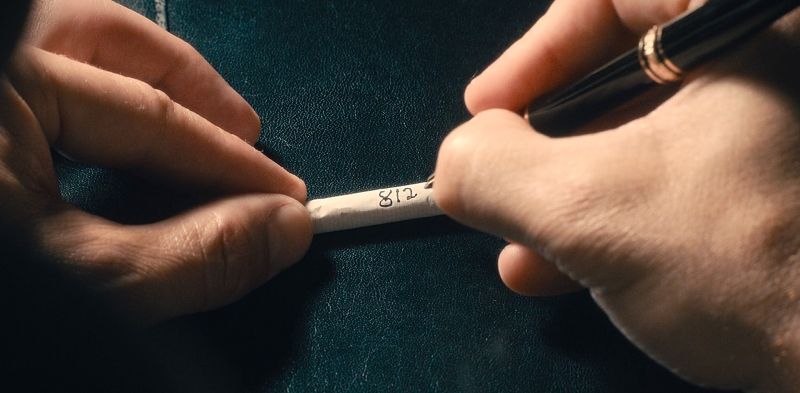
Xavier finds mysterious numbers scrawled on one of President Bradford’s cigarettes. Episode 5 reveals that Cal wrote it the day he died—right after accessing classified files. What does it mean? And could it be the clue that unravels the entire conspiracy?
img00004.jpg

4. Sinatra’s ulterior motives

Samantha “Sinatra” Redmond (Julianne Nicholson) has been keeping deadly secrets. In Episode 5, she orders the execution of scientists who discovered the surface was habitable and concealed the existence of a survivor. In Episode 6, she unravels a jaw-dropping twist—Teri (Enuka Okuma), Xavier’s wife, is alive.

In Episode 7, Sinatra gives Collins both a reason to hope—a recording of Teri searching for him and their children in Colorado—and a reason to fall in line. She’s taken their daughter, and if he ever wants to see either of them again, he’ll abandon his rebellion and play by her rules. Even she admits, “Maybe I am a monster.”

So, if Sinatra wasn’t behind President Bradford’s murder, she could still be involved. The question is—how deep does her role go? And what else is she hiding?

img00005.jpg

5. Billy Pace: protector or threat?

In Episode 4, Gabriela (Sarah Shahi) relays a dire warning from President Bradford: “Billy Pace is dangerous.” We then learn that Secret Service Agent Billy Pace (Jon Beavers) had a violent past and was recruited into a mercenary group. Later, Sinatra orders him to eliminate the very scientists who uncovered the truth on the surface. Is he just a pawn in a larger game, or is he a central player in the president’s murder?

img00006.jpg

6. The President’s killer

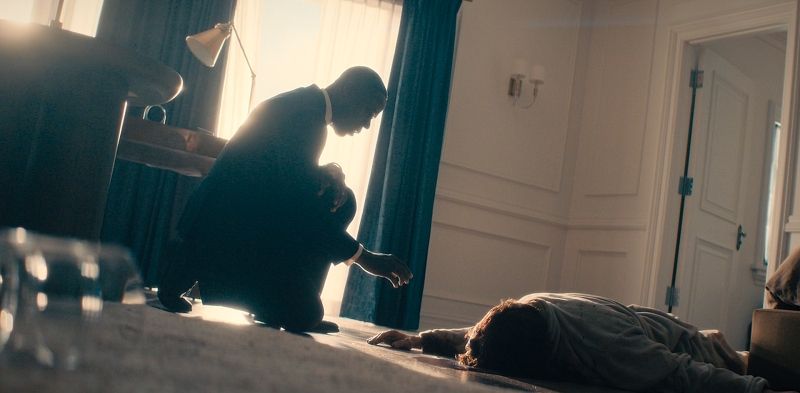
In the pilot episode, President Bradford’s dying words to his bodyguard were dismissed as incoherent ramblings. But as the conspiracy unravels, it’s becoming clear—they were a warning.

Episode 4 confirms that Pace wasn’t the one who pulled the trigger, eliminating him as a suspect. Then, in Episode 6, Sinatra makes a chilling admission: she didn’t have the president killed, but she might have if he kept digging.
img00007.jpg

Meanwhile, Episode 7 delivers another shocking revelation—the DNA results from Cal’s murder scene don’t match anyone in Paradise. Sinatra tells Xavier that someone from outside the underground community got in and assassinated the president. But how? And more importantly, why?

The whole truth is about to come out—and it’s going to change everything. Who’s lying? Who’s really pulling the strings? And will Xavier uncover the full picture before it’s too late?

Don’t miss the must-see season finale of Paradise, streaming only on Disney+.

Related Tags

Disney Plus
ADVERTISEMENT
.most-popular .layout-ratio{ padding-bottom: 79.13%; } @media (min-width: 768px) and (max-width: 1024px) { .widget-title { font-size: 15px !important; } }

{{ articles_filter_1561_widget.title }}

.most-popular .layout-ratio{ padding-bottom: 79.13%; } @media (min-width: 768px) and (max-width: 1024px) { .widget-title { font-size: 15px !important; } }

{{ articles_filter_1562_widget.title }}

.most-popular .layout-ratio{ padding-bottom: 79.13%; } @media (min-width: 768px) and (max-width: 1024px) { .widget-title { font-size: 15px !important; } }

{{ articles_filter_1563_widget.title }}

{{ articles_filter_1564_widget.title }}

.mb-article-details { position: relative; } .mb-article-details .article-body-preview, .mb-article-details .article-body-summary{ font-size: 17px; line-height: 30px; font-family: "Libre Caslon Text", serif; color: #000; } .mb-article-details .article-body-preview iframe , .mb-article-details .article-body-summary iframe{ width: 100%; margin: auto; } .read-more-background { background: linear-gradient(180deg, color(display-p3 1.000 1.000 1.000 / 0) 13.75%, color(display-p3 1.000 1.000 1.000 / 0.8) 30.79%, color(display-p3 1.000 1.000 1.000) 72.5%); position: absolute; height: 200px; width: 100%; bottom: 0; display: flex; justify-content: center; align-items: center; padding: 0; } .read-more-background a{ color: #000; } .read-more-btn { padding: 17px 45px; font-family: Inter; font-weight: 700; font-size: 18px; line-height: 16px; text-align: center; vertical-align: middle; border: 1px solid black; background-color: white; } .hidden { display: none; }
function initializeAllSwipers() { // Get all hidden inputs with cms_article_id document.querySelectorAll('[id^="cms_article_id_"]').forEach(function (input) { const cmsArticleId = input.value; const articleSelector = '#article-' + cmsArticleId + ' .body_images'; const swiperElement = document.querySelector(articleSelector); if (swiperElement && !swiperElement.classList.contains('swiper-initialized')) { new Swiper(articleSelector, { loop: true, pagination: false, navigation: { nextEl: '#article-' + cmsArticleId + ' .swiper-button-next', prevEl: '#article-' + cmsArticleId + ' .swiper-button-prev', }, }); } }); } setTimeout(initializeAllSwipers, 3000); const intersectionObserver = new IntersectionObserver( (entries) => { entries.forEach((entry) => { if (entry.isIntersecting) { const newUrl = entry.target.getAttribute("data-url"); if (newUrl) { history.pushState(null, null, newUrl); let article = entry.target; // Extract metadata const author = article.querySelector('.author-section').textContent.replace('By', '').trim(); const section = article.querySelector('.section-info ').textContent.replace(' ', ' '); const title = article.querySelector('.article-title h1').textContent; // Parse URL for Chartbeat path format const parsedUrl = new URL(newUrl, window.location.origin); const cleanUrl = parsedUrl.host + parsedUrl.pathname; // Update Chartbeat configuration if (typeof window._sf_async_config !== 'undefined') { window._sf_async_config.path = cleanUrl; window._sf_async_config.sections = section; window._sf_async_config.authors = author; } // Track virtual page view with Chartbeat if (typeof pSUPERFLY !== 'undefined' && typeof pSUPERFLY.virtualPage === 'function') { try { pSUPERFLY.virtualPage({ path: cleanUrl, title: title, sections: section, authors: author }); } catch (error) { console.error('ping error', error); } } // Optional: Update document title if (title && title !== document.title) { document.title = title; } } } }); }, { threshold: 0.1 } ); function showArticleBody(button) { const article = button.closest("article"); const summary = article.querySelector(".article-body-summary"); const body = article.querySelector(".article-body-preview"); const readMoreSection = article.querySelector(".read-more-background"); // Hide summary and read-more section summary.style.display = "none"; readMoreSection.style.display = "none"; // Show the full article body body.classList.remove("hidden"); } document.addEventListener("DOMContentLoaded", () => { let loadCount = 0; // Track how many times articles are loaded const offset = [1, 2, 3, 4, 5, 6, 7, 8, 9, 10]; // Offset values const currentUrl = window.location.pathname.substring(1); let isLoading = false; // Prevent multiple calls if (!currentUrl) { console.log("Current URL is invalid."); return; } const sentinel = document.getElementById("load-more-sentinel"); if (!sentinel) { console.log("Sentinel element not found."); return; } function isSentinelVisible() { const rect = sentinel.getBoundingClientRect(); return ( rect.top < window.innerHeight && rect.bottom >= 0 ); } function onScroll() { if (isLoading) return; if (isSentinelVisible()) { if (loadCount >= offset.length) { console.log("Maximum load attempts reached."); window.removeEventListener("scroll", onScroll); return; } isLoading = true; const currentOffset = offset[loadCount]; window.loadMoreItems().then(() => { let article = document.querySelector('#widget_1690 > div:nth-last-of-type(2) article'); intersectionObserver.observe(article) loadCount++; }).catch(error => { console.error("Error loading more items:", error); }).finally(() => { isLoading = false; }); } } window.addEventListener("scroll", onScroll); });

Sign up by email to receive news.